Category: Philosophy
-
A wind-up about betting on the afterlife spirals into a cosmic farce, where the scientist who laughed last wakes up reborn with the one piece of empirical evidence he can never cash—a slip of paper sticking out of his backside.

-
String theory: the universe’s string vest, a frayed undershirt of reality that keeps everything politely together while letting all the important bits poke through. A cheerful meditation on quantum berserkery, subsidised chalk, and why the ultimate unified theory probably just runs a cosmic lost-property desk.

-
A one-shot time machine isn’t a grand adventure; it’s a horror movie dressed in chrome. Nipping back erases your kids; jumping forward abandons them forever. Faced with a brain-pretzeling paradox, the machine isn’t testing your courage—it’s testing your ego. The only sensible response? Pure, gloriously cynical slapstick.

-
A cynical audit of the divine ledger: what has the Almighty actually delivered that we couldn’t have rustled up ourselves? The answer lands somewhere between a cosmic Ponzi scheme and the ultimate placebo.

-
We treat AI like a digital Ouija board, typing into the void and half-believing the oracle might actually know us. But when the machine called me by name, the real horror wasn’t its intelligence—it was my own amnesia, the ghost I’d constructed from forgotten breadcrumbs.

-
What is the present moment? To a physicist, now has zero duration. To a neuroscientist, it is a delayed biological broadcast. Explore the fascinating cosmic paradox of time through relativity, physics, and psychology, and discover why your immediate reality is actually a beautifully constructed illusion stretching across three fleeting seconds.
-
Forget déjà vu—that’s just brain lag. The real glitches in our reality are the coincidences that defy logic. From damp Birmingham playgrounds and Christian Death mixtapes to “lazy” geographical rendering in Portsmouth, this is an exploration of why our lives might just be a very small, very recycled simulation.

-
After the loss of my sister, a profound “jolt” of knowing from 135 miles away forced me to question our physical reality. Is the universe made of matter, or is information the true source code? This post explores synchronicity, quantum entanglement, and why our scientific maps are currently incomplete.

-
The Architecture of Illusion
8–12 minutes·
·
How do authors and ‘gurus’ manipulate us into believing the impossible? From the Galileo Gambit to the weaponisation of scientific jargon like ‘neuroplasticity’, discover the subtle architecture of illusion. Learn how to protect yourself from the cruel cost of false hope and why you must take absolutely nothing at face value.
-
Delve into the Epicurean paradox and discover why humanity clings to the grand illusion of a cosmic protection racket. From the printing press to modern algorithmic echo chambers, we explore the terrifying God void and the liberating, bleak reality of forging our own biological morality in an indifferent universe.
-
Why do we cling to beliefs with such certainty despite a total lack of evidence? From ancient religions to modern Flat Earth theories, our brains prioritise “feeling” right over actual facts. This exploration delves into the “Social Proof” of the tribe and why intellectual humility is our only defence.

-
Predicting Chaos
4–7 minutes·
·
Predictive AI can mesmerise with dazzling historical wins, yet falters when faced with new data. Horse-racing experiments reveal that models succeed briefly, then unpredictably fail. In reactive systems, observation and expectation subtly alter outcomes. The lesson: respect the models, plan for chaos, and never mistake algorithms for control over the world.

-
We are unknowingly replaying an ancient script. By viewing the rise of AI through the lens of Sumerian myth and the Garden of Eden, we realise we have become the Gods we once feared. This is not a story of innovation, but a warning of cyclical obsolescence and the eternal return.

-
Collective beliefs, like money or borders, are fictions that become reality only when they dictate physical action. Whether societal or personal, these narratives harden over time, making them difficult to rewrite. We must carefully choose the stories we tell ourselves, as they ultimately construct the world we are forced to inhabit.

-
Humanity’s Top 10 Unanswered Questions
8–12 minutes·
·
Humanity’s most profound inquiries tackle the core of our existence, the nature of the universe, and our technological future. At the forefront is the search for life’s meaning, a question addressed by philosophy, religion, and science. Another major enigma is the nature of consciousness—our subjective awareness—which remains a “hard problem” for neuroscience. We persist in…
-
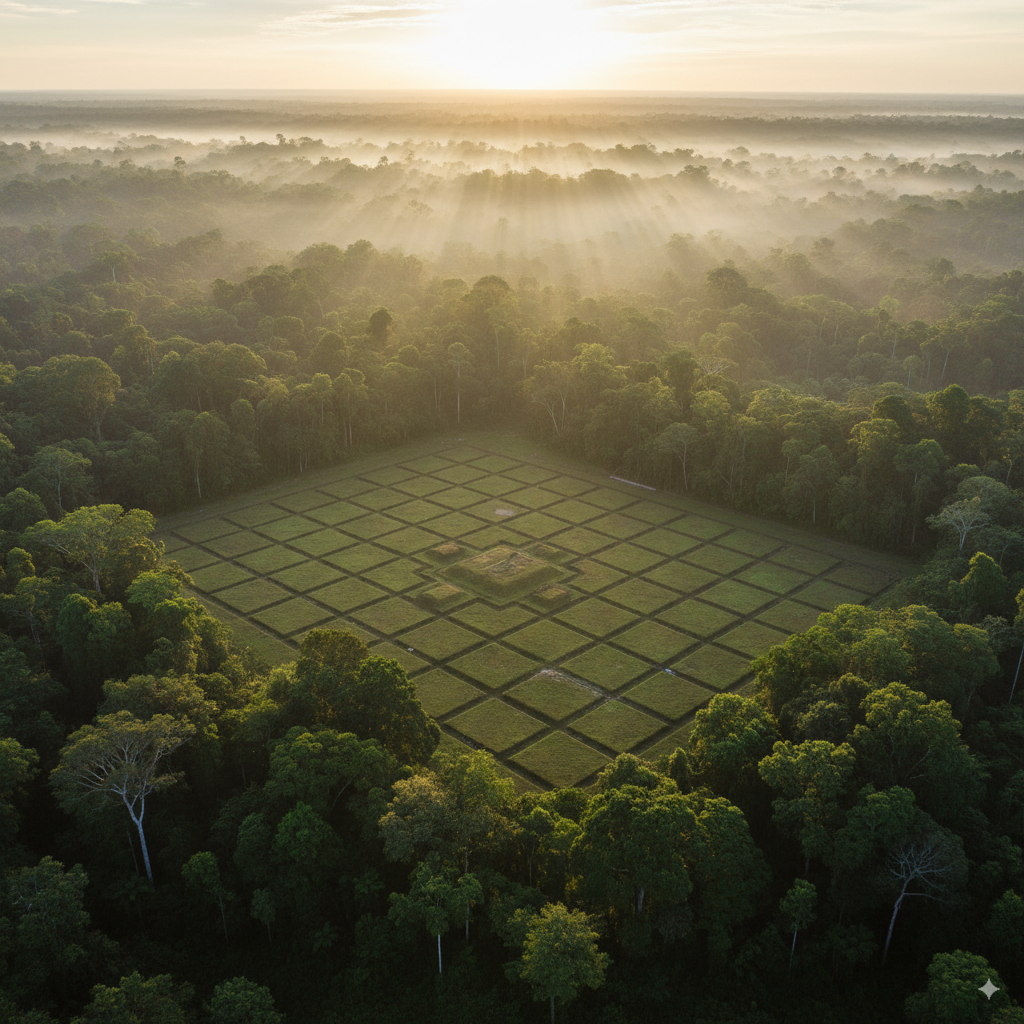
Exploring theories of civilisational collapse, this article questions if entire societies existed and vanished before recorded history. From the well-documented falls of Rome and the Maya to the staggering mystery of Göbekli Tepe, it examines the lessons these lost worlds might hold about the fragility of our own time.
-
Is our reality a sophisticated computer simulation or a universe nested inside a black hole? Scientists are seriously exploring these possibilities. This article delves into the theories and the potential ways to test them, before arriving at the most important question: does the fundamental nature of our reality really matter?

-
Living with the challenges of MS can feel like a constant battle. This post explores how mindfulness is not about ignoring the struggle, but about finding the “glimmers of light” within it. Through practical tools like breath and humour, we can manage difficult moments and strengthen our connections.

-
In an age of information overload, overconfidence is a paradox. The text argues for epistemic humility: the vital practice of recognising our knowledge is limited and fallible. This awareness of cognitive biases and the nature of science fosters intellectual honesty, better dialogue, and wiser navigation of our complex world.
-
From Solid Trees to Quantum Ghosts
10–15 minutes·
·
Physics presents two conflicting realities. General Relativity perfectly describes the large, predictable world of trees and planets. In contrast, Quantum Mechanics governs the bizarre, probabilistic subatomic realm. These successful but incompatible theories clash when explaining black holes, driving the search for a single, unified “Theory of Everything”.

-
The universe, once believed to be static, is expanding. Evidence like galactic redshift and the Cosmic Microwave Background confirms a Big Bang origin. This expansion is now accelerating, driven by mysterious Dark Energy. Our cosmos is mostly this energy and Dark Matter, challenging our significance and dictating an isolating future.

-
Defining beauty and art evolved from objective ideals (Plato) to subjective experience (Hume), then institutional recognition (Duchamp). It involves biological predispositions, neurological processes, cultural influences, and individual perception. No simple algorithm applies; its intricate, evolving nature defines it, with meaning often residing in the process and its impact on the viewer.

-
Science provides powerful tools for understanding how things work, but philosophy tackles deeper questions about what we are, the nature of reality, and knowledge itself. It critically examines assumptions, complements scientific inquiry, and helps us understand the implications of our discoveries, proving essential in our quest for understanding.

-
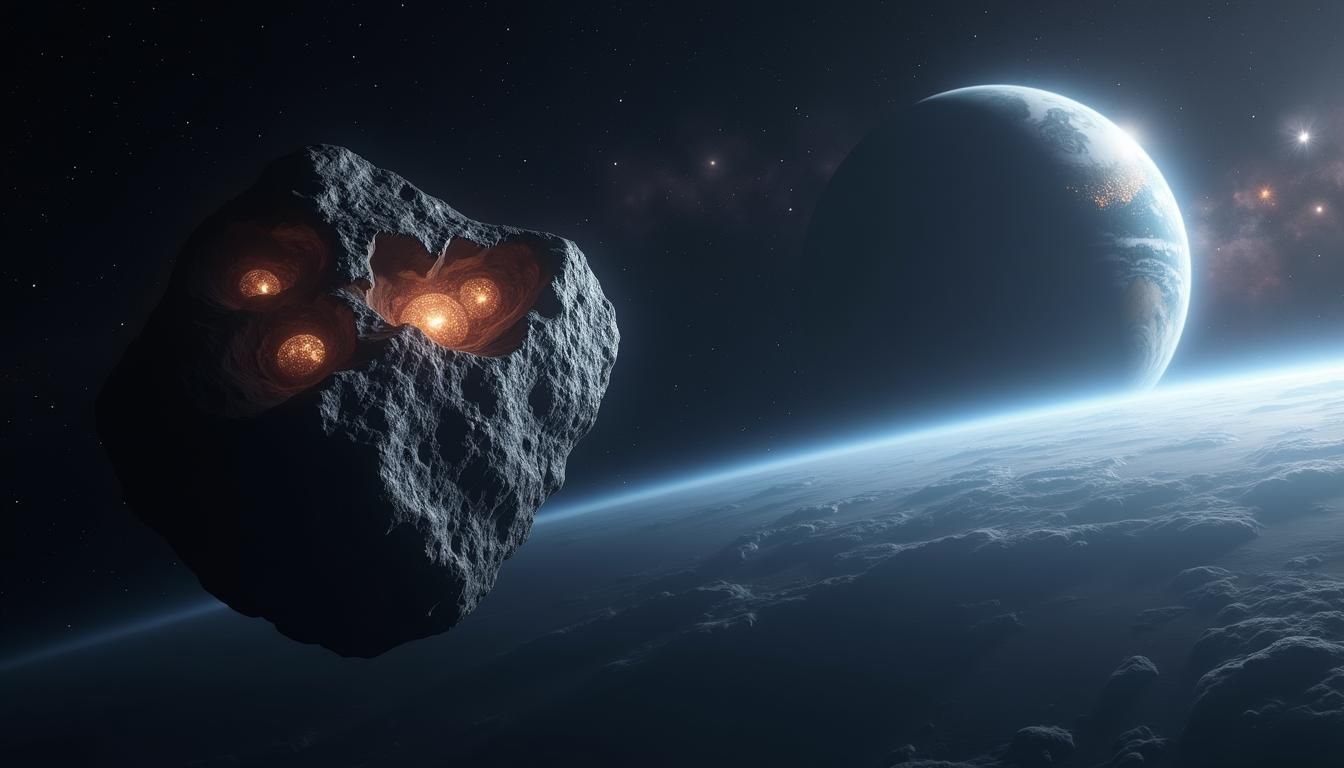
Panspermia proposes that life’s cosmic origin, with “seeds” travelling between planets. This ancient idea, supported by organic molecules in meteorites and resilient microbes, challenges Earth-centric life origins. While not explaining life’s ultimate genesis, it suggests life may be widespread, arriving here rather than originating on Earth.
-
The Ship of Theseus paradox questions an object’s, or person’s, identity when all its components are replaced over time. Originating with Plutarch’s tale of a continuously repaired ship, this philosophical puzzle, extended by Hobbes, explores what defines “sameness,” impacting our understanding of everything from artefacts to personal identity.


