Category: Health and Medicine
-
The Architecture of Illusion
8–12 minutes·
·
How do authors and ‘gurus’ manipulate us into believing the impossible? From the Galileo Gambit to the weaponisation of scientific jargon like ‘neuroplasticity’, discover the subtle architecture of illusion. Learn how to protect yourself from the cruel cost of false hope and why you must take absolutely nothing at face value.

-
Living with the challenges of MS can feel like a constant battle. This post explores how mindfulness is not about ignoring the struggle, but about finding the “glimmers of light” within it. Through practical tools like breath and humour, we can manage difficult moments and strengthen our connections.

-
Modern work overloads our minds, similar to IT systems. Micro-mindfulness, brief moments of focused attention integrated into daily routines, offers a pragmatic way to improve cognitive stability and efficiency. These “code optimisations” help manage stress and enhance focus, acting as mental system maintenance for better well-being.

-
Neuroplasticity is the brain’s remarkable lifelong capacity to reorganise its structure and function. This ability, disproving older theories of a fixed brain, allows us to learn new skills, adapt, and recover from injury. Lifestyle factors like learning, exercise, and mindset can enhance it, offering transformative potential for personal growth.

-
Somatic awareness, listening to your body’s internal sensations, profoundly enhances mindfulness. It grounds you in the present, offers an early warning for stress, and deepens self-understanding and emotional processing. Techniques include body scans and mindful movement, leading to a more integrated, richer experience of life and improved well-being.

-
Non-judgmental observation, a core mindfulness skill with ancient roots, means noticing present thoughts, feelings, and sensations without labelling. Popularised by MBSR, it reduces stress and enhances self-awareness. Cultivate it through meditation or daily mindful moments, observing experiences with acceptance for greater calm, clarity, and well-being.

-
Ancient Egyptians pioneered medicine blending empirical observation with magic. They developed sophisticated diagnosis, surgery, and extensive remedies documented in papyri. With early doctor specialisation, their practical knowledge and systematic approach laid vital foundations for later medical traditions, showcasing a deep concern for health.

-
High-stress professions face chronic pressure impacting well-being and performance. Mindfulness offers a solution, building resilience, clarity, and calm. By focusing on the present moment non-judgementally, professionals can mitigate stress’s toll. Practices, both formal and informal, scientifically shown to improve brain function and reduce physical stress responses, enhance coping skills and job effectiveness.

-
Mindfulness, an ancient practice validated by science, aids focus in a distracting world. It significantly enhances the developing teenage brain, improving attention, emotional regulation, and cognitive abilities via neuroplasticity. While not a panacea, evidence supports its potential for navigating challenges and building lifelong mental well-being and cognitive strength.

-
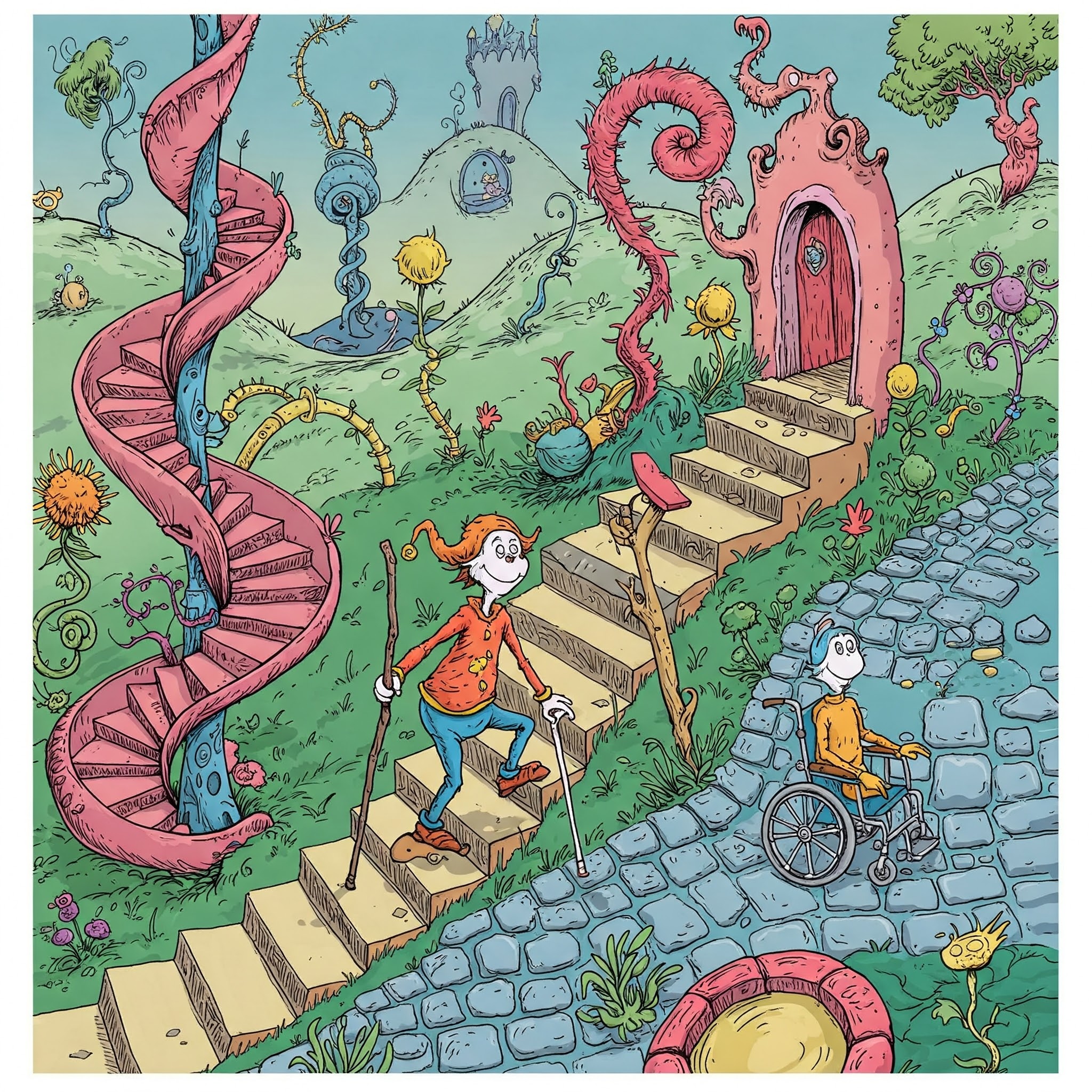
A lighthearted alternative to Dr Seuss’, “Oh, the places you’ll go” with respect to someone like me who is really struggling with MS symptoms at the moment.
-
Cryogenics, the science of ultra-low temperatures, from historical gas liquefaction to modern MRI and particle accelerators, is crucial. Distinctly, cryonics is the speculative practice of freezing legally dead humans for future revival. This faces immense scientific hurdles and ethical debates, differing significantly from established cryopreservation of cells.

-
Mindfulness practice enhances emotional intelligence by training non-judgmental attention. It directly boosts self-awareness and self-regulation, fosters empathy, and aids motivation and social skills. This provides tools for better emotional management, stronger relationships, and increased resilience in navigating life’s complexities, supported by scientific evidence.

-
Technology is deeply embedded in modern life, influencing human evolution. Whilst medicine weakens natural selection, digital demands introduce new pressures. Gene editing and human augmentation present radical possibilities, raising ethical dilemmas about humanity’s future and our wisdom to responsibly direct our biological destiny.

-
Mindfulness, rooted in Buddhist tradition and secularised by Kabat-Zinn’s MBSR, offers a way to navigate modern overwhelm. It’s defined as purposeful, present, non-judgemental attention. Practising mindfulness can alter brain structure, reducing stress and enhancing self-awareness, emotional regulation, focus, and empathy. It fosters resilience and conscious living, though requiring consistent effort, not a quick solution.

-
Ancient Egyptian medicine blended science, spirituality, and practicality, pioneering surgical techniques, herbal remedies, and medical documentation (Ebers and Edwin Smith Papyri). Mummification advanced anatomical knowledge, while treatments merged empirical methods with incantations. Influencing Greek and Roman practices, their holistic approach—balancing physical and spiritual care—laid foundations for modern medicine, highlighting innovation and cross-cultural legacy in medical…

-
Mindfulness, rooted in ancient Buddhist traditions, offers teenagers a science-backed tool to manage stress and enhance mental clarity. Popularised by Jon Kabat-Zinn’s MBSR programme, it improves focus, emotional regulation, and brain structure. Despite benefits, critics warn against oversimplification and inequitable access. Mindfulness is a practice requiring dedication, not a quick fix, aiding resilience amid life’s…

-
Climate change destabilises global food systems through extreme weather, rising temperatures, and ecological collapse. Crop yields for staples like wheat and rice decline with each degree of warming, while fisheries dwindle as oceans acidify. Vulnerable regions face heightened food insecurity, worsening inequality. Today’s teenagers must confront unprecedented food challenges, demanding systemic shifts in production, diets,…

-
Mindfulness, rooted in ancient Buddhist meditation, has become a mainstream practice for enhancing mental and physical health. Research shows it reduces stress by lowering cortisol, boosts immunity, alleviates chronic pain, and improves cardiovascular health. While critics warn against oversimplification, studies demonstrate its benefits, particularly for teens managing academic and social pressures through present-moment focus.

-
Neurofeedback is a technique allowing individuals to control brain activity, with applications in psychology, education, and healthcare, showing promise in treating ADHD, anxiety, and depression, despite some limitations and controversies surrounding its use.

-
Mindfulness, an ancient concept, has gained significant attention for its profound effects on emotional wellbeing, with scientific evidence supporting its benefits in reducing anxiety and depression, and improving mood and emotional regulation, through increased awareness and non-judgemental attitude.

-
Social Media Alters Lives
6–8 minutes·
·
Social media profoundly impacts relationships, altering communication, romantic relationships, and mental health, with both positive and negative effects, necessitating a balance between online and offline interactions.

-
Mindfulness, an ancient concept, has gained significant attention for its profound effects on cognitive function, emotional regulation, and academic performance, with potential to revolutionise the way we think, learn, and interact with the world around us, promoting greater awareness and compassion.

-
Cryogenics, a rapidly advancing field, aims to preserve life through cryopreservation, with potential applications in medicine and space exploration, despite challenges and controversies surrounding its ethics and accessibility.

-
Technology has profoundly impacted human relationships, altering communication and connection formation, with both benefits and drawbacks, necessitating a balanced approach to maintain healthy, meaningful relationships in the digital era, amidst concerns over mental health and authenticity.

-
Lucid dreaming, a centuries-old concept, involves conscious recognition and control of dreams, with potential benefits including improved problem-solving skills and emotional regulation, but also drawbacks such as addiction and increased stress.