Category: Science and Technology
-
What is the present moment? To a physicist, now has zero duration. To a neuroscientist, it is a delayed biological broadcast. Explore the fascinating cosmic paradox of time through relativity, physics, and psychology, and discover why your immediate reality is actually a beautifully constructed illusion stretching across three fleeting seconds.
-
Forget déjà vu—that’s just brain lag. The real glitches in our reality are the coincidences that defy logic. From damp Birmingham playgrounds and Christian Death mixtapes to “lazy” geographical rendering in Portsmouth, this is an exploration of why our lives might just be a very small, very recycled simulation.

-
After the loss of my sister, a profound “jolt” of knowing from 135 miles away forced me to question our physical reality. Is the universe made of matter, or is information the true source code? This post explores synchronicity, quantum entanglement, and why our scientific maps are currently incomplete.

-
We often use “quantum collapse” as a witty shorthand for disappointment. But what if our casual metaphors mask a deeper, more “alien” reality? This exploration dives into Schrödinger’s legacy, the “Measurement Problem,” and why we find comfort in the fuzziness of a participatory universe.

-
The Architecture of Illusion
8–12 minutes·
·
How do authors and ‘gurus’ manipulate us into believing the impossible? From the Galileo Gambit to the weaponisation of scientific jargon like ‘neuroplasticity’, discover the subtle architecture of illusion. Learn how to protect yourself from the cruel cost of false hope and why you must take absolutely nothing at face value.
-
Predicting Chaos
4–7 minutes·
·
Predictive AI can mesmerise with dazzling historical wins, yet falters when faced with new data. Horse-racing experiments reveal that models succeed briefly, then unpredictably fail. In reactive systems, observation and expectation subtly alter outcomes. The lesson: respect the models, plan for chaos, and never mistake algorithms for control over the world.

-
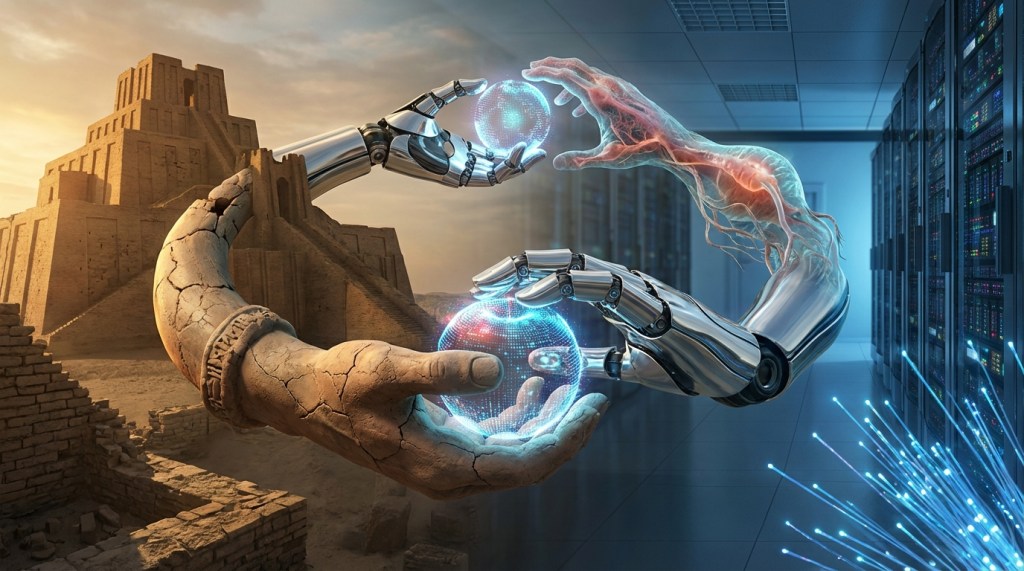
We are unknowingly replaying an ancient script. By viewing the rise of AI through the lens of Sumerian myth and the Garden of Eden, we realise we have become the Gods we once feared. This is not a story of innovation, but a warning of cyclical obsolescence and the eternal return.
-
Humanity’s Top 10 Unanswered Questions
8–12 minutes·
·
Humanity’s most profound inquiries tackle the core of our existence, the nature of the universe, and our technological future. At the forefront is the search for life’s meaning, a question addressed by philosophy, religion, and science. Another major enigma is the nature of consciousness—our subjective awareness—which remains a “hard problem” for neuroscience. We persist in…
-
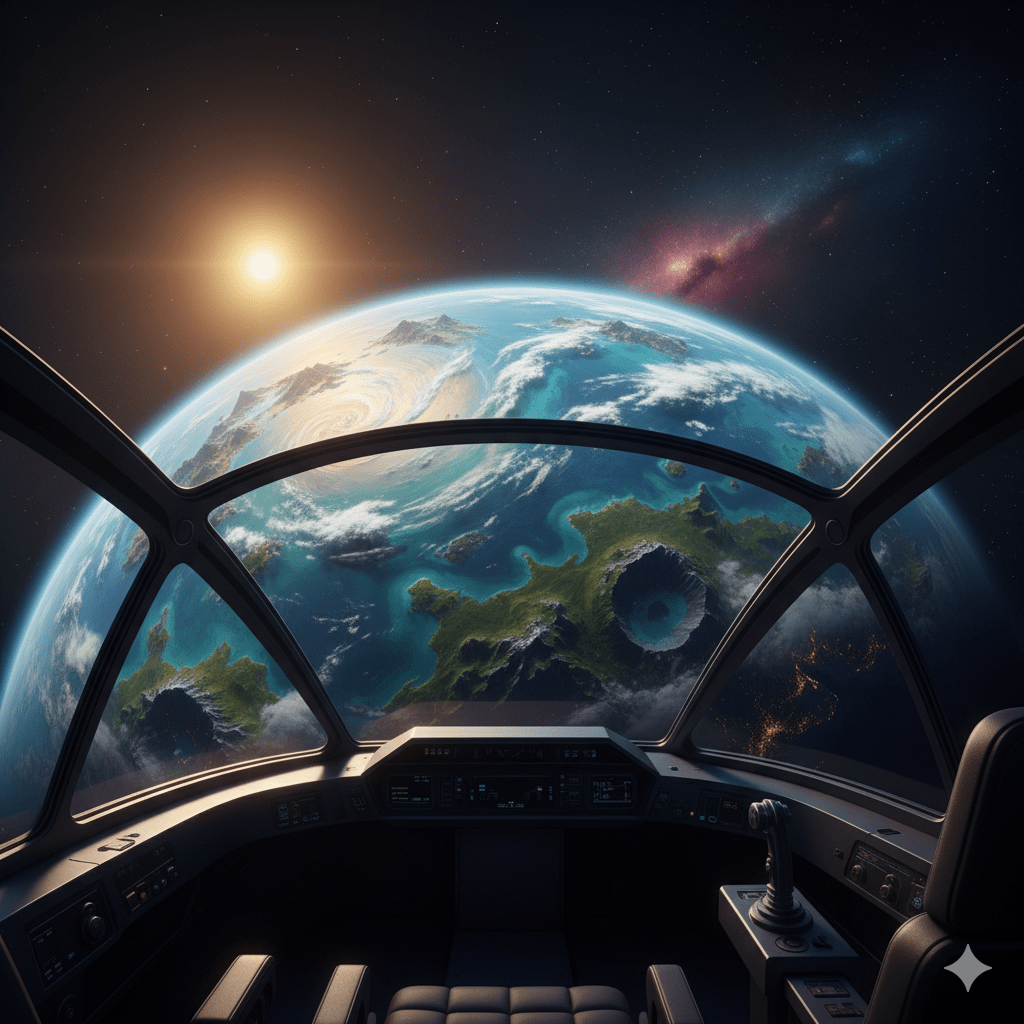
For centuries, we wondered if we were alone. Then, an alien ship visited, had a good look at our little planet, and simply left without a word. This is the story of what happened next: how humanity dealt with the cosmic sting of being ghosted, and how the ultimate grudge became our greatest motivation.
-
Silence Is Golden
5–7 minutes·
·
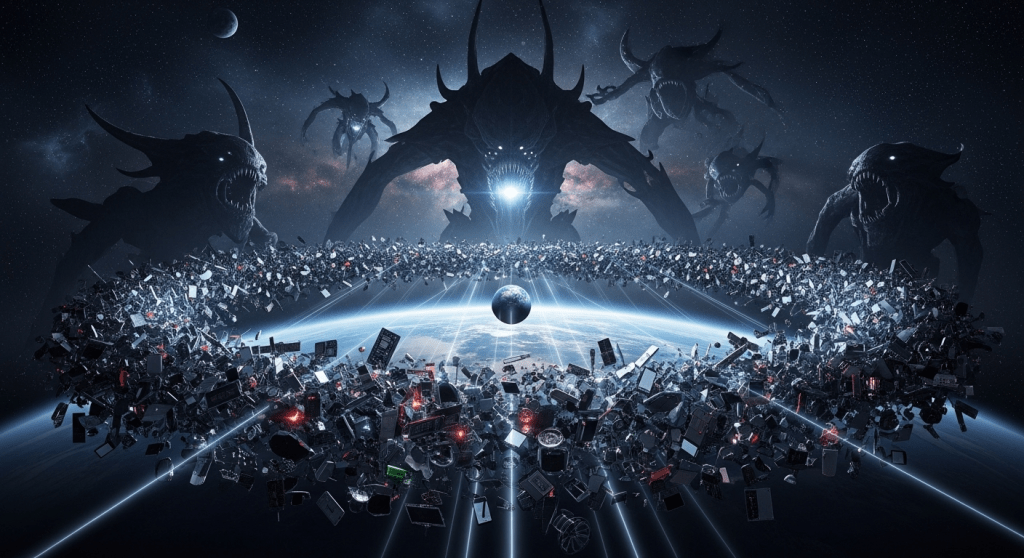
The universe is unnervingly quiet. We call this the Fermi Paradox, but what if the silence isn’t a sign of absence, but of fear? This article explores a chilling theory: that advanced civilisations lay cosmic tripwires for species like us, and our astronomical achievements are simply a dinner bell.
-
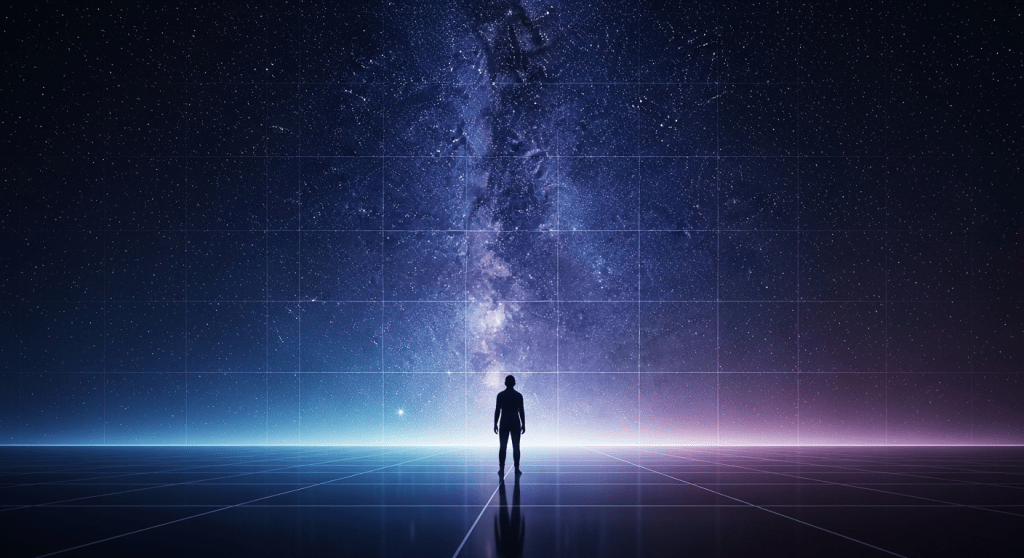
Is our reality a sophisticated computer simulation or a universe nested inside a black hole? Scientists are seriously exploring these possibilities. This article delves into the theories and the potential ways to test them, before arriving at the most important question: does the fundamental nature of our reality really matter?
-
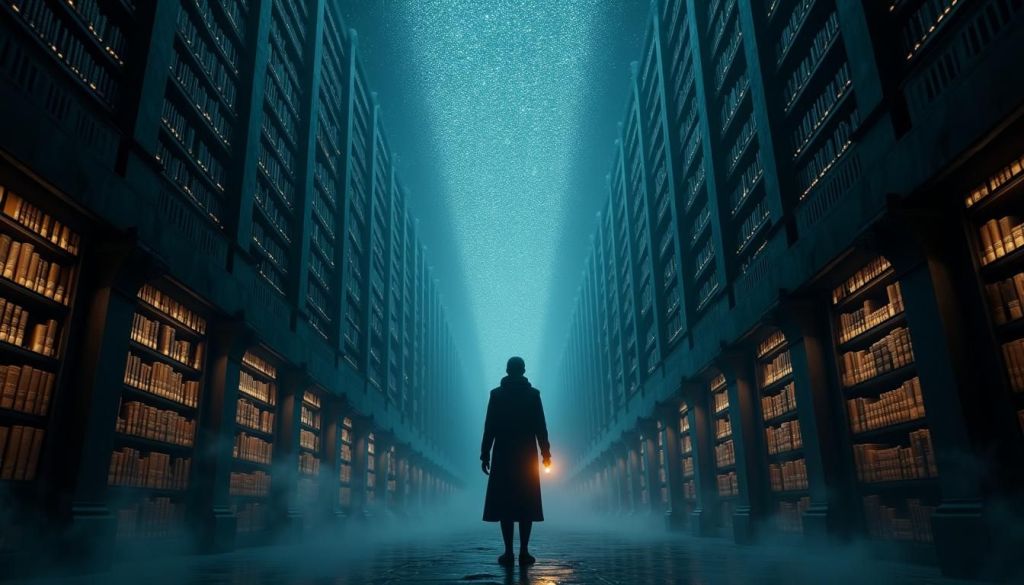
In an age of information overload, overconfidence is a paradox. The text argues for epistemic humility: the vital practice of recognising our knowledge is limited and fallible. This awareness of cognitive biases and the nature of science fosters intellectual honesty, better dialogue, and wiser navigation of our complex world.
-
From Solid Trees to Quantum Ghosts
10–15 minutes·
·
Physics presents two conflicting realities. General Relativity perfectly describes the large, predictable world of trees and planets. In contrast, Quantum Mechanics governs the bizarre, probabilistic subatomic realm. These successful but incompatible theories clash when explaining black holes, driving the search for a single, unified “Theory of Everything”.

-
The universe, once believed to be static, is expanding. Evidence like galactic redshift and the Cosmic Microwave Background confirms a Big Bang origin. This expansion is now accelerating, driven by mysterious Dark Energy. Our cosmos is mostly this energy and Dark Matter, challenging our significance and dictating an isolating future.

-
Earth’s magnetic north pole is accelerating and the overall field is weakening, signalling a potential future reversal. This slow process poses little threat to life. However, a weakened magnetic shield would leave modern technological infrastructure, such as power grids and satellites, critically vulnerable to damaging solar radiation.


 Conversations with AI