Category: Computing
-
We treat AI like a digital Ouija board, typing into the void and half-believing the oracle might actually know us. But when the machine called me by name, the real horror wasn’t its intelligence—it was my own amnesia, the ghost I’d constructed from forgotten breadcrumbs.

-
Rounding a neural weight from 0.4132 to 0.4 barely dents a benchmark. But chaos theory doesn’t care about aggregate scores. That tiny snip can, over time, quietly pull a model into a surreal loop or rewrite its own reality under the guise of perfect recall. How long before the butterfly wing finally flaps?

-
The Fire We Struck from Sand
6–9 minutes·
·
From a sliver of germanium came a spark that would outshine the taming of flame. The transistor didn’t just power our devices – it rewired the human story, leading from binary switches to minds we can’t yet comprehend. This is a celebration of the silicon age’s quiet, world-forging fire.

-
The narrative that LLMs will replace technical professionals is colliding with reality. While local inference engines like ds4 make running powerful models accessible, LLMs remain “Knowledge Base 2.0″—excellent at interpolating GitHub data to clone Doom, but incapable of true novelty. To progress, the industry is awkwardly rebuilding the Enterprise Service Bus.

-
Predicting Chaos
4–7 minutes·
·
Predictive AI can mesmerise with dazzling historical wins, yet falters when faced with new data. Horse-racing experiments reveal that models succeed briefly, then unpredictably fail. In reactive systems, observation and expectation subtly alter outcomes. The lesson: respect the models, plan for chaos, and never mistake algorithms for control over the world.

-
Large Language Models (LLMs) are rapidly evolving, impacting work, creativity, and societal systems. While offering automation and educational benefits, they pose risks like misinformation, ethical biases, and intellectual property issues. Addressing these challenges through careful governance and adapting societal structures is crucial for managing their transformative power and future.

-
Video game graphics journeyed from simple pixels to near-photorealistic 3D, thanks to powerful hardware and engines like Unreal and Unity. Physics evolved from basic scripts to dynamic simulations. Now, ray tracing and AI push boundaries, creating incredibly immersive and complex interactive entertainment, profoundly changing game design and player experience.

-
Classical computing reached limits where quantum effects interfere. Quantum computing emerged to harness these effects using qubits (superposition, entanglement) for problems classical computers can’t efficiently solve. Theory and algorithms paved the way, though building quantum machines is challenging, requiring classical control. They offer potential for simulations and cryptography, working alongside classical systems.
-
Machine learning’s evolution from theoretical concepts to everyday applications is intrinsically linked to computing power advancements. Starting with Turing’s ideas and early limitations, Moore’s Law, GPUs, and cloud computing progressively fuelled ML’s growth. Specialised AI hardware now optimises performance. This synergy drives innovation, but also raises questions about accessibility and environmental impact as computing demands…
-
Human-Computer Interaction (HCI) has evolved from 1940s punch-card systems to intuitive voice assistants and gesture controls. Milestones include Douglas Engelbart’s 1968 interface innovations, 1980s graphical interfaces, and modern touchscreens. HCI prioritises user-centred design, blending human intuition with machine functionality. Advances like AI and brain-computer interfaces raise ethical questions, urging balance between technological empowerment and human…

-
From Steam to AI: Navigating Job Shifts and Future Opportunities
5–7 minutes·
·
Technology’s impact on employment, from the Industrial Revolution to today’s AI-driven shifts, involves both job displacement and creation. Automation threatens roles but spurs new industries like renewable energy and digital careers. Ethical concerns, such as biased algorithms, highlight the need for responsible innovation. Adaptability, tech literacy, and human-centric skills are crucial for future careers, balancing…

-
Natural Language Processing (NLP) evolved from 1950s rule-based systems like ELIZA to modern neural networks and transformers (e.g., GPT-3), enabling real-time translation, sentiment analysis, and virtual assistants. While revolutionising communication, education, and healthcare, NLP faces ethical challenges like bias and misinformation. Future advancements may integrate multimodal models and quantum computing, questioning machines’ true linguistic understanding.

-
Cybersecurity’s evolution mirrors computing’s history, from WWII codebreaking to modern digital threats. Key milestones include the 1988 Morris Worm and 2007 Estonian attacks, highlighting vulnerabilities in interconnected systems. Core principles (confidentiality, integrity, availability) underpin defences like encryption and AI. Human error remains a weak link. Emerging challenges—quantum computing, IoT expansion—demand vigilance, blending technology with ethical…

-
Technology has revolutionised education, transforming the way we learn and teach, with online resources and digital tools enhancing student engagement and academic achievement, despite concerns over equity and access.

-
Social Media Alters Lives
6–8 minutes·
·
Social media profoundly impacts relationships, altering communication, romantic relationships, and mental health, with both positive and negative effects, necessitating a balance between online and offline interactions.

-
Artificial intelligence development has accelerated, with potential to revolutionise lives, driven by advances in computing power, machine learning, and data storage, raising concerns about job displacement and accountability.

-
Technology has profoundly impacted human relationships, altering communication and connection formation, with both benefits and drawbacks, necessitating a balanced approach to maintain healthy, meaningful relationships in the digital era, amidst concerns over mental health and authenticity.

-
Quantum computing is a rapidly developing field with potential to revolutionize science and technology, with applications in cryptography, materials science, AI, and optimization problems, and could solve complex problems currently unsolvable.

-
The concept of artificial intelligence sparks debate on its potential benefits and risks, impact on human employment, and ethical implications, raising questions about its development and alignment with human values.

-
Artificial General Intelligence (AGI) and Artificial Superintelligence (ASI) may surpass human intelligence, posing risks and benefits, with experts debating their development and potential impact on humanity and the future.

-
Coding theory, a fusion of computer science and mathematics, enables efficient data transmission and storage through error-correction codes, with computational complexity being a crucial aspect in designing and decoding these codes to ensure reliable communication in the digital era.

-
Deepfake Dilemma?: Technology, Ethics, and Society’s Future
3–5 minutes·
·
This conversation explores the evolution and implications of Deepfake technology, which combines deep learning with synthetic media. It discusses its societal impacts, including misinformation and ethical dilemmas surrounding consent. The adoption of Generative Adversarial Networks is highlighted, alongside the need for legislation and public awareness to manage its consequences.

-
Algorithms to Awareness: AI Evolution and Its Ethical Frontiers
3–5 minutes·
·
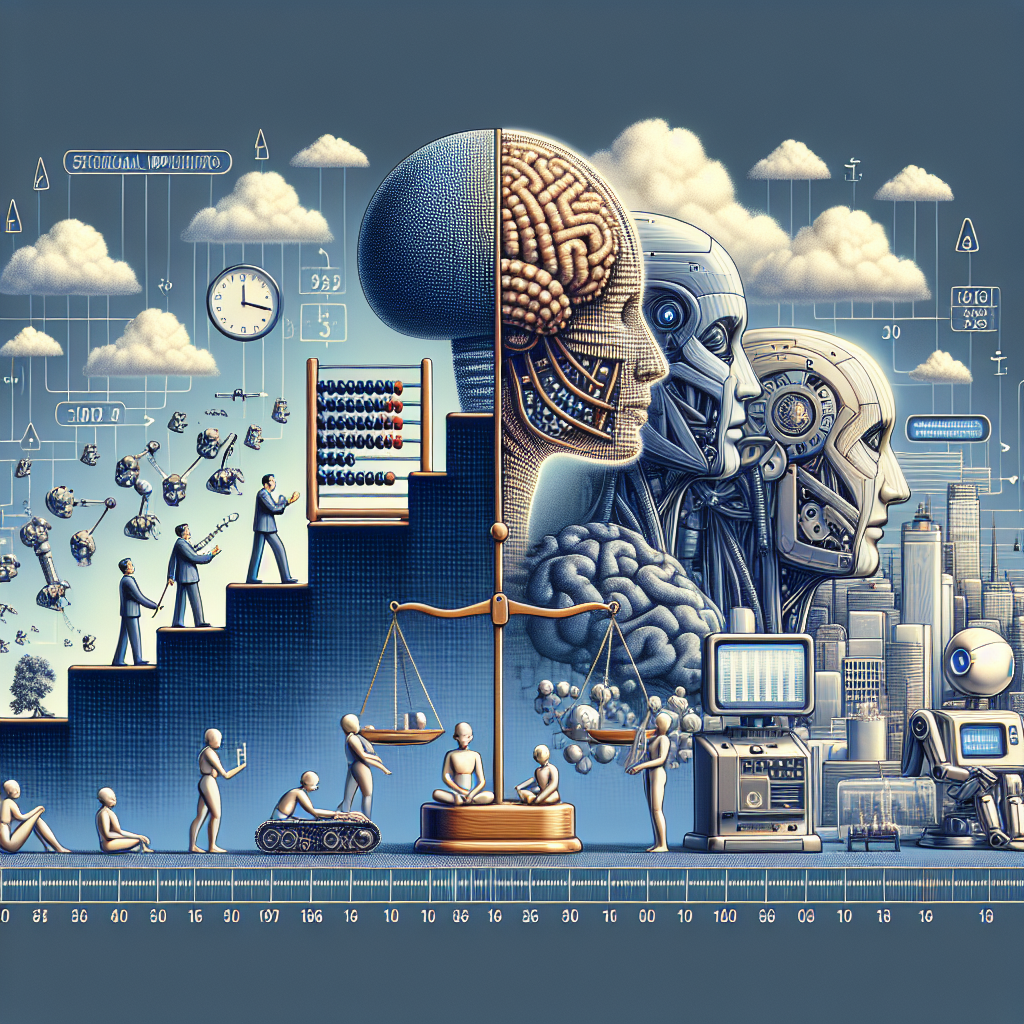
The discussion explores the evolution of Artificial Intelligence (AI) since its term was coined in 1956, addressing questions of consciousness and self-awareness in machines. It contrasts ‘Strong AI’ and ‘Weak AI,’ highlights societal implications, and raises ethical concerns surrounding potential AI consciousness, emphasizing the need for comprehensive understanding.
-
This article explores the complex landscape of cybersecurity threats in the 21st century, highlighting categories like malware, social engineering, and advanced persistent threats. It discusses the evolution of these threats since the 1970s, emphasizing the need for proactive measures by individuals, corporations, and governments to ensure digital safety and privacy.
-
This article discusses the growing concern of data privacy in today’s information-sharing society. It explores the ethical dilemmas surrounding transparency, ownership, and governance amidst increasing technology reliance. Highlighting issues like the Cambridge Analytica scandal, it calls for ongoing public awareness and research on data privacy’s implications for society.