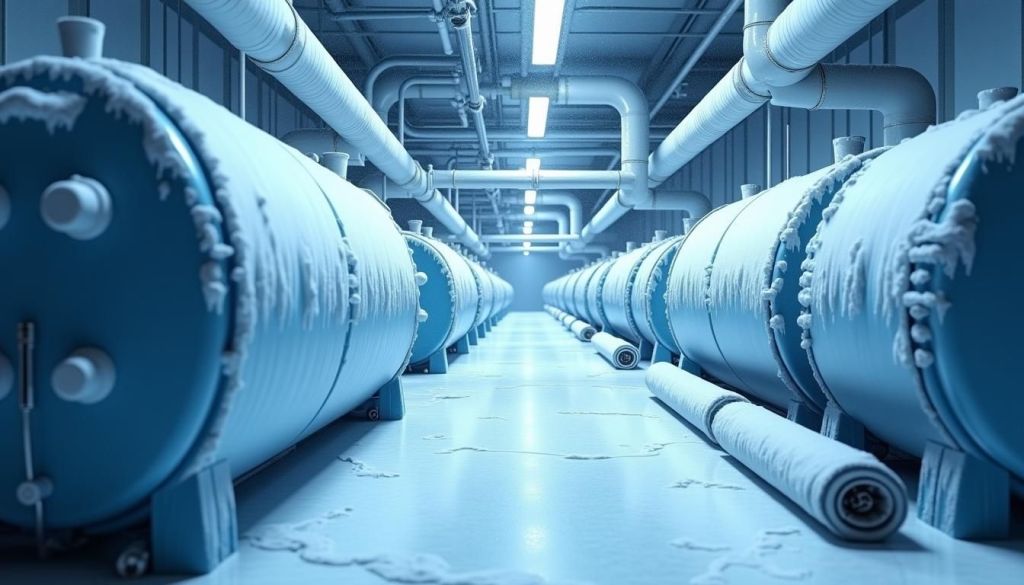
Imagine stepping into a future where diseases are cured not just by medicine, but by time itself – a pause button pressed on life while science catches up. Or picture technology so powerful it requires temperatures colder than the deepest reaches of space to function. This isn’t just science fiction; it’s the realm explored by cryogenics, the fascinating science of the ultra-cold. Often confused with the more speculative idea of freezing people for future revival (that’s cryonics, and we’ll get to that!), cryogenics is a well-established field of physics and engineering dealing with the production and effects of very low temperatures. Understanding this science opens a window onto cutting-edge technologies transforming medicine, physics, space exploration, and even how we recycle. This journey will delve into the history, the fundamental science, the current applications, and the tantalising, sometimes controversial, future potential of manipulating the world at temperatures approaching the absolute coldest possible. Why does it matter? Because the mastery of cold is unlocking new frontiers in human capability and pushing the boundaries of what we thought possible.
The story of cryogenics isn’t one of sudden discovery but a gradual chipping away at the concept of cold. Humans have always understood cooling – preserving food with ice, seeking shade – but the scientific understanding began much later. In the 17th and 18th centuries, scientists like Robert Boyle and Guillaume Amontons explored the relationship between the pressure, volume, and temperature of gases, laying theoretical groundwork. However, reaching genuinely cryogenic temperatures (typically defined as below -150°C or 123 Kelvin) required conquering the challenge of turning gases into liquids. A major breakthrough came in the 19th century. Michael Faraday, renowned for his work in electricity and magnetism, managed to liquefy several gases previously thought “permanent,” like chlorine and ammonia, using pressure and cooling [1]. Yet, gases like oxygen, nitrogen, hydrogen, and helium stubbornly resisted. The real push came later in the century. In 1877, Louis Paul Cailletet in France and Raoul Pictet in Switzerland independently liquefied oxygen [2]. Then, in the 1890s, British scientist James Dewar invented the vacuum-insulated flask – the Dewar flask, or Thermos as we often know it – which was crucial for storing these frigid liquids. Dewar himself liquefied hydrogen in 1898 [3]. The final frontier was helium, the most difficult gas to liquefy due to its extremely low boiling point. This feat was achieved in 1908 by Dutch physicist Heike Kamerlingh Onnes in Leiden [4]. Cooling helium down to just 4.2 Kelvin (-268.95°C), remarkably close to absolute zero, opened up a new world. Just three years later, in 1911, Onnes discovered superconductivity while studying the electrical resistance of mercury at these extreme temperatures, a phenomenon where electrical resistance vanishes completely [5]. This discovery alone highlights the profound impact of reaching cryogenic temperatures, paving the way for technologies undreamt of centuries before.
So, what exactly is this extreme cold we’re talking about? Temperature, at its core, is a measure of the average kinetic energy – the movement energy – of atoms and molecules within a substance. The hotter something is, the more its constituent particles jiggle, vibrate, and zoom around. As you cool something down, this motion slows. Cryogenics deals with the extreme end of this scale, pushing towards the theoretical minimum temperature: absolute zero. This is 0 Kelvin on the scientific Kelvin scale, which corresponds to -273.15 degrees Celsius or -459.67 degrees Fahrenheit. At absolute zero, atoms would theoretically possess the minimum possible energy, essentially ceasing all random motion (though quantum mechanics dictates a tiny residual “zero-point energy” remains). Reaching absolute zero is considered impossible according to the laws of thermodynamics, but scientists can get astonishingly close – within billionths of a degree! How is this achieved? It’s not as simple as putting something in a really powerful freezer. The main method involves the liquefaction of gases. Gases like nitrogen (which liquefies at 77 K or -196°C) and helium (liquefying at 4.2 K or -269°C) are commonly used cryogens. Achieving liquefaction often relies on the Joule-Thomson effect, where a gas cools as it expands rapidly through a valve or porous plug, combined with cycles of compression and heat exchange [6]. For even lower temperatures, techniques like evaporative cooling (pumping away the vapour above liquid helium to lower its boiling point further) and adiabatic demagnetisation (using magnetic fields to align atomic magnetic moments, extracting heat, then demagnetising to cool further) are employed [7]. Containing these ultra-cold substances requires sophisticated insulation, like the Dewar flask, which uses a vacuum between double walls, often silvered, to minimise heat transfer via conduction, convection, and radiation. Larger cryogenic systems use similar principles in devices called cryostats.
While the idea of freezing people might grab headlines, the real-world applications of established cryogenics are widespread and vital. In medicine, Magnetic Resonance Imaging (MRI) scanners rely heavily on cryogenics. The powerful electromagnets used in MRI machines to generate detailed images of the body are superconducting magnets. To maintain their superconducting state (zero electrical resistance), they must be cooled to extremely low temperatures, typically using liquid helium [8]. This allows for incredibly strong magnetic fields to be generated efficiently, essential for high-resolution imaging. Cryosurgery, or cryoablation, is another medical application where extreme cold, often delivered via a probe cooled with liquid nitrogen or argon gas, is used to destroy diseased tissue, such as cancerous tumours (prostate, liver) or pre-cancerous cells (on the cervix), by freezing them [9]. The rapid freezing causes ice crystals to form within the cells, disrupting membranes and blood supply, leading to cell death. Furthermore, cryopreservation (note the distinction from cryonics) is routinely used to store biological materials like blood cells, stem cells, sperm, eggs, and embryos at liquid nitrogen temperatures. This halts biological time, preserving viability for future use, such as in fertility treatments or research [10].
Beyond medicine, cryogenics is indispensable in fundamental physics research. The Large Hadron Collider (LHC) at CERN, the world’s largest particle accelerator, uses thousands of superconducting magnets to steer beams of protons at near light speed. These magnets must be cooled by vast quantities of superfluid helium to temperatures even lower than outer space, around 1.9 K (-271.25°C), to achieve the immense magnetic fields required [11]. Without cryogenics, experiments like the discovery of the Higgs boson would not have been possible. Space exploration also leans on cryogenic technology. Liquid hydrogen and liquid oxygen are potent rocket propellants, offering high efficiency, but require cryogenic storage [12]. Additionally, sensitive infrared telescopes, like the James Webb Space Telescope, need their detectors cooled to cryogenic temperatures (down to around 7 K for its Mid-Infrared Instrument) to minimise thermal ‘noise’ – interference from the instrument’s own heat – allowing them to detect faint heat signatures from distant stars and galaxies [13]. Industry benefits too. Cryogenic liquids are used for the rapid freezing of food products, preserving quality and texture. In recycling, cryogenic processing can make materials like tyres or plastics brittle, allowing them to be easily shattered and separated [14]. It’s also used in certain manufacturing processes, such as shrink-fitting components where cooling one part causes it to contract slightly for easier assembly.
Now we venture into the more speculative, and often controversial, territory: cryonics. It’s crucial to differentiate cryonics from the scientifically established cryopreservation we discussed earlier (preserving cells, embryos etc.). Cryonics is the practice of preserving legally dead humans, or sometimes just their heads (neuropreservation), at liquid nitrogen temperatures with the hope that future medical technology will be able to revive them, cure the cause of death, and reverse any damage caused by the preservation process itself [15]. Organisations like the Alcor Life Extension Foundation in the US offer these services. The fundamental scientific challenge is immense. While small samples like embryos can be successfully cryopreserved using cryoprotectant agents (chemicals that reduce ice formation) and rapid cooling techniques like vitrification (cooling so fast that water molecules solidify like glass rather than forming damaging ice crystals), scaling this up to whole organs, let alone a whole body or brain, is currently impossible without causing significant damage [16]. Ice crystal formation can shred delicate cellular structures, particularly in the brain. The high concentrations of cryoprotectants needed to prevent ice are often toxic. As neuroscientist Dr Michael Hendricks stated, arguing against the feasibility based on current understanding of brain function, “advocates of cryonics are technologists who fail to appreciate the profound implications of the encoded nature of mind and personality… It is the structure that encodes the information, and there is absolutely no technology on the horizon that is capable of reproducing it from a dead, frozen brain.” [17]. Current cryonics procedures begin immediately after legal death, aiming to stabilise the body, replace blood with cryoprotectant solutions, and cool the patient rapidly. However, even proponents acknowledge that significant damage occurs and that revival depends entirely on hypothetical future breakthroughs in nanotechnology or molecular repair far beyond anything existing today [18].
The prospect of cryonics raises profound questions and ethical debates. Firstly, there’s the scientific feasibility. Mainstream scientific consensus is highly sceptical about the possibility of reviving a cryopreserved human being with memories and personality intact, given the damage inherent in current processes and the complexity of the brain [19]. Critics view it as unfounded speculation, closer to science fiction than realistic science. Then there are the ethical considerations. What constitutes ‘death’ if revival is theoretically possible? Who would decide who gets preserved, given the high costs involved (often running into hundreds of thousands of pounds)? What kind of society would result if people could potentially live indefinitely? Would resources be diverted from helping the currently living towards preserving the dead? There are also legal ambiguities surrounding the status of cryopreserved individuals. Proponents argue that people should have the right to choose cryopreservation as a chance, however slim, at future life, comparing it to an experimental medical procedure or an ambulance ride to a future hospital [20]. They believe that death is a process that might one day be reversible if intervened early enough. The debate pits the hope for overcoming mortality against scientific realism and ethical concerns about resource allocation and the definition of life itself. It highlights a tension between the cautious, evidence-based approach of mainstream science and the more optimistic, future-oriented perspective of cryonics advocates. It’s vital to maintain the distinction: cryogenics is the established science of cold; cryonics is a speculative application of that science based on future hopes.
In summary, the science of cryogenics, the study and application of extremely low temperatures, is far more than just a plot device for science fiction films. From its historical roots in the quest to liquefy gases to its modern role in enabling technologies like MRI scanners, particle accelerators, and advanced space telescopes, cryogenics is a cornerstone of contemporary science and engineering. Its principles allow us to preserve biological materials, perform precise surgeries, and probe the fundamental nature of the universe. The related but distinct field of cryonics pushes these boundaries further, offering the speculative hope of cheating death through preservation for future revival. While scientifically unproven and fraught with immense technical challenges and ethical questions, cryonics reflects a deep-seated human desire to transcend biological limits. As we continue to master the realm of the ultra-cold, established cryogenic applications will undoubtedly expand, leading to further innovations. Whether the more ambitious dreams of cryonics will ever materialise remains an open question, dependent on scientific breakthroughs we can currently only imagine. Does the potential, however remote, justify the attempt to pause death itself, or are there boundaries that science should respect?
References and Further Reading:
- Faraday, M. (1845). On the Liquefaction and Solidification of Bodies Generally Existing as Gases. Philosophical Transactions of the Royal Society of London, 135, 155-177. (Historical context, though direct access might require journal subscription, summaries are widely available).
- Mendeleev, D. (1902). An Attempt Towards a Chemical Conception of the Ether. (Translated from Russian). Longmans, Green, and Co. (Provides historical context on gas liquefaction efforts around that period). Often cited in histories of cryogenics.
- Dewar, J. (1898). Preliminary Note on the Liquefaction of Hydrogen and Helium. Proceedings of the Royal Society of London, 63(389-400), 256-258.
- van Delft, D., & Kes, P. (2010). The discovery of superconductivity. Physics Today, 63(9), 38-43. (Details Onnes’ liquefaction of helium).
- Onnes, H. K. (1911). Further experiments with liquid helium. C. On the change of electric resistance of pure metals at very low temperatures. V. The disappearance of the resistance of mercury. Communications from the Physical Laboratory at the University of Leiden, No. 122b.
- White, G. K., & Meeson, P. J. (2002). Experimental Techniques in Low-Temperature Physics (4th ed.). Oxford University Press. (Standard text on cryogenic methods, covers Joule-Thomson).
- Pobell, F. (2007). Matter and Methods at Low Temperatures (3rd ed.). Springer. (Detailed coverage of reaching ultra-low temperatures, including adiabatic demagnetisation).
- National Institute of Biomedical Imaging and Bioengineering (NIBIB). (n.d.). Magnetic Resonance Imaging (MRI). Retrieved from https://www.nibib.nih.gov/science-education/science-topics/magnetic-resonance-imaging-mri (Explains MRI technology, including the use of superconducting magnets).
- National Cancer Institute. (n.d.). Cryosurgery in Cancer Treatment. Retrieved from https://www.cancer.gov/about-cancer/treatment/types/cryosurgery (Describes medical application).
- Fuller, B. J. (2004). Cryoprotectants: the essential antifreezes to protect life in the frozen state. CryoLetters, 25(6), 375-388. (Overview of cryopreservation science).
- CERN. (n.d.). LHC: The Guide. Retrieved from https://home.cern/resources/brochure/cern/lhc-guide-en (Section on cryogenics for LHC magnets).
- NASA. (n.d.). Cryogenic Propellants. Retrieved from https://www.nasa.gov/mission_pages/constellation/ares/cryogenics.html (Or similar NASA pages discussing rocket fuels).
- NASA Webb Telescope. (n.d.). Webb’s Instruments: MIRI. Retrieved from https://webb.nasa.gov/content/observatory/instruments/miri.html (Details cooling requirements).
- British Cryogenics Council. (n.d.). Applications of Cryogenics. Retrieved from https://www.bcryo.org.uk/cryogenics/applications-of-cryogenics/ (General overview of industrial uses).
- Alcor Life Extension Foundation. (n.d.). What is Cryonics?. Retrieved from https://www.alcor.org/what-is-cryonics/ (Proponent’s definition).
- Fahy, G. M., MacFarlane, D. R., Angell, C. A., & Meryman, H. T. (1984). Vitrification as an approach to cryopreservation. Cryobiology, 21(4), 407-426. (Seminal paper on vitrification, highlights challenges).
- Hendricks, M. (2015, September 14). The False Science of Cryonics. MIT Technology Review. Retrieved from https://www.technologyreview.com/2015/09/14/167100/the-false-science-of-cryonics/
- Cryonics Institute. (n.d.). CI Patient Procedures Overview. Retrieved from https://www.cryonics.org/ci-patient-procedures-overview/ (Example of procedures and reliance on future tech).
- Moen, O. M. (2017). The case against cryonics. Journal of Medical Ethics, 43(7), 437-441. (Discusses ethical and practical arguments against cryonics).
- Wowk, B. (2014). The future of death. Journal of Critical Care, 29(6), 1111-1112. (Argues for cryonics as a form of critical care extension).
Suggested Further Reading for Young Adults:
- Check out science news websites like New Scientist, Scientific American, or the BBC Science Focus Magazine website – search for “cryogenics” or related terms.
- NASA’s website (https://www.nasa.gov) has great resources on space technology, often mentioning cryogenic applications.
- Explore CERN’s website (https://home.cern) for details on the Large Hadron Collider and its cooling systems.
- For a balanced perspective on cryonics, look for articles discussing both the hopes and the scientific/ethical challenges. Be critical of sources heavily promoting it without acknowledging scientific hurdles.





 Conversations with AI
Leave a comment