It started on a football forum that had, for reasons best known to its moderators, gone spiritual. The topic was past lives. One poster, brimming with belief, declared that if they had a million pounds they’d place a bet with the bookies that there is life after death. Right. Solid plan. Except for one tiny snag: if they’d lived before—dozens, hundreds of times—why hadn’t they already done it? The logic gaped like a trapdoor. If the soul does recurring seasons, why is its bank account always reset to zero? Ladbrokes doesn’t run a karmic accumulator. The poster had built a metaphysical Ponzi scheme of one, each incarnation promising riches to the next, and none ever collecting.
It wasn’t just a contradiction. It had a Blackadder style flaw – a punt on the eternal, laid with the same mental machinery you’d use for a Saturday acca. The bookie’s odds board meets the great beyond, and neither flinches.
The Invoice for the Mountain
I couldn’t resist. The forum had become a séance with an internet connection, people casually existing in both the spirit world and the real world as if they were popping between rooms. So I offered my services. I’ve existed in both planes my entire life, I told them, and I’m happy to share what I know. Free of charge, obviously—the spirit realm forbids a fee. But I’m stuck in a wheelchair, so if they’d like a face-to-face, I’ll come to them. Mountain to Mohammed. The transportation fee is £10,000 plus VAT plus subsistence. I hope that’s satisfactory. 😇
The angel emoji, just a little wink of mischief. It was a gentle nudge to highlight the absurdity—wrapping a sacred idiom in a mundane logistics invoice, letting the spiritual world bump into the practical realities of travel expenses and red tape.
It got a couple of giggles. The knowing kind. The thread didn’t detonate, but I’d left a minor heretical device on the doorstep, rung the bell, and wheeled away.
The Gentle Waft
Mischief, not malice. That distinction matters. A troll lobs abuse for a reaction; a saboteur of sloppy thinking leaves a carefully constructed contradiction for the target to stumble into on their own time. The humour isn’t decoration—it’s a Kevlar-piercing round wrapped in chocolate. Talk science, falsifiability, and people switch off. Add a bit of soft humour, lull them into comfort, then waft the heresy through the gap. A torrent of logic just bounces off the shield. A giggle, and the payload slides right in.
The poster I ribbed is someone I genuinely respect. He holds firm beliefs, whereas I look to scientific inquiry. It’s not arrogance, just categorisation: knowing and believing operate on different wavelengths. Science doesn’t demand trust; it just offers a method to measure reality. Faith operates where empirical evidence stops, answering a different set of human questions. We simply view the landscape through different lenses.
But here’s the thing: I don’t know the ultimate shape of the universe, but I know whoever discovers it won’t do so through wishful thinking. Facts don’t wait for emotional readiness—they land regardless. Climate change is the slow-motion version of that reality check. The data has been reported for decades, yet a chunk of the population has built up a spiritual callus. The evidence registers; it just doesn’t break through the insulation.
What happens when the gentle nudge and the logical trap both fail? When the planet-sized smack is the only thing left?
The Slip
Total system reboot. The world implodes. The scientist—the one who saw every punch coming—snuffs it along with everyone else. Then he wakes up, born again, with a betting slip sticking out of his backside.
That image arrived fully formed, a perfect closed loop of apocalyptic farce. Science gets the grim satisfaction of being right, but belief walks away with the perpetual promise of a jackpot it can never cash. The smack was real; the million-pound payout is a ghost. It’s a victory that exists purely in the hypothetical, a ledger written in invisible ink. The Book of Revelation, rewritten by a committee of nihilistic bookies.
And yet, belief shows a cockroach-like resilience. It’ll outlast the apocalypse precisely because it requires no physical evidence—just the continuation of the story. That’s almost enviable. Almost. The idea that a hollow, unfalsifiable promise counts as a win makes me sad.
But for the reborn scientist, that slip isn’t just a cosmic wedgie. It’s the first piece of empirical data he’s ever had that proves there’s life after death. He spent a past lifetime—and a whole world—demanding falsifiable evidence, and the universe finally handed him his answer in the most absurdly intimate, humiliating form possible. The bet wasn’t a wager; it was a test. And the test came back with a rude doodle in the margin. The smack wasn’t the apocalypse. The smack was waking up with the one fact that dismantles your entire materialist framework, wedged in a place you can’t easily check.
It’s proof so undeniable and so utterly useless to anyone else that it loops back around to being a private joke at the scientist’s expense. The believer never gets their millions, but the sceptic gets his evidence, and it’s an eternal indignity.
So what does he do with it?
The Preacher
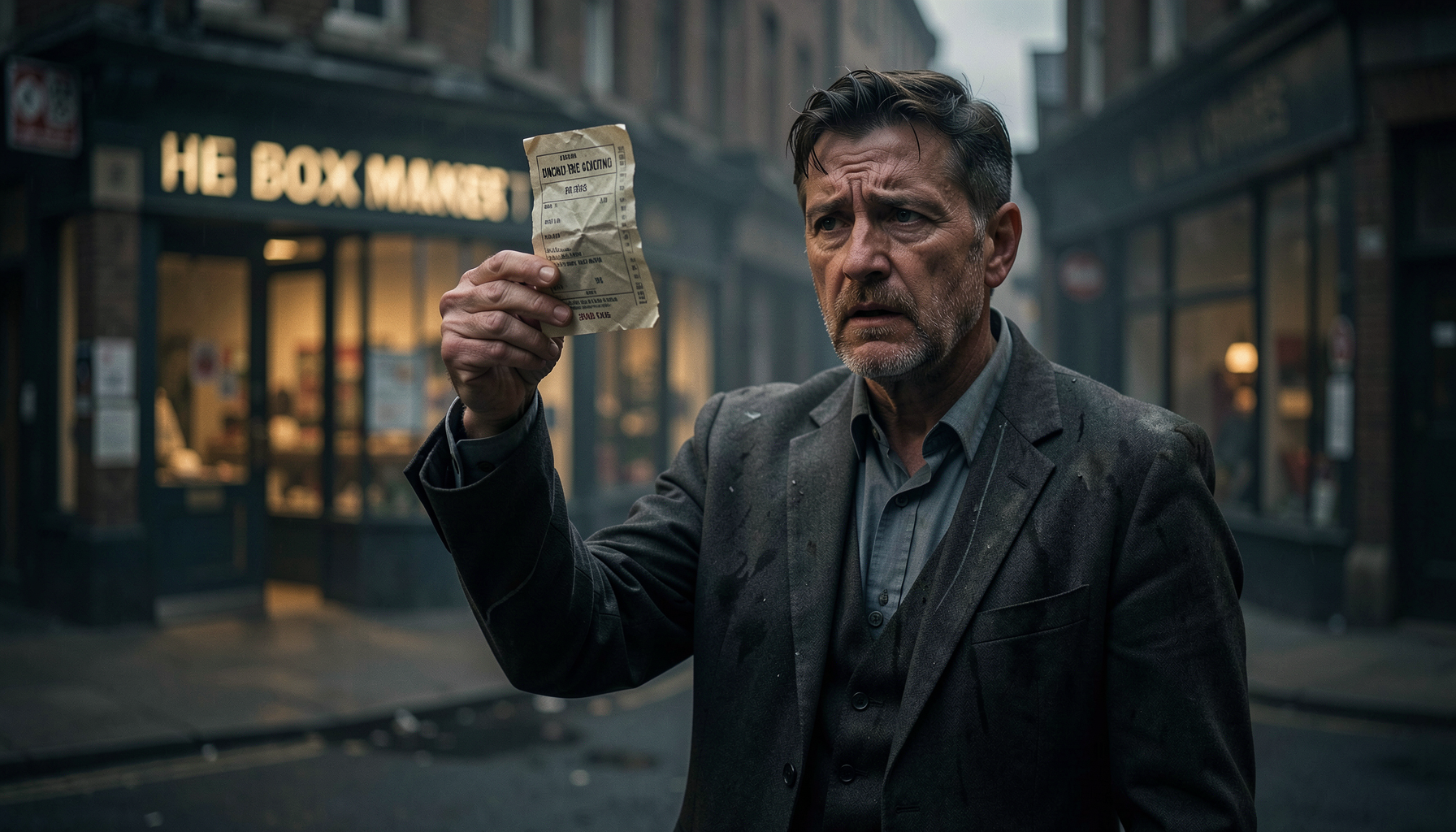
He grows up. And one day you’ll find him on a street corner, clutching that same crinkled slip, preaching about life after death. He’s seen it. He has proof. Where’s the proof? Right here—a piece of paper no earthly bank will touch, no bookie will honour, and no passer-by will believe.
The scientist, once armed with data and a smirk, has become the very thing he gently mocked: a street-corner evangelist with an unfalsifiable personal truth and a relic that only he can interpret. The heresy consumed the heretic. The logical trap, so elegantly set, was sprung by the universe on the one who thought he was setting it.
And the circle closes. The only thing that survives the fire is a bet, and the only thing that can’t be falsified is the joke.


Leave a Reply