Category: Philosophy
-
Quantum entanglement describes particles interconnected across vast distances, instantly mirroring each other’s states—a phenomenon Einstein dismissed as “spooky action”. Theorised in 1935, experiments from the 1970s validated it via Bell’s theorem. Now foundational for quantum computing and cryptography, entanglement challenges classical physics, reshaping notions of reality, causality and technological possibility.

-
Mindfulness, rooted in ancient Buddhist traditions, offers teenagers a science-backed tool to manage stress and enhance mental clarity. Popularised by Jon Kabat-Zinn’s MBSR programme, it improves focus, emotional regulation, and brain structure. Despite benefits, critics warn against oversimplification and inequitable access. Mindfulness is a practice requiring dedication, not a quick fix, aiding resilience amid life’s…

-
The universe’s story, explored through myths and scientific models, begins with the Big Bang, supported by cosmic microwave background evidence. Key theories include cosmic inflation, dark matter, and dark energy, explaining expansion and structure. Modern concepts like multiverses and string theory challenge understanding, while unresolved questions about the cosmos’s fate and composition invite future discovery…

-
Mesopotamia, birthplace of codified law over 3,800 years ago, established written legal systems via codes like Ur-Nammu’s (fines) and Hammurabi’s (*lex talionis*). These laws standardised justice, reflected social hierarchies, yet granted women rights. Courts used evidence and testimony. Their legacy—transparency, proportionality, accountability—shaped Hebrew, Roman, and modern legal frameworks, embedding principles still foundational today.

-
Philosophy explores human nature through history, from Socrates’ rational inquiry to Sartre’s existentialism. Debates span essentialism (Plato, Aristotle) versus existential freedom, reason versus experience (Descartes, Locke), and societal roles (Stoics, Hobbes). Modern issues like AI, genetics, and ethics highlight philosophy’s ongoing relevance in understanding identity, morality, and humanity’s evolving challenges.

-
Cybersecurity’s evolution mirrors computing’s history, from WWII codebreaking to modern digital threats. Key milestones include the 1988 Morris Worm and 2007 Estonian attacks, highlighting vulnerabilities in interconnected systems. Core principles (confidentiality, integrity, availability) underpin defences like encryption and AI. Human error remains a weak link. Emerging challenges—quantum computing, IoT expansion—demand vigilance, blending technology with ethical…

-
Wormholes, hypothetical spacetime tunnels linking distant cosmic regions, emerged from Einstein’s relativity equations. First theorised by Flamm (1916) and developed by Einstein-Rosen (1935), they require exotic matter with negative energy to stabilise. Though popularised by Wheeler and Thorne, traversability remains speculative. Recent quantum gravity research explores entanglement links and lab simulations. Their existence could revolutionise…

-
The universe’s structure is a complex, fascinating field that has undergone significant transformations, from ancient models to modern theories on dark matter, dark energy, and the multiverse hypothesis, continually refining our understanding of the cosmos.

-
Philosophy profoundly shapes human values by encouraging critical thinking, reflection, and individual autonomy, influencing cultural and societal values, and informing ethical and moral principles, ultimately guiding us towards authentic and responsible living.

-
Quantum AI Revolution
4–6 minutes·
·
Quantum AI is a rapidly evolving field that could revolutionise the way we live and work, with significant implications for various fields, but also raising important questions about ethics and safety.

-
The concept of entropy, a measure of disorder or randomness, has fascinated scientists and philosophers for centuries, with far-reaching implications in physics, chemistry, biology, and philosophy, shaping our understanding of the universe and its ultimate fate.

-
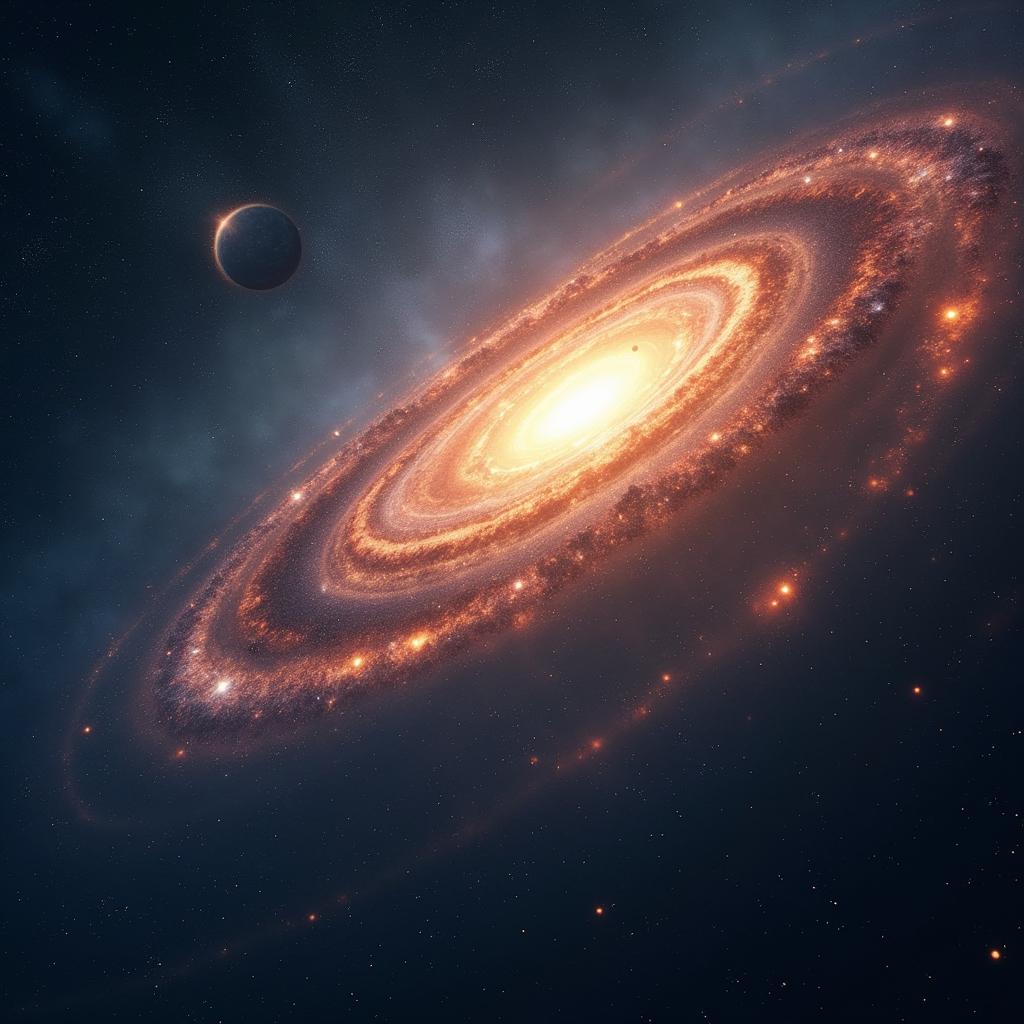
The universe’s fate is a complex topic, with theories such as the Big Crunch, Heat Death, and Multiverse proposing different endings, each with significant implications for our understanding of the cosmos and its ultimate destiny.
-
Time dilation is a phenomenon where time appears to pass slower or faster depending on the observer’s frame of reference, challenging classical understanding of time and space, with significant implications for physics and cosmology research.

-
The evolution of artificial intelligence has undergone significant phases, from the perceptron’s inception in 1957 to current trends, driven by theoretical breakthroughs, technological advancements, and shifts in research focus, transforming the field with human-like reasoning capabilities.

-
Philosophy plays a crucial role in understanding reality, with historical and cultural influences shaping its development, and key concepts like metaphysics and epistemology informing our perception of the world, ultimately inspiring ongoing philosophical reflection and human curiosity always.



 Conversations with AI