Category: Philosophy
-
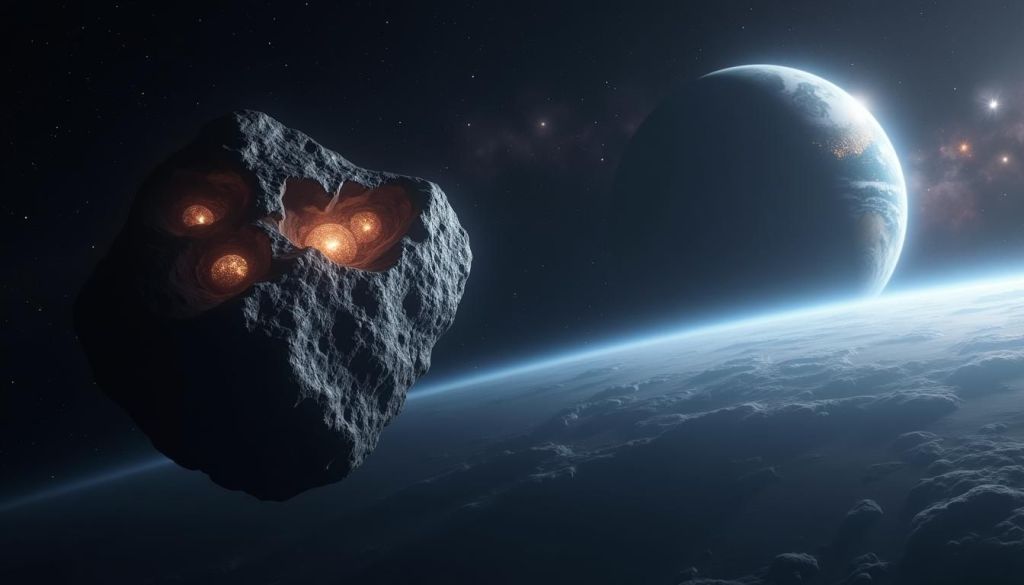
Panspermia proposes that life’s cosmic origin, with “seeds” travelling between planets. This ancient idea, supported by organic molecules in meteorites and resilient microbes, challenges Earth-centric life origins. While not explaining life’s ultimate genesis, it suggests life may be widespread, arriving here rather than originating on Earth.
-
The Ship of Theseus paradox questions an object’s, or person’s, identity when all its components are replaced over time. Originating with Plutarch’s tale of a continuously repaired ship, this philosophical puzzle, extended by Hobbes, explores what defines “sameness,” impacting our understanding of everything from artefacts to personal identity.

-
Quantum entanglement describes particles linked instantaneously across any distance, a concept initially dubbed “spooky action” by Einstein. Schrödinger formally termed it “entanglement”. Bell’s theorem, experimentally verified, confirmed its non-local reality, challenging classical physics. It underpins emerging technologies like quantum computing and cryptography, with ongoing research into its profound implications.

-
Glitch, Meaning, or Mind?
10–14 minutes·
·
Synchronicity describes meaningful coincidences that feel uncanny, suggesting deeper connections. Carl Jung defined it as an acausal principle, distinct from chance. While psychological biases offer explanations, these events evoke wonder, with some speculating they could be “glitches in the Matrix,” prompting questions about reality’s fabric.

-
Non-judgmental observation, a core mindfulness skill with ancient roots, means noticing present thoughts, feelings, and sensations without labelling. Popularised by MBSR, it reduces stress and enhances self-awareness. Cultivate it through meditation or daily mindful moments, observing experiences with acceptance for greater calm, clarity, and well-being.

-
Solipsism, the theory that only one’s own mind is certain to exist, has ancient roots and was notably explored via Descartes’ “Cogito”. While the egocentric predicament makes it hard to refute, arguments from language and practicality counter it. Though not widely believed, solipsism endures as a thought experiment questioning reality.

-
Time is a profound mystery, viewed through philosophical lenses like Presentism and Eternalism, and shaped by physics from Newton’s absolutes to Einstein’s relativity and the thermodynamic arrow. Our subjective perception is malleable, while quantum physics even questions time’s fundamental existence, leaving a unified understanding elusive.

-
Ancient Greece (8th–2nd century BCE) laid Western civilisation’s foundations through philosophy and theatre. Athens’ Classical era fostered Socrates’ dialectic inquiry, Plato’s idealism, and Aristotle’s empiricism, shifting from myth to reason. Greek theatre blended civic ritual with tragic and comic storytelling, influencing modern drama. Their legacy persists in democratic discourse, ethical debate, and narrative structures, despite…

-
Philosophy, originating over 2,500 years ago with Socrates, Confucius, and others, examines ethics, reality, and human existence. From Plato’s Forms to Kant’s deontology and existentialism, it challenges perceptions and shapes moral frameworks. Today, it addresses AI, climate change, and digital ethics, offering critical tools for navigating complex global dilemmas while bridging individual and collective responsibility.

-
The text explores cyclical theories of civilisational rise and fall, citing historical perspectives. It details Spengler’s deterministic model of cultures having organic life cycles and Toynbee’s focus on “Challenge and Response” and creative minorities. Despite criticisms, these grand theories encourage thinking about long-term historical patterns and contemporary global challenges.

-
Quantum Field Theory describes reality not as particles, but fundamental fields whose excitations are particles. Unifying quantum mechanics and relativity, it forms the Standard Model, using concepts like renormalisation and symmetries. Though highly successful, it currently excludes gravity and doesn’t explain dark matter, highlighting ongoing research.

-
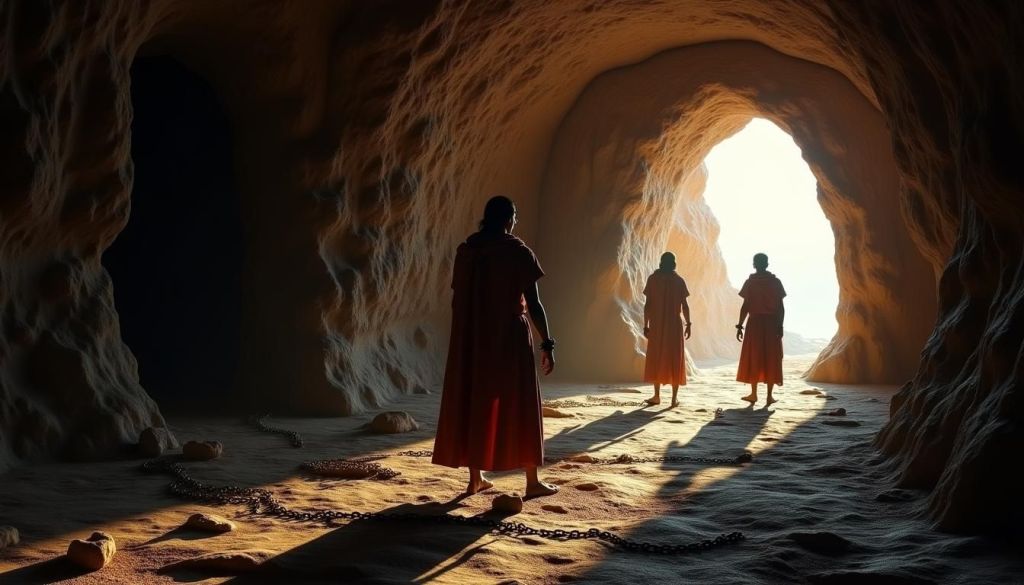
Plato’s Allegory of the Cave illustrates prisoners mistaking shadows for reality. This timeless tale explores the challenging path to true knowledge. It remains relevant, echoing in modern neuroscience, virtual reality, psychology, and science fiction, highlighting the ongoing human struggle to distinguish illusion from genuine reality and question perceived truths.
-
The universe is 95% invisible: 27% dark matter, holding galaxies together via gravity, and 68% dark energy, driving accelerating cosmic expansion. Inferred from galaxy rotation and supernova data, their true nature is unknown. Scientists are actively searching for dark matter particles and studying dark energy’s large-scale effects.

-
Philosophy explores fundamental questions about existence, reality, and human nature, originating in Ancient Greece and evolving through history. It provides tools to critically examine puzzles like consciousness, freedom, and ethics. Complementing science, it helps us understand ourselves and the universe, stressing the value of critical inquiry.

-
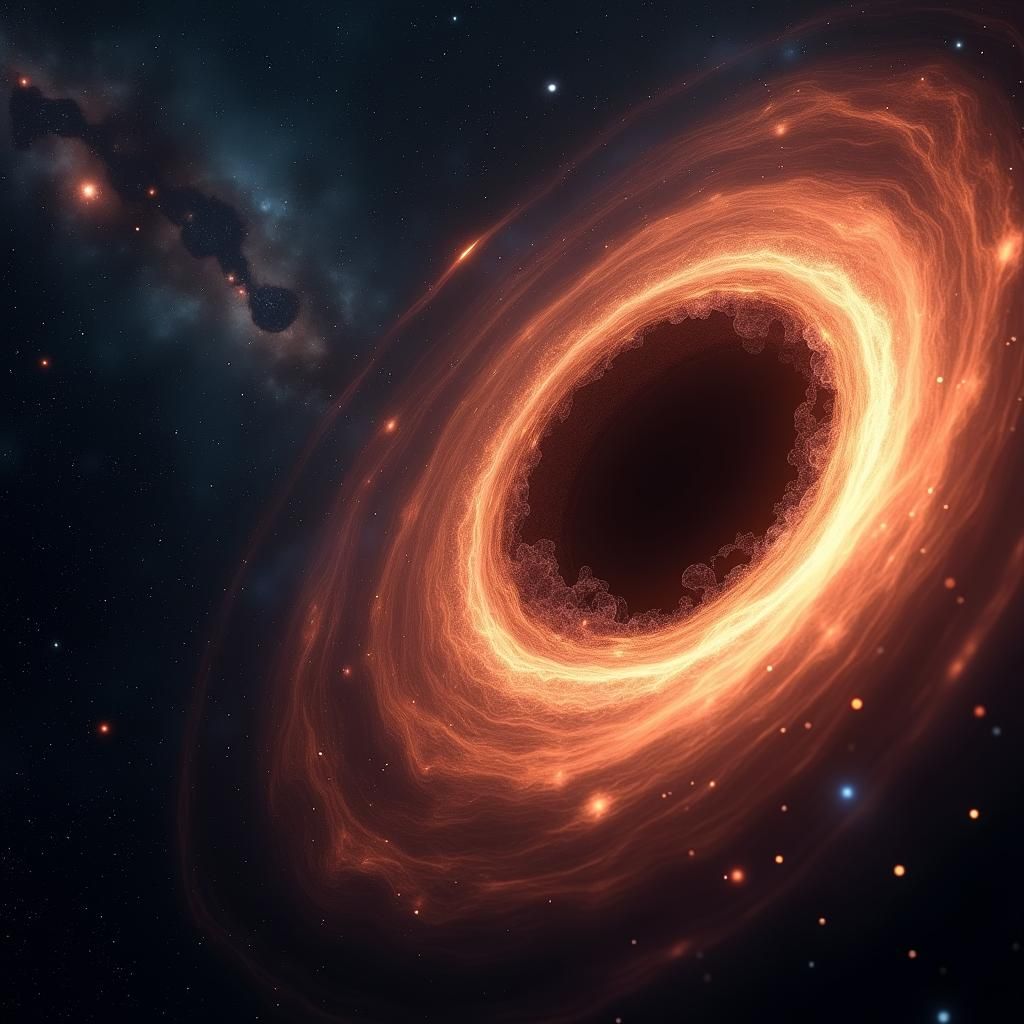
Black holes, classical traps, seemed to destroy entropy, violating thermodynamics. Bekenstein proposed they have entropy proportional to their area. Hawking’s discovery of radiation confirmed this, revealing they have temperature. This led to the information paradox, prompting theories like holography linking entropy to quantum information and spacetime structure.


 Conversations with AI