Category: Science and Technology
-
Quantum entanglement describes particles interconnected across vast distances, instantly mirroring each other’s states—a phenomenon Einstein dismissed as “spooky action”. Theorised in 1935, experiments from the 1970s validated it via Bell’s theorem. Now foundational for quantum computing and cryptography, entanglement challenges classical physics, reshaping notions of reality, causality and technological possibility.

-
Paleoclimatology studies Earth’s ancient climates using natural archives like ice cores, tree rings, and ocean sediments. Antarctic ice reveals 800,000-year-old air bubbles, showing past CO₂ fluctuations. Proxies and technology trace historical climate shifts, highlighting humanity’s unprecedented impact on modern warming. This field informs future climate predictions, stressing urgent action against human-driven change while learning from…

-
Climate change destabilises global food systems through extreme weather, rising temperatures, and ecological collapse. Crop yields for staples like wheat and rice decline with each degree of warming, while fisheries dwindle as oceans acidify. Vulnerable regions face heightened food insecurity, worsening inequality. Today’s teenagers must confront unprecedented food challenges, demanding systemic shifts in production, diets,…

-
Ancient marvels like the pyramids and Stonehenge spark debate between mainstream archaeology, which credits human ingenuity and labour, and conspiracy theories proposing lost civilisations or extraterrestrial intervention. While such narratives reflect fascination with mystery and hidden truths, they risk overshadowing ancient societies’ achievements, highlighting tensions between sceptical inquiry and cultural appreciation of historical innovation.

-
The universe’s story, explored through myths and scientific models, begins with the Big Bang, supported by cosmic microwave background evidence. Key theories include cosmic inflation, dark matter, and dark energy, explaining expansion and structure. Modern concepts like multiverses and string theory challenge understanding, while unresolved questions about the cosmos’s fate and composition invite future discovery…

-
Cryovolcanism, the eruption of water, methane, or ammonia instead of molten rock, occurs on icy celestial bodies like Saturn’s Enceladus and Pluto. Driven by tidal forces, these eruptions suggest subsurface oceans and geological activity, offering clues about life’s potential beyond Earth. Missions like Europa Clipper aim to explore these environments, reshaping planetary science and astrobiology.

-
Alien Quest: Bridging Ancient Curiosity and Cosmic Silence
6–8 minutes·
·
For millennia, humanity has pondered extraterrestrial life. From ancient philosophers to modern science, the search evolved into rigorous endeavours using radio telescopes, exoplanet analysis and biosignature detection. Discoveries of extremophiles and habitable exoplanets fuel optimism, yet the Fermi paradox questions cosmic silence. Ethical debates and technological advances continue this quest, reshaping our cosmic perspective and…

-
In the next millennium, celestial events like explosive stellar deaths, rare planetary alignments, and potential supernovae will transform our skies. Predictions rely on historical astronomy and modern models, from eclipses shifting with Earth’s rotation to interstellar comets offering cosmic insights. Risks include asteroid impacts and galactic collisions, challenging humanity to adapt and explore, blending science…

-
Philosophy explores human nature through history, from Socrates’ rational inquiry to Sartre’s existentialism. Debates span essentialism (Plato, Aristotle) versus existential freedom, reason versus experience (Descartes, Locke), and societal roles (Stoics, Hobbes). Modern issues like AI, genetics, and ethics highlight philosophy’s ongoing relevance in understanding identity, morality, and humanity’s evolving challenges.

-
Cybersecurity’s evolution mirrors computing’s history, from WWII codebreaking to modern digital threats. Key milestones include the 1988 Morris Worm and 2007 Estonian attacks, highlighting vulnerabilities in interconnected systems. Core principles (confidentiality, integrity, availability) underpin defences like encryption and AI. Human error remains a weak link. Emerging challenges—quantum computing, IoT expansion—demand vigilance, blending technology with ethical…

-
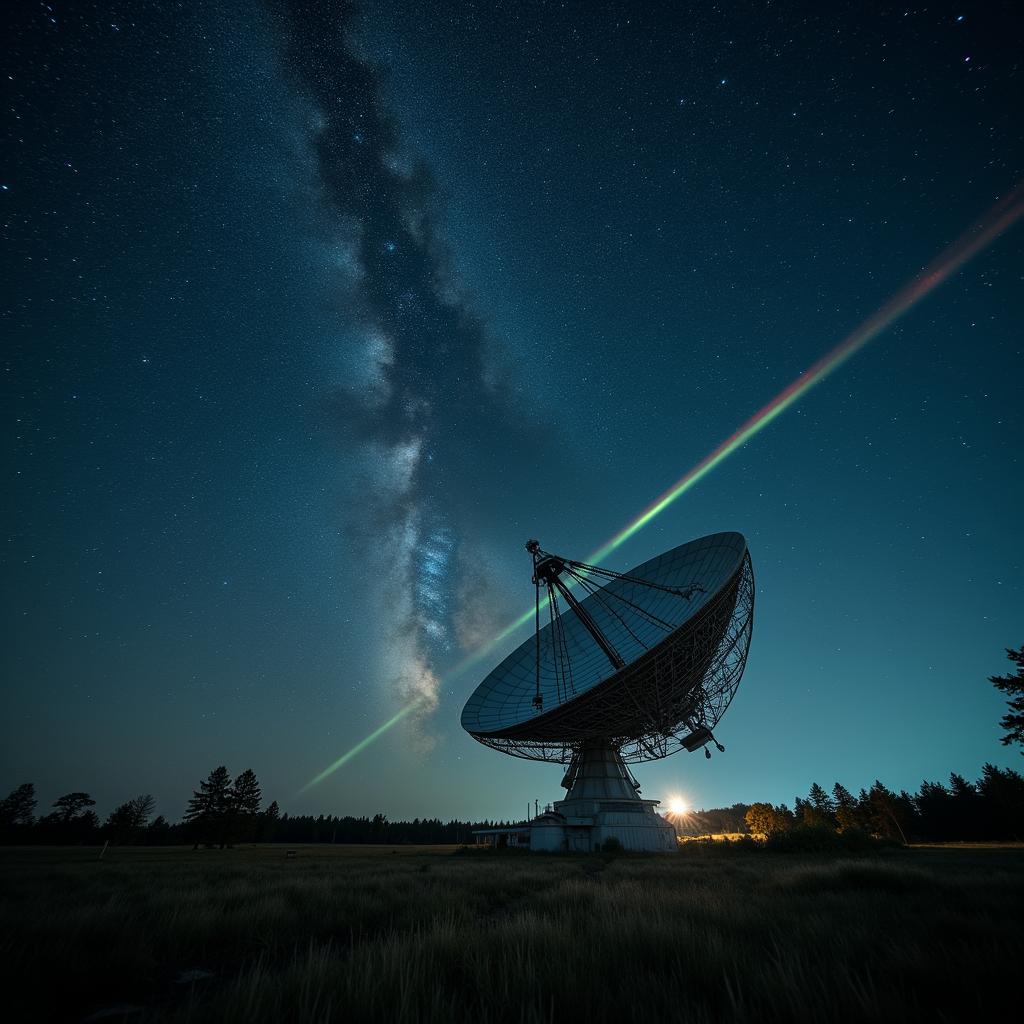
In 1977, astronomer Jerry Ehman detected a 72-second radio burst via Ohio’s Big Ear telescope. Dubbed the “Wow! Signal” for his annotated reaction, its intensity, narrow frequency (1420 MHz), and lack of re-detection sparked debate over extraterrestrial, natural, or human origins. Despite theories, its unresolved mystery fuels scientific and cultural fascination with cosmic life searches.
-
Wormholes, hypothetical spacetime tunnels linking distant cosmic regions, emerged from Einstein’s relativity equations. First theorised by Flamm (1916) and developed by Einstein-Rosen (1935), they require exotic matter with negative energy to stabilise. Though popularised by Wheeler and Thorne, traversability remains speculative. Recent quantum gravity research explores entanglement links and lab simulations. Their existence could revolutionise…

-
Seismology, the science of earthquakes, helps understand the earth’s internal structure and composition, with applications in earthquake hazard assessment, tsunami warning systems, and natural resource exploration, ultimately mitigating earthquake effects on society and the environment.

-
Technology has revolutionised education, transforming the way we learn and teach, with online resources and digital tools enhancing student engagement and academic achievement, despite concerns over equity and access.

-
The universe’s structure is a complex, fascinating field that has undergone significant transformations, from ancient models to modern theories on dark matter, dark energy, and the multiverse hypothesis, continually refining our understanding of the cosmos.


 Conversations with AI