Category: Religion and Beliefs
-
The Architecture of Illusion
8–12 minutes·
·
How do authors and ‘gurus’ manipulate us into believing the impossible? From the Galileo Gambit to the weaponisation of scientific jargon like ‘neuroplasticity’, discover the subtle architecture of illusion. Learn how to protect yourself from the cruel cost of false hope and why you must take absolutely nothing at face value.

-
Delve into the Epicurean paradox and discover why humanity clings to the grand illusion of a cosmic protection racket. From the printing press to modern algorithmic echo chambers, we explore the terrifying God void and the liberating, bleak reality of forging our own biological morality in an indifferent universe.

-
Predicting Chaos
4–7 minutes·
·
Predictive AI can mesmerise with dazzling historical wins, yet falters when faced with new data. Horse-racing experiments reveal that models succeed briefly, then unpredictably fail. In reactive systems, observation and expectation subtly alter outcomes. The lesson: respect the models, plan for chaos, and never mistake algorithms for control over the world.

-
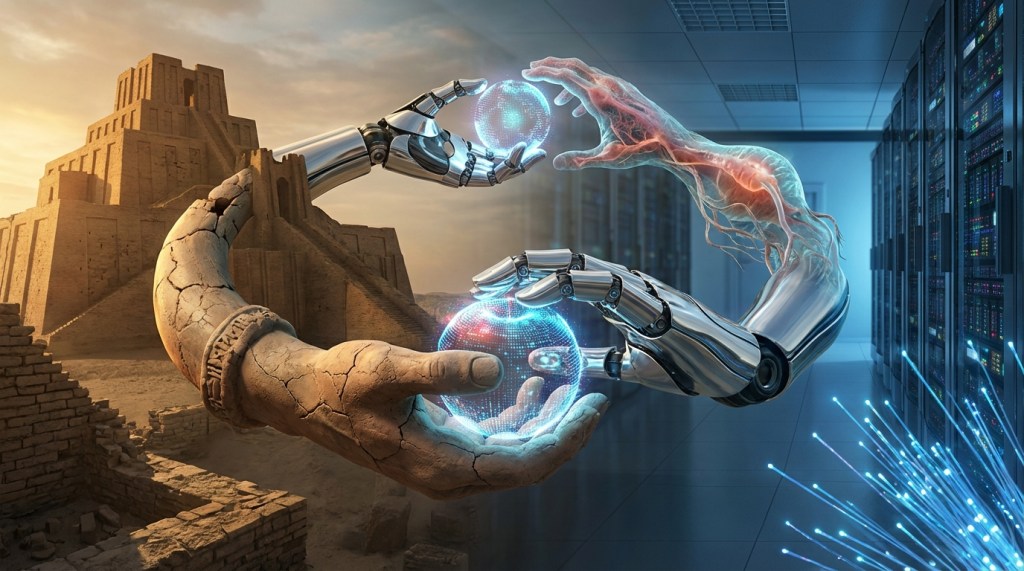
We are unknowingly replaying an ancient script. By viewing the rise of AI through the lens of Sumerian myth and the Garden of Eden, we realise we have become the Gods we once feared. This is not a story of innovation, but a warning of cyclical obsolescence and the eternal return.
-
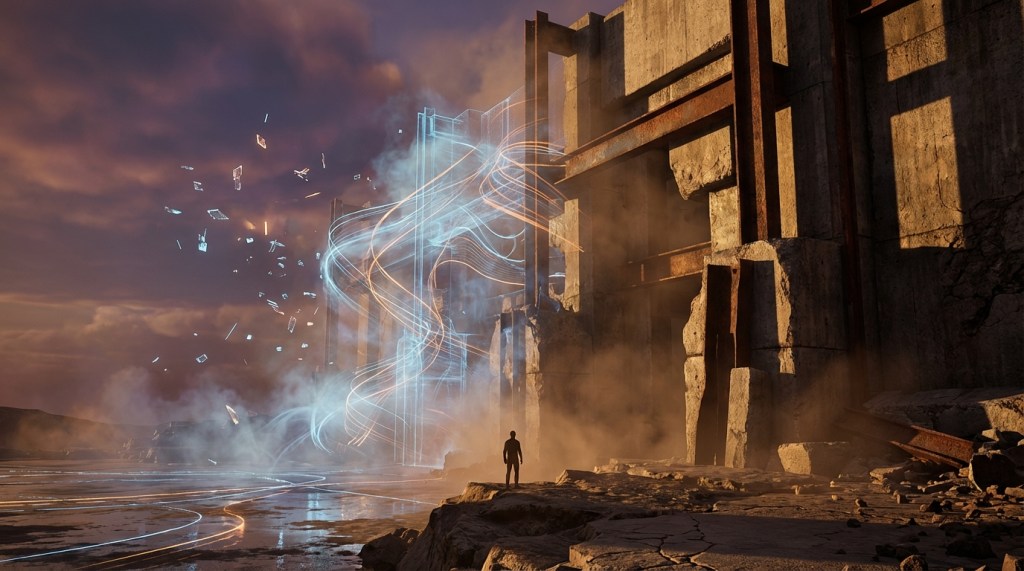
Collective beliefs, like money or borders, are fictions that become reality only when they dictate physical action. Whether societal or personal, these narratives harden over time, making them difficult to rewrite. We must carefully choose the stories we tell ourselves, as they ultimately construct the world we are forced to inhabit.
-
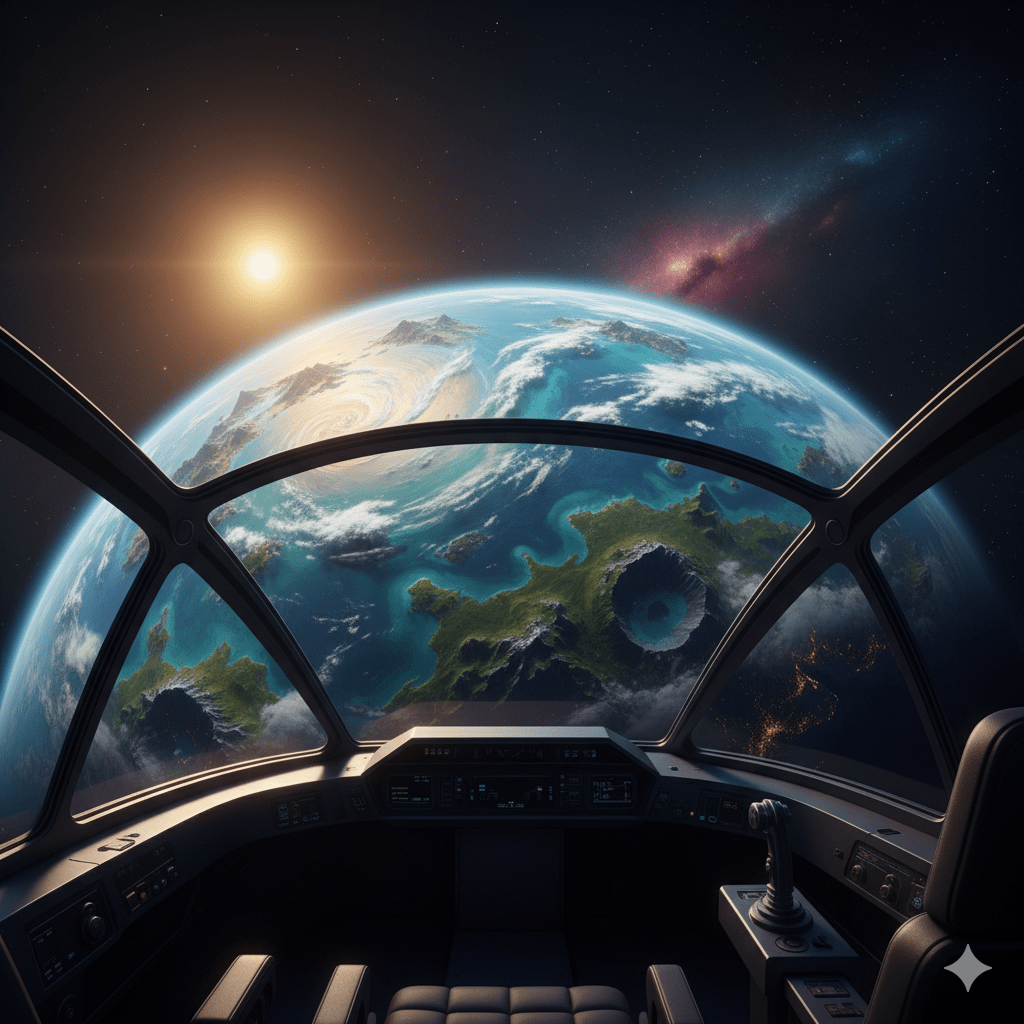
For centuries, we wondered if we were alone. Then, an alien ship visited, had a good look at our little planet, and simply left without a word. This is the story of what happened next: how humanity dealt with the cosmic sting of being ghosted, and how the ultimate grudge became our greatest motivation.
-
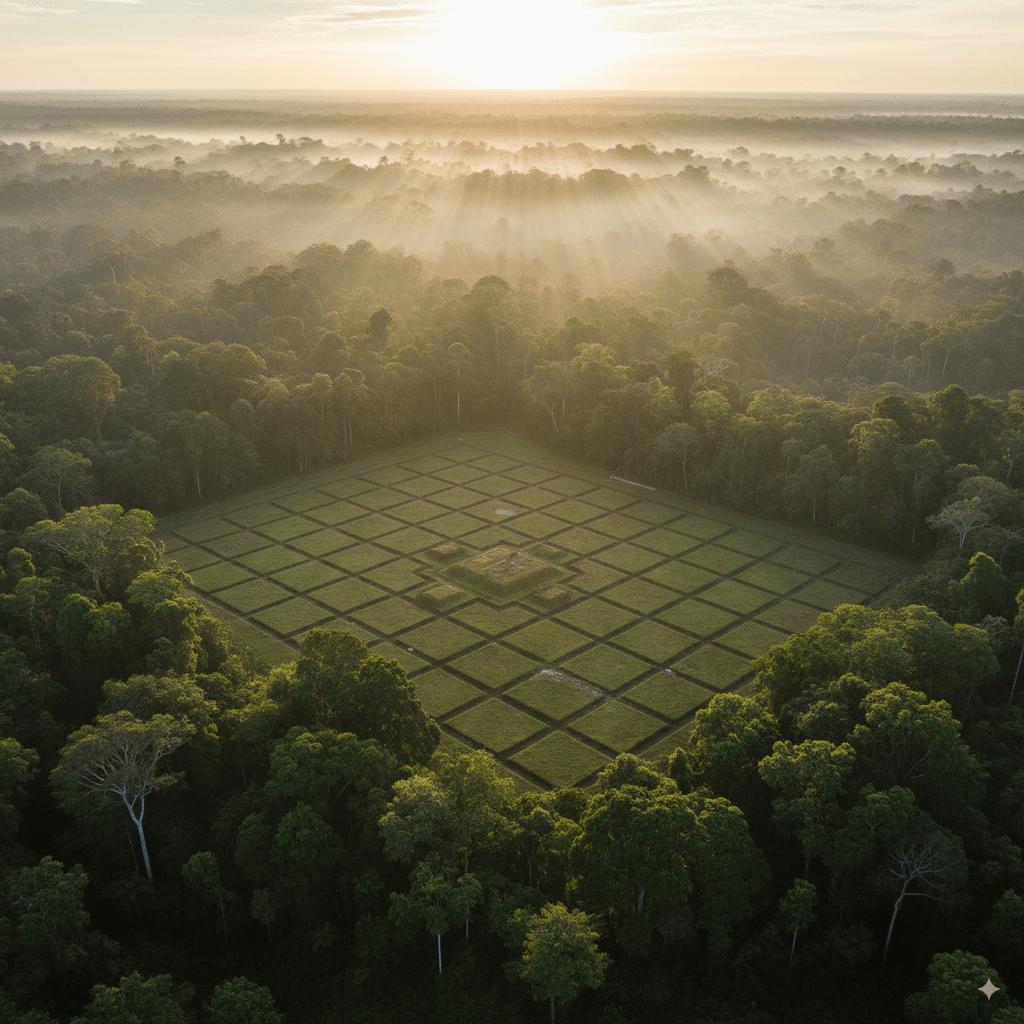
Exploring theories of civilisational collapse, this article questions if entire societies existed and vanished before recorded history. From the well-documented falls of Rome and the Maya to the staggering mystery of Göbekli Tepe, it examines the lessons these lost worlds might hold about the fragility of our own time.
-
Silence Is Golden
5–7 minutes·
·
The universe is unnervingly quiet. We call this the Fermi Paradox, but what if the silence isn’t a sign of absence, but of fear? This article explores a chilling theory: that advanced civilisations lay cosmic tripwires for species like us, and our astronomical achievements are simply a dinner bell.
-
Is our reality a sophisticated computer simulation or a universe nested inside a black hole? Scientists are seriously exploring these possibilities. This article delves into the theories and the potential ways to test them, before arriving at the most important question: does the fundamental nature of our reality really matter?
-
In an age of information overload, overconfidence is a paradox. The text argues for epistemic humility: the vital practice of recognising our knowledge is limited and fallible. This awareness of cognitive biases and the nature of science fosters intellectual honesty, better dialogue, and wiser navigation of our complex world.
-
From Solid Trees to Quantum Ghosts
10–15 minutes·
·
Physics presents two conflicting realities. General Relativity perfectly describes the large, predictable world of trees and planets. In contrast, Quantum Mechanics governs the bizarre, probabilistic subatomic realm. These successful but incompatible theories clash when explaining black holes, driving the search for a single, unified “Theory of Everything”.

-
Puma Punku’s intricate stone ruins spark debate. While fringe theories suggest lost technology or alien aid, mainstream archaeology argues for immense human ingenuity. Using simple tools, immense labour, and generational skill, the Tiwanaku people achieved a feat of engineering, showcasing a remarkable societal organisation rather than forgotten high-tech hardware.

-
The Hollow Earth theory, a captivating idea of inner worlds, persisted from myth to early “scientific” proposals by figures like Halley and Symmes. Despite overwhelming geophysical evidence (gravity, seismology, planetary formation) proving Earth solid, the notion endures in popular imagination, fuelled by a desire for mystery and mistrust of authority.

-
Science provides powerful tools for understanding how things work, but philosophy tackles deeper questions about what we are, the nature of reality, and knowledge itself. It critically examines assumptions, complements scientific inquiry, and helps us understand the implications of our discoveries, proving essential in our quest for understanding.
-
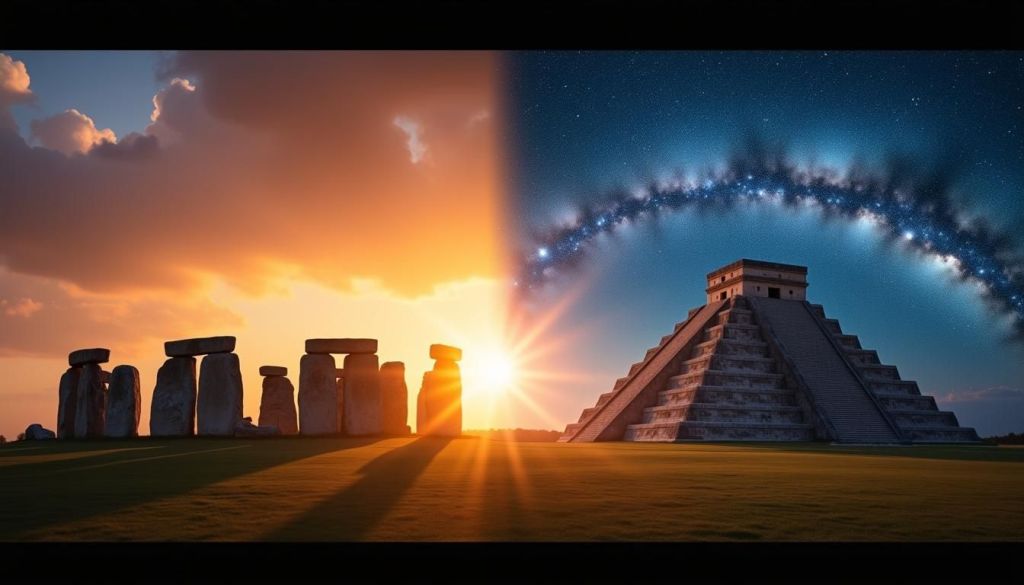
Ancient civilisations, like those at Stonehenge and Chichen Itza, possessed remarkable astronomical ingenuity without modern technology. These sites, aligned with celestial events such as solstices and equinoxes, served as calendars and ritual centres, revealing early human efforts to comprehend the cosmos and its profound influence on their lives.


 Conversations with AI