Category: Science and Technology
-
Empty Skies to Dark Energy
4–6 minutes·
·
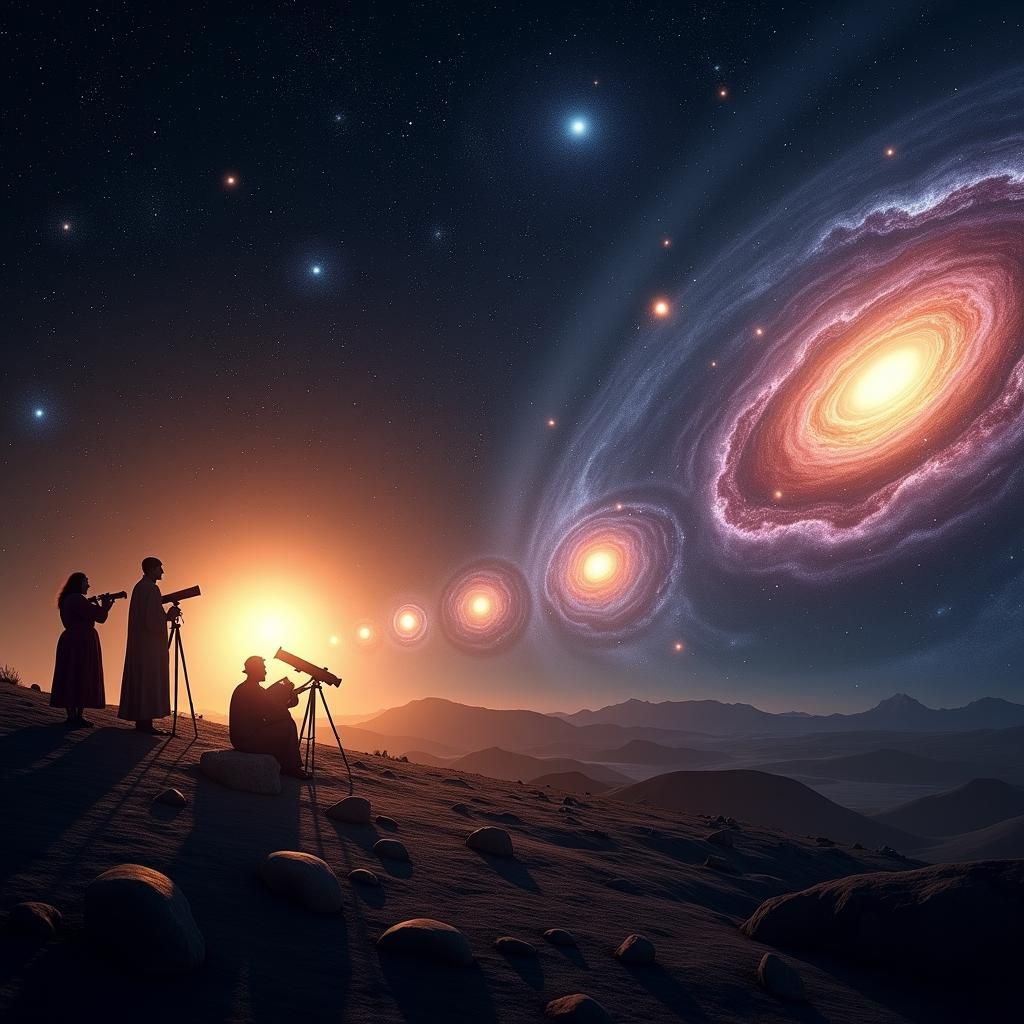
Humans have long sought to explain the cosmos, evolving from ancient geocentric models to modern science. The 20th century revolutionised cosmology with relativity, the expanding universe, and Big Bang theory, later challenged by steady state models. Dark energy, dark matter, and cosmic inflation now dominate research, alongside multiverse hypotheses. Despite progress, fundamental questions about the…
-
Planetary science, rooted in ancient astronomy, explores celestial formation and evolution. From Babylonian observations to modern missions like Voyager and James Webb, it advances understanding of Earth’s climate, guides space exploration and seeks extraterrestrial life. Debates on ethics and funding persist, while future projects target Moon bases, Mars and icy moons. The field underscores Earth’s…

-
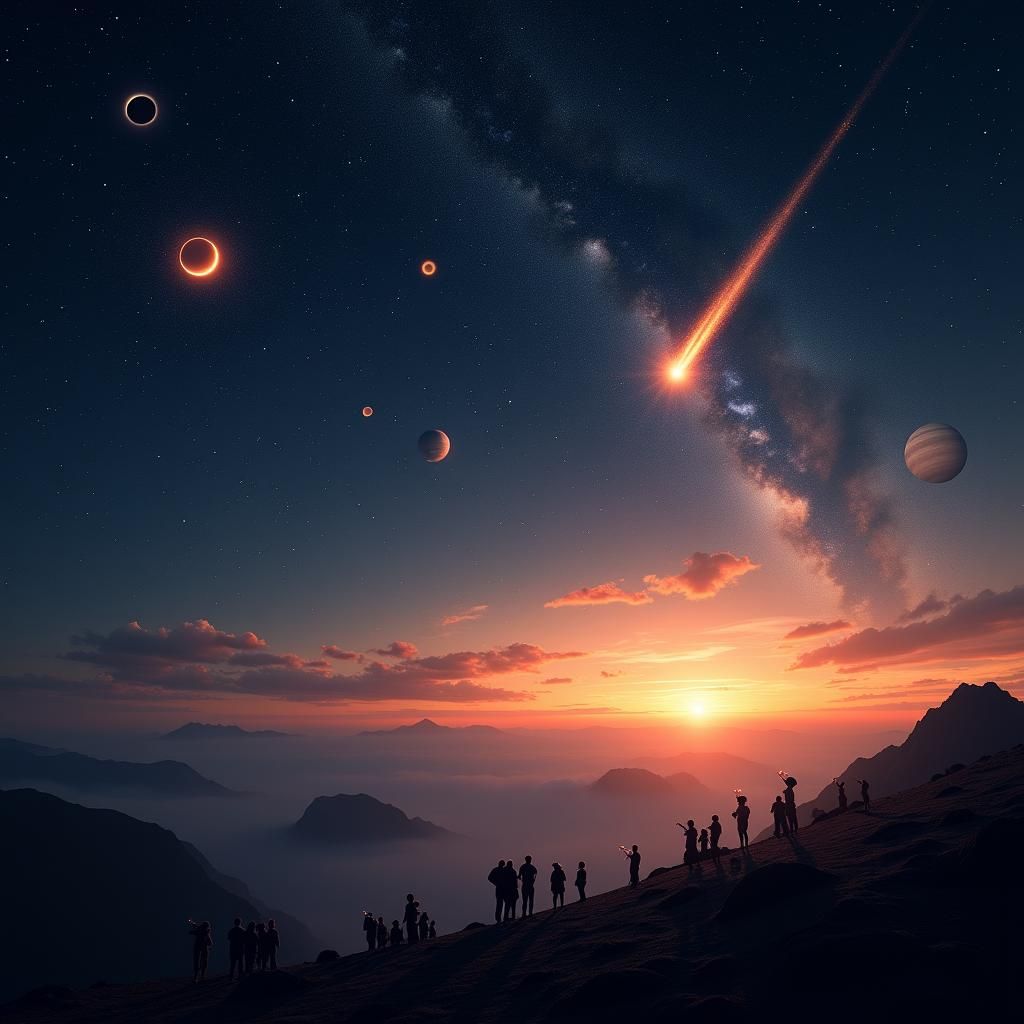
The next decade will feature extraordinary celestial events, including the 2024 and 2027 total solar eclipses, asteroid Apophis’s 2029 close Earth flyby, a rare five-planet alignment in 2030, and Comet Tsuchinshan-ATLAS in 2024. These events offer scientific insights and public wonder, though light pollution challenges visibility. Global audiences can engage via technology, fostering shared awe…
-
Humanity’s enduring quest to discover extraterrestrial life blends philosophy, science, and technology. From Giordano Bruno’s heretical ideas to the Drake Equation and modern missions to Mars, Europa, and exoplanets, the search explores life’s potential in extreme environments and distant worlds. Despite the Fermi Paradox, this pursuit deepens our cosmic understanding and underscores Earth’s uniqueness.

-
Philosophy examines reality and knowledge through critical inquiry, rooted in ancient Greek traditions. It addresses core questions of existence and perception, intersecting with science and ethics. From Descartes’ scepticism to modern debates on AI and quantum physics, it challenges assumptions, fosters critical thinking, and navigates evolving truths, remaining essential in understanding existence’s complexities.

-
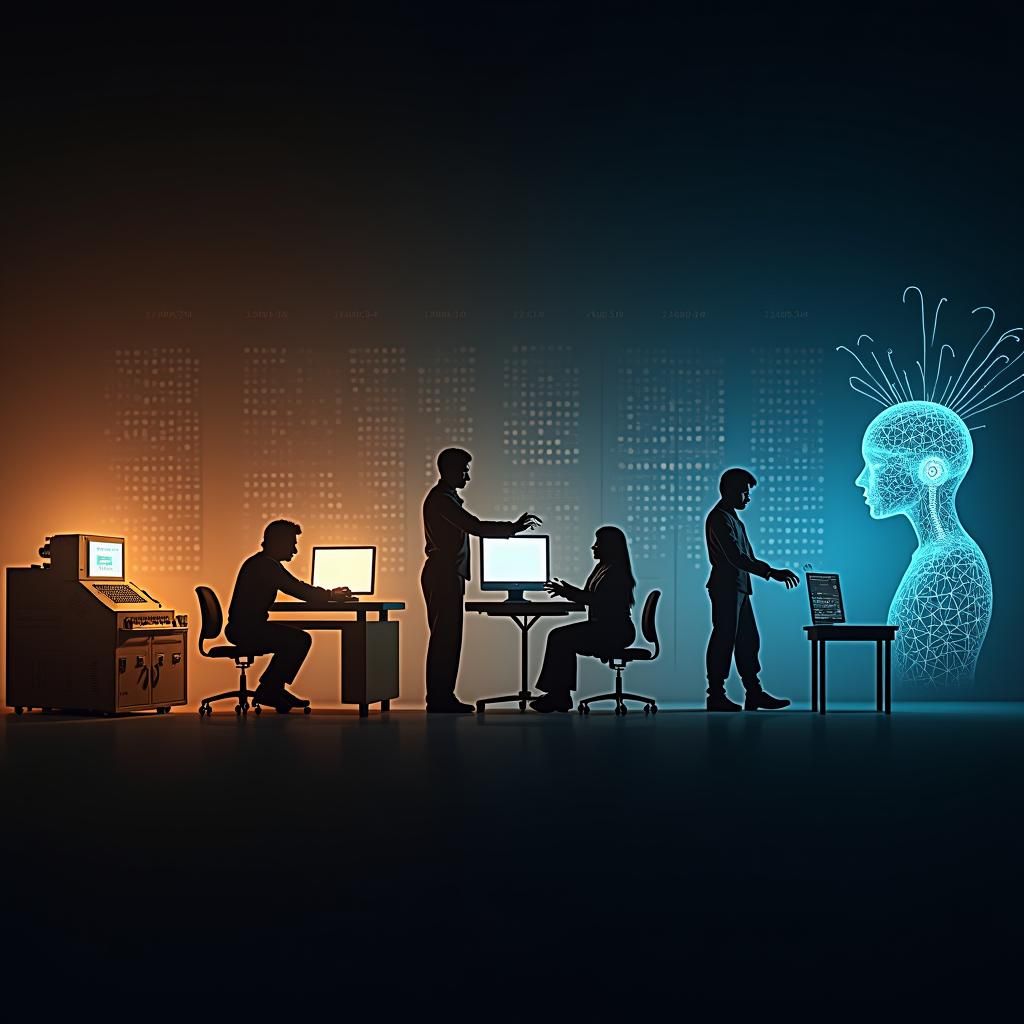
Human-Computer Interaction (HCI) has evolved from 1940s punch-card systems to intuitive voice assistants and gesture controls. Milestones include Douglas Engelbart’s 1968 interface innovations, 1980s graphical interfaces, and modern touchscreens. HCI prioritises user-centred design, blending human intuition with machine functionality. Advances like AI and brain-computer interfaces raise ethical questions, urging balance between technological empowerment and human…
-
The conversation explores time travel’s transition from myth to theoretical physics, rooted in Einstein’s relativity, which reimagined time as flexible. Mathematical models like wormholes, cosmic strings, and closed timelike curves suggest potential mechanisms, though paradoxes and practical hurdles persist. Debates over causality, quantum interpretations, and ethical implications highlight unresolved challenges. While tangible time machines remain…

-
Materials science underpins modern innovations, from smartphones to biodegradable plastics, by studying atomic structures and properties. Historic breakthroughs like bronze and steel paved the way for today’s composites, nanomaterials, and biomaterials. Addressing sustainability and global challenges, researchers develop eco-friendly alternatives and smart materials. Future advancements aim for atomic-level precision, revolutionising energy, medicine, and technology.
-
From Steam to AI: Navigating Job Shifts and Future Opportunities
5–7 minutes·
·
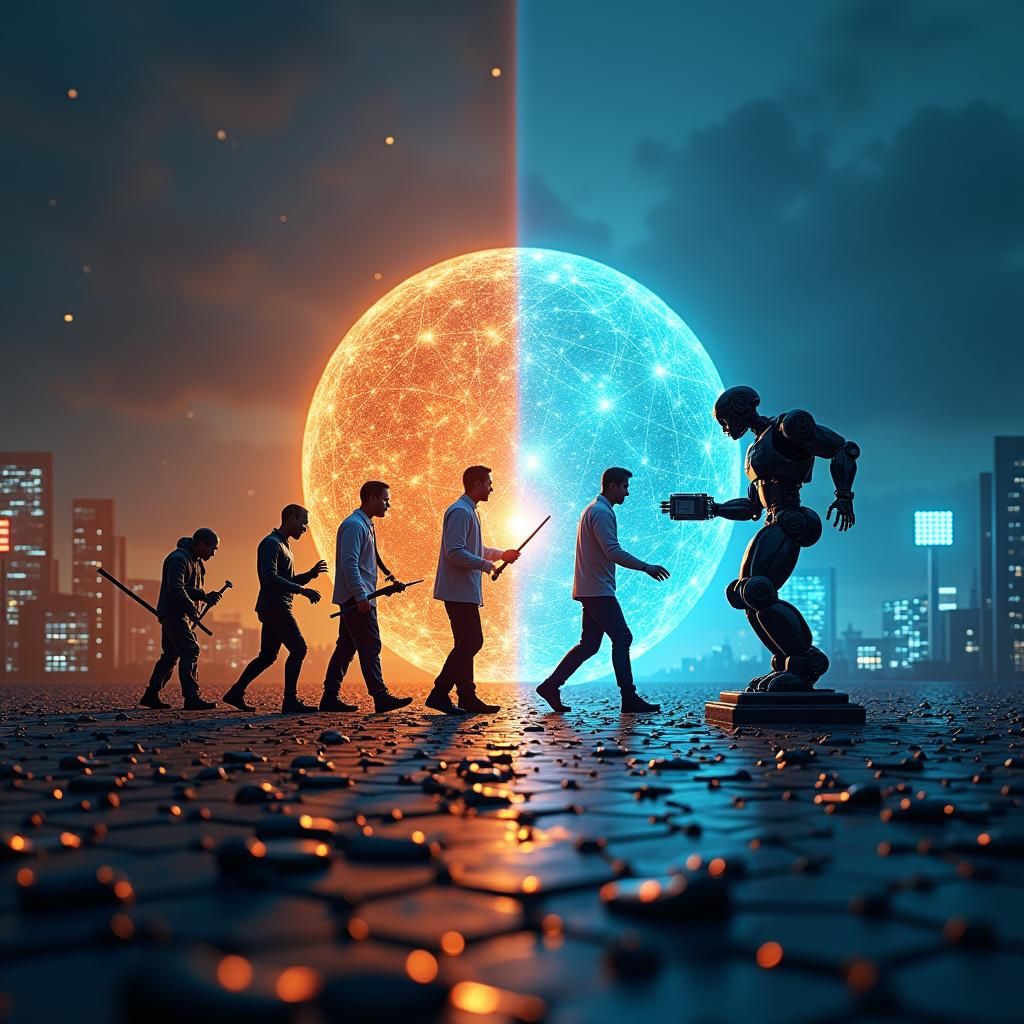
Technology’s impact on employment, from the Industrial Revolution to today’s AI-driven shifts, involves both job displacement and creation. Automation threatens roles but spurs new industries like renewable energy and digital careers. Ethical concerns, such as biased algorithms, highlight the need for responsible innovation. Adaptability, tech literacy, and human-centric skills are crucial for future careers, balancing…

-
In the digital age, pervasive tracking fuels government surveillance concerns, blending security and intrusion. Historical programmes like COINTELPRO and Snowden’s NSA leaks reveal mass monitoring, while facial recognition and tech partnerships amplify distrust. Conspiracy theories, driven by secrecy and pop culture, merge documented realities with myths. Experts debate privacy erosion versus safety, questioning transparency’s role…
-
Exploring the universe’s origins and fate, humanity has evolved from ancient creation myths to modern theories like the Big Bang, supported by Hubble’s expansion discovery and cosmic microwave evidence. Competing models—Steady State, inflationary expansion, multiverses, and cyclical universes—address cosmic beginnings, while dark energy’s role fuels debates on endings: Heat Death, Big Crunch, or Rip. Ongoing…

-
Biophysics combines biology and physics to decode life’s molecular mechanisms, from protein folding to cellular processes. Emerging in the mid-20th century, it builds on historical breakthroughs like DNA’s structure and Hodgkin-Huxley’s nerve models. Applications include MRI, drug design, and synthetic biology, while controversies surround CRISPR and AI-driven research. Future challenges involve quantum biology and ethical…
-
The cosmic microwave background (CMB), ancient light emitted 380,000 years after the Big Bang, was accidentally detected in 1964. Its temperature fluctuations confirm the universe’s composition (5% ordinary matter, 27% dark matter, 68% dark energy) and cosmic evolution. Missions like COBE, WMAP, and Planck mapped its structure, while ongoing research probes anomalies, inflation, and future…

-
The visible universe constitutes less than 5% of its mass-energy, with dark matter—undetectable yet gravitationally vital—comprising most. Proposed by Zwicky in the 1930s and confirmed by Rubin in the 1970s, dark matter’s nature remains elusive. Leading candidates include WIMPs and axions. Experiments like XENON1T and LHC aim to detect it, potentially revolutionising physics and cosmic…

-
Natural Language Processing (NLP) evolved from 1950s rule-based systems like ELIZA to modern neural networks and transformers (e.g., GPT-3), enabling real-time translation, sentiment analysis, and virtual assistants. While revolutionising communication, education, and healthcare, NLP faces ethical challenges like bias and misinformation. Future advancements may integrate multimodal models and quantum computing, questioning machines’ true linguistic understanding.


 Conversations with AI