Category: Neuroscience
-
The Architecture of Illusion
8–12 minutes·
·
How do authors and ‘gurus’ manipulate us into believing the impossible? From the Galileo Gambit to the weaponisation of scientific jargon like ‘neuroplasticity’, discover the subtle architecture of illusion. Learn how to protect yourself from the cruel cost of false hope and why you must take absolutely nothing at face value.

-
Neuroplasticity is the brain’s remarkable lifelong capacity to reorganise its structure and function. This ability, disproving older theories of a fixed brain, allows us to learn new skills, adapt, and recover from injury. Lifestyle factors like learning, exercise, and mindset can enhance it, offering transformative potential for personal growth.

-
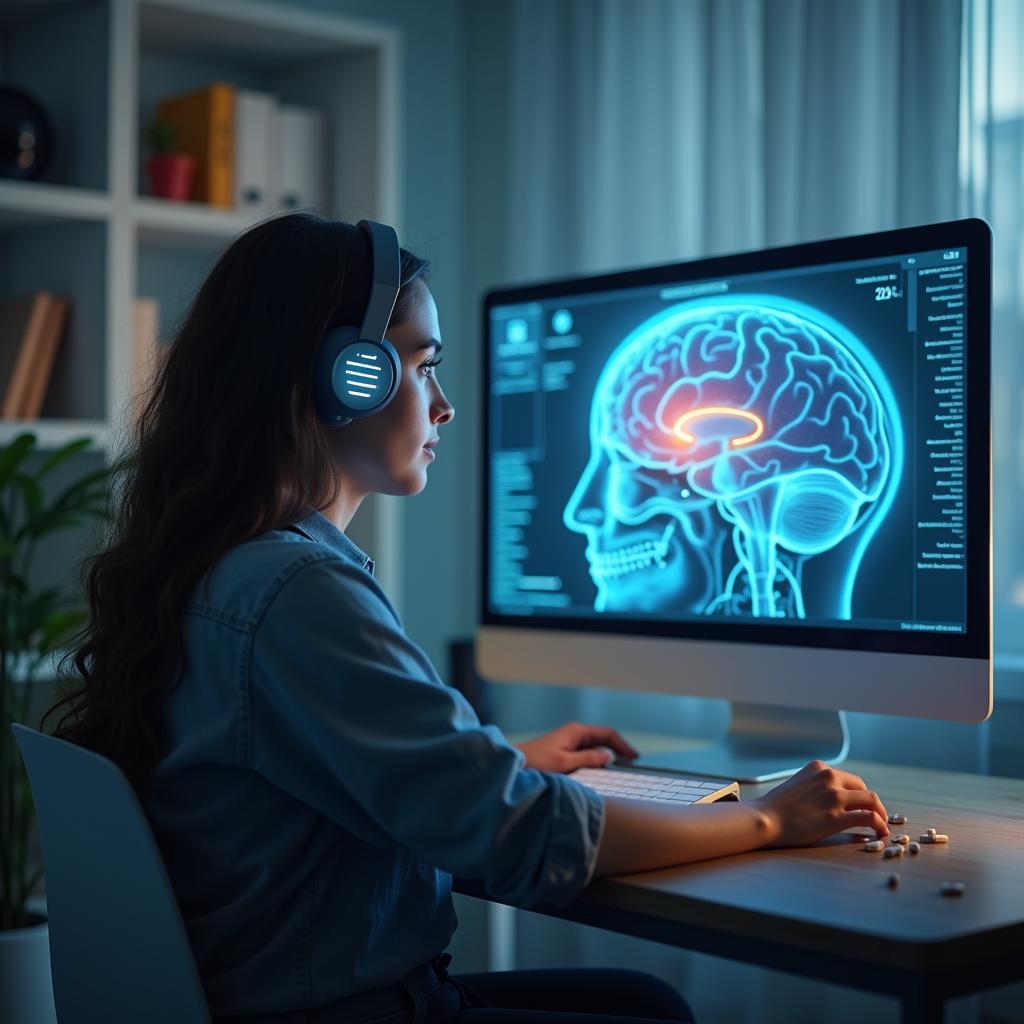
Neurofeedback is a technique allowing individuals to control brain activity, with applications in psychology, education, and healthcare, showing promise in treating ADHD, anxiety, and depression, despite some limitations and controversies surrounding its use.
-
Merging Minds and Machines
3–4 minutes·
·
The conversation discusses Brain-Computer Interfaces (BCIs), merging mind and machine, highlighting their historical development since the 1970s, current applications, and future potential. It addresses the types (invasive vs. non-invasive), challenges, and ethical considerations. BCIs promise revolutionary changes but raise important societal issues regarding privacy and identity.

-
The conversation explores the allure and science of meditation, tracing its roots from Buddhism to modern cognitive science. It discusses neuroimaging findings, mindfulness benefits, and emotional regulation. The potential for neuroplasticity and future research in cognitive science and meditation highlights the complexity and significance of understanding mental tranquility.

-
The conversation discusses predictive coding, a theory suggesting the brain functions as a prediction machine, decoding sensory information. Originating in the late 1980s, it has implications in neuroscience and artificial intelligence. While controversial, predictive coding may transform understanding and treatment of mental disorders, as it intertwines with advancements in AI.


 Conversations with AI