Category: Space Exploration and Astronomy
-
Astrophysics explores the universe’s physical nature, evolving from ancient astronomy to modern science using physics, observation, and computation. Key advancements include spectroscopy, relativity, and quantum mechanics. Telescopes across the spectrum, gravitational wave detectors and simulations are vital tools. Astrophysics studies exoplanets, cosmology, and dark matter, yielding technological and societal benefits, and inspiring scientific curiosity.

-
Humanity has long questioned our cosmic solitude, prompting the search for extraterrestrial intelligence (SETI) and life (astrobiology). Using radio telescopes and exoplanet atmosphere analysis, scientists explore for alien signals or biosignatures. The Drake Equation and Fermi Paradox frame this quest, highlighting the implications of both discovery and continued silence for our understanding of life in…

-
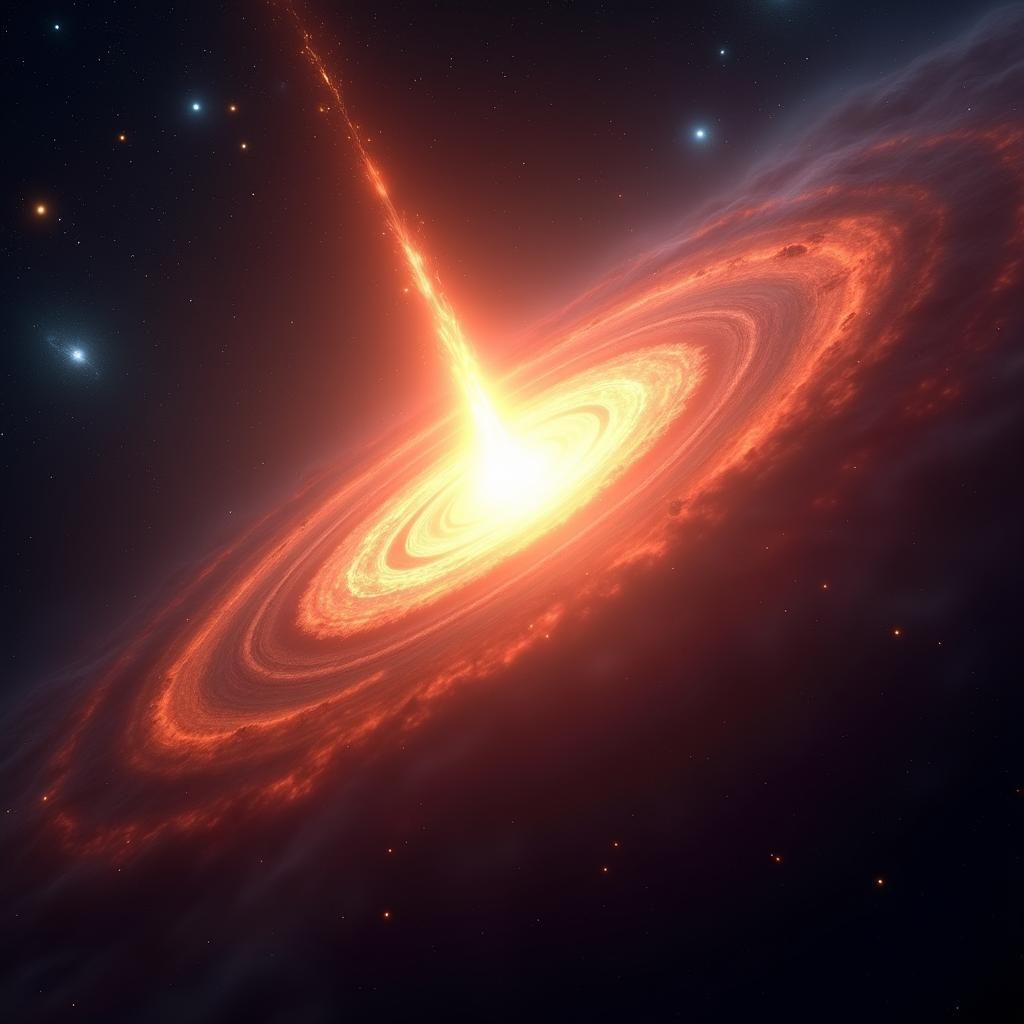
Fast Radio Bursts (FRBs) are millisecond-long, powerful radio signals from distant galaxies, first accidentally detected in 2007. Initially enigmatic, the discovery of repeating FRBs aided localisation to dwarf galaxies. Magnetars, neutron stars with strong magnetic fields, are leading source candidates, supported by a galactic magnetar burst. FRBs probe the cosmos and challenge physics, but mysteries…
-
Empty Skies to Dark Energy
4–6 minutes·
·
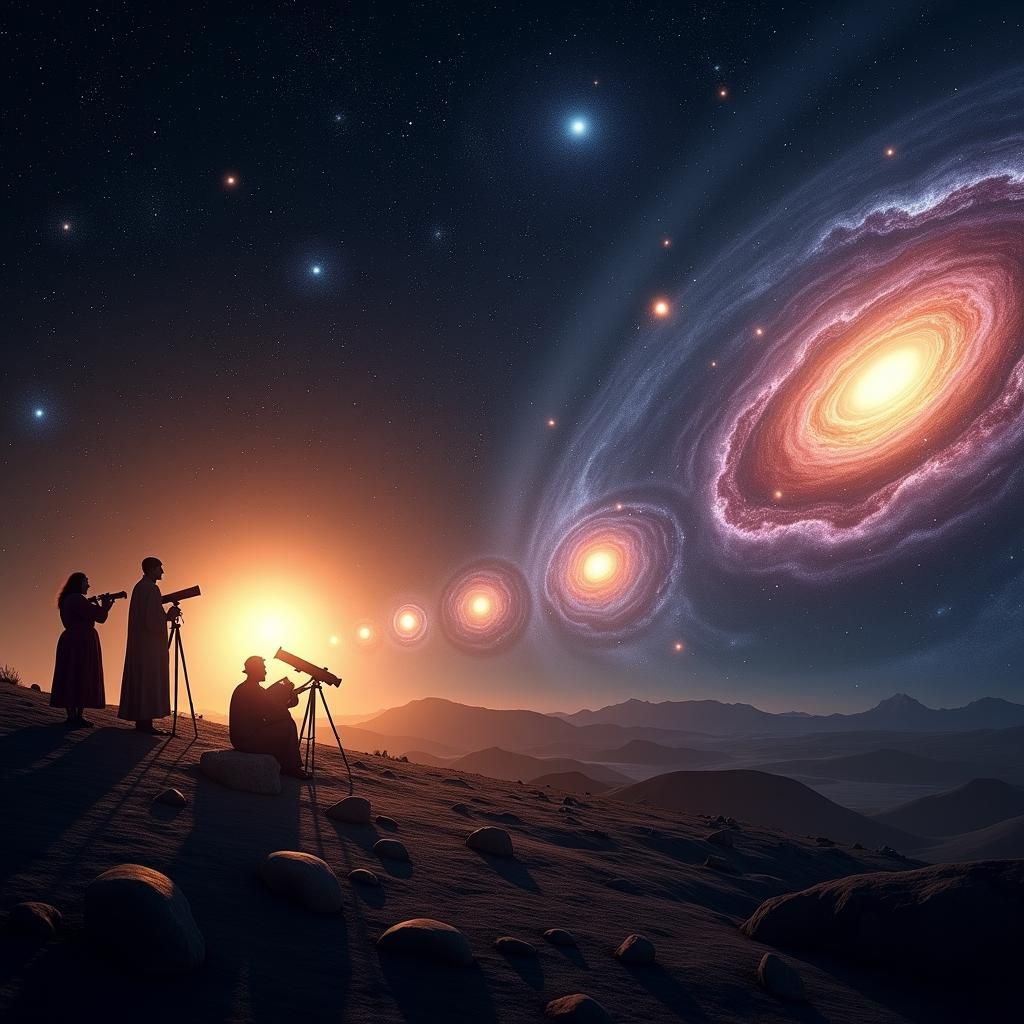
Humans have long sought to explain the cosmos, evolving from ancient geocentric models to modern science. The 20th century revolutionised cosmology with relativity, the expanding universe, and Big Bang theory, later challenged by steady state models. Dark energy, dark matter, and cosmic inflation now dominate research, alongside multiverse hypotheses. Despite progress, fundamental questions about the…
-
Planetary science, rooted in ancient astronomy, explores celestial formation and evolution. From Babylonian observations to modern missions like Voyager and James Webb, it advances understanding of Earth’s climate, guides space exploration and seeks extraterrestrial life. Debates on ethics and funding persist, while future projects target Moon bases, Mars and icy moons. The field underscores Earth’s…

-
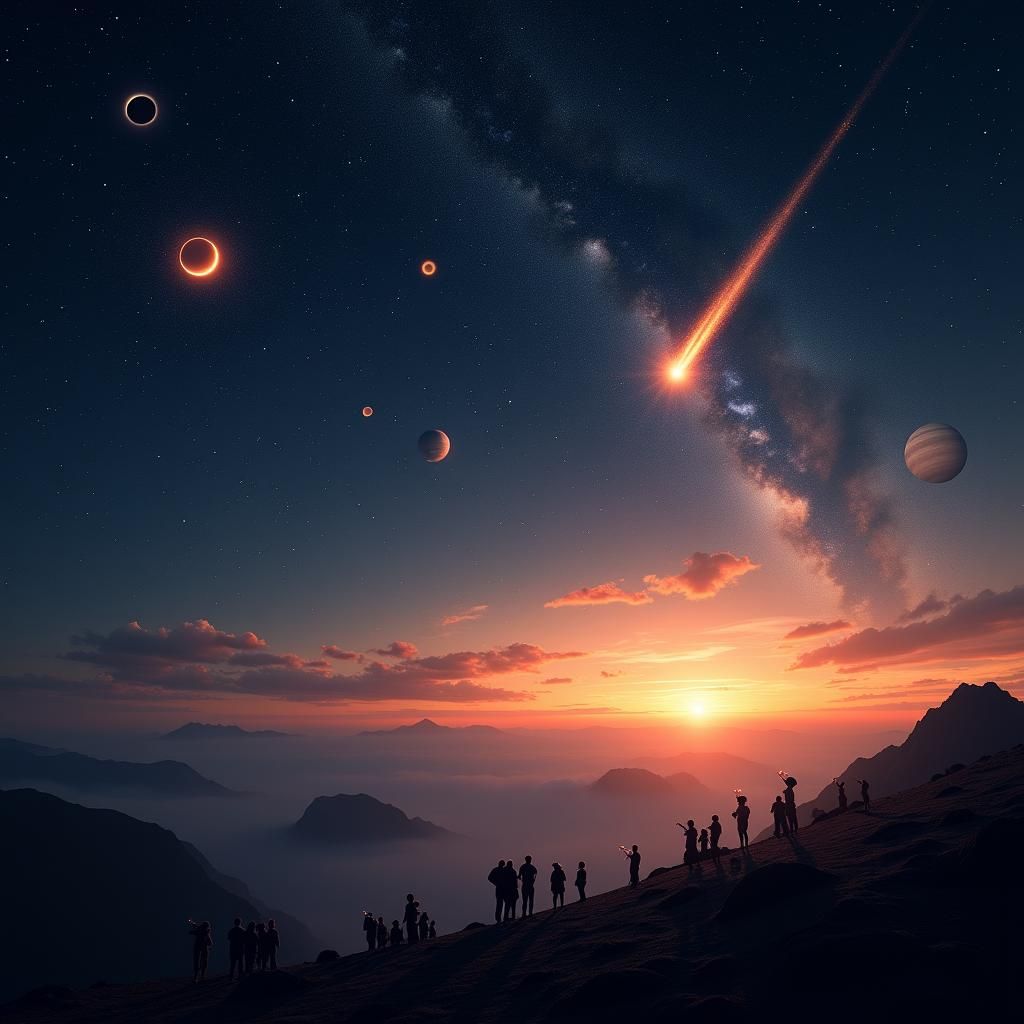
The next decade will feature extraordinary celestial events, including the 2024 and 2027 total solar eclipses, asteroid Apophis’s 2029 close Earth flyby, a rare five-planet alignment in 2030, and Comet Tsuchinshan-ATLAS in 2024. These events offer scientific insights and public wonder, though light pollution challenges visibility. Global audiences can engage via technology, fostering shared awe…
-
Humanity’s enduring quest to discover extraterrestrial life blends philosophy, science, and technology. From Giordano Bruno’s heretical ideas to the Drake Equation and modern missions to Mars, Europa, and exoplanets, the search explores life’s potential in extreme environments and distant worlds. Despite the Fermi Paradox, this pursuit deepens our cosmic understanding and underscores Earth’s uniqueness.

-
Exploring the universe’s origins and fate, humanity has evolved from ancient creation myths to modern theories like the Big Bang, supported by Hubble’s expansion discovery and cosmic microwave evidence. Competing models—Steady State, inflationary expansion, multiverses, and cyclical universes—address cosmic beginnings, while dark energy’s role fuels debates on endings: Heat Death, Big Crunch, or Rip. Ongoing…

-
The cosmic microwave background (CMB), ancient light emitted 380,000 years after the Big Bang, was accidentally detected in 1964. Its temperature fluctuations confirm the universe’s composition (5% ordinary matter, 27% dark matter, 68% dark energy) and cosmic evolution. Missions like COBE, WMAP, and Planck mapped its structure, while ongoing research probes anomalies, inflation, and future…

-
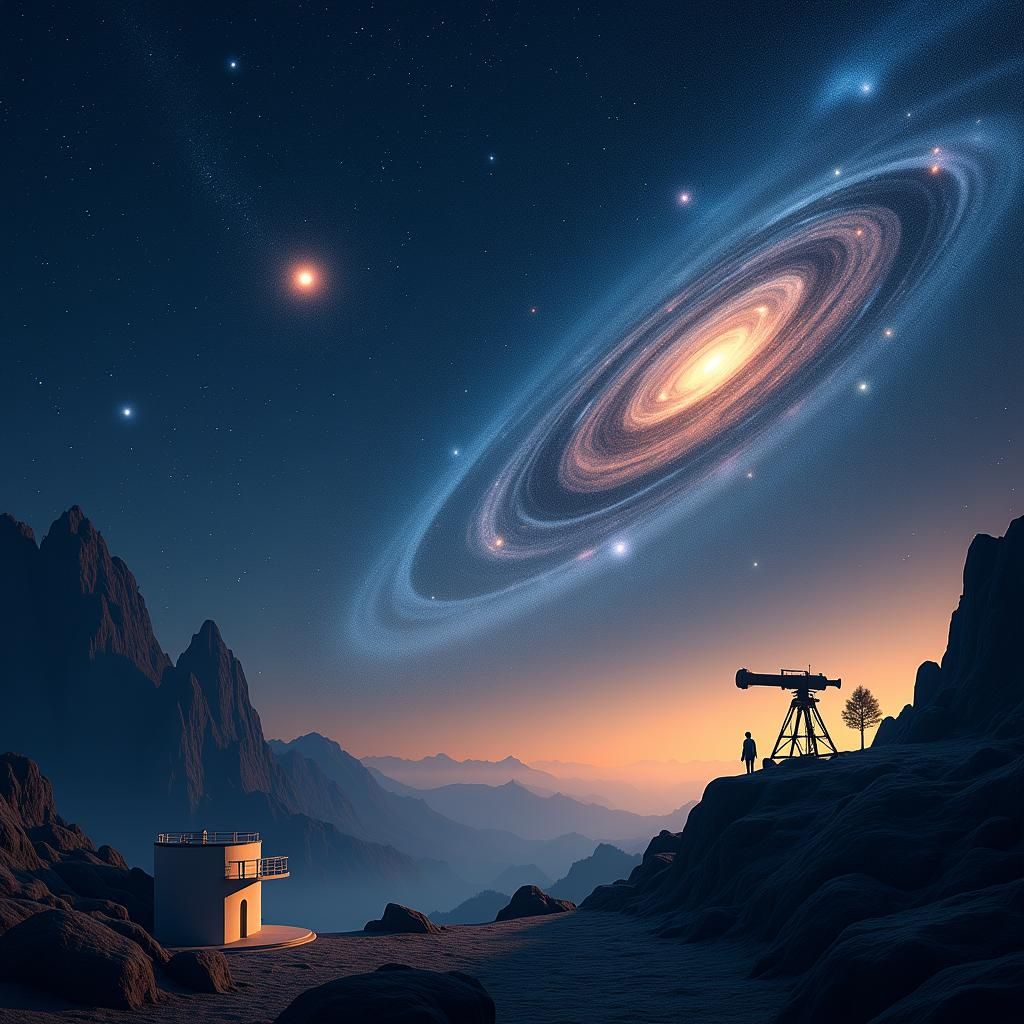
The visible universe constitutes less than 5% of its mass-energy, with dark matter—undetectable yet gravitationally vital—comprising most. Proposed by Zwicky in the 1930s and confirmed by Rubin in the 1970s, dark matter’s nature remains elusive. Leading candidates include WIMPs and axions. Experiments like XENON1T and LHC aim to detect it, potentially revolutionising physics and cosmic…
-
The universe’s story, explored through myths and scientific models, begins with the Big Bang, supported by cosmic microwave background evidence. Key theories include cosmic inflation, dark matter, and dark energy, explaining expansion and structure. Modern concepts like multiverses and string theory challenge understanding, while unresolved questions about the cosmos’s fate and composition invite future discovery…

-
Cryovolcanism, the eruption of water, methane, or ammonia instead of molten rock, occurs on icy celestial bodies like Saturn’s Enceladus and Pluto. Driven by tidal forces, these eruptions suggest subsurface oceans and geological activity, offering clues about life’s potential beyond Earth. Missions like Europa Clipper aim to explore these environments, reshaping planetary science and astrobiology.

-
Alien Quest: Bridging Ancient Curiosity and Cosmic Silence
6–8 minutes·
·
For millennia, humanity has pondered extraterrestrial life. From ancient philosophers to modern science, the search evolved into rigorous endeavours using radio telescopes, exoplanet analysis and biosignature detection. Discoveries of extremophiles and habitable exoplanets fuel optimism, yet the Fermi paradox questions cosmic silence. Ethical debates and technological advances continue this quest, reshaping our cosmic perspective and…

-
In the next millennium, celestial events like explosive stellar deaths, rare planetary alignments, and potential supernovae will transform our skies. Predictions rely on historical astronomy and modern models, from eclipses shifting with Earth’s rotation to interstellar comets offering cosmic insights. Risks include asteroid impacts and galactic collisions, challenging humanity to adapt and explore, blending science…

-
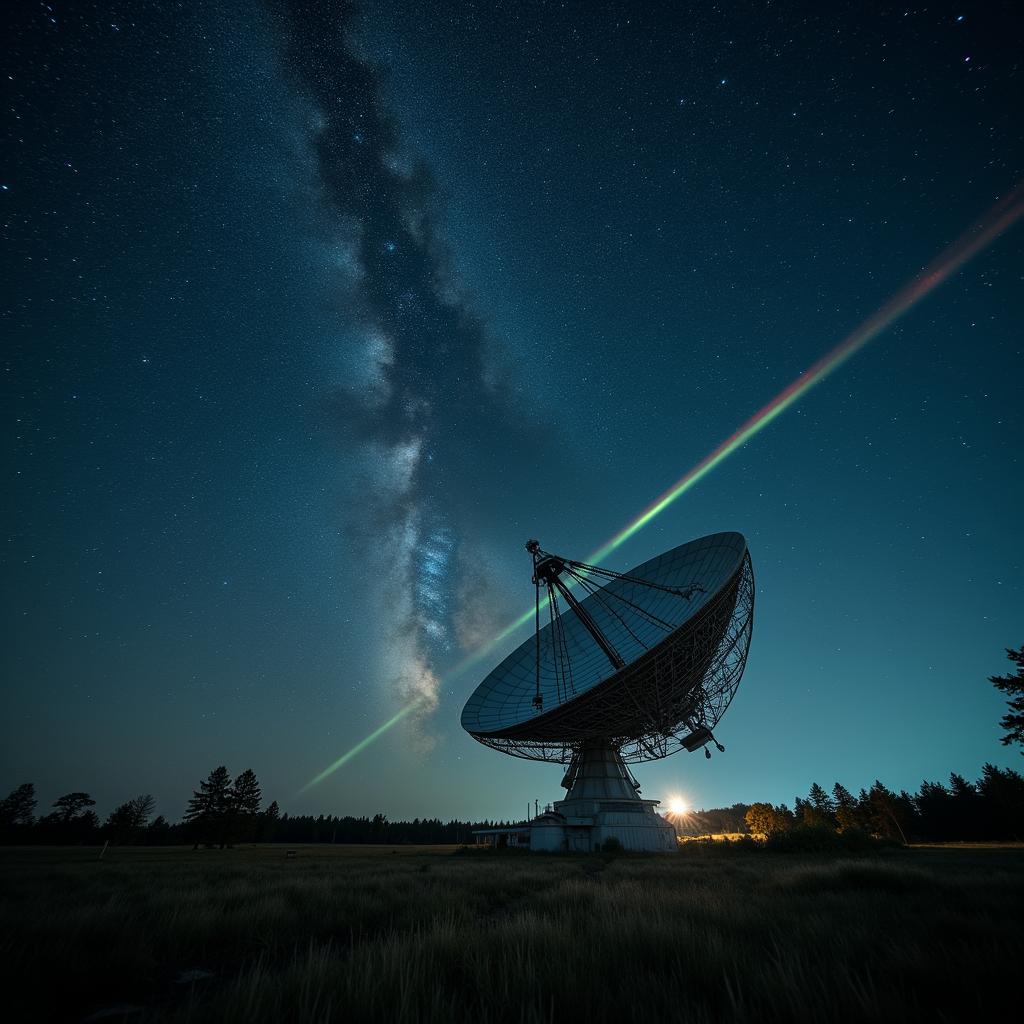
In 1977, astronomer Jerry Ehman detected a 72-second radio burst via Ohio’s Big Ear telescope. Dubbed the “Wow! Signal” for his annotated reaction, its intensity, narrow frequency (1420 MHz), and lack of re-detection sparked debate over extraterrestrial, natural, or human origins. Despite theories, its unresolved mystery fuels scientific and cultural fascination with cosmic life searches.


 Conversations with AI