Category: Physics
-
From Solid Trees to Quantum Ghosts
10–15 minutes·
·
Physics presents two conflicting realities. General Relativity perfectly describes the large, predictable world of trees and planets. In contrast, Quantum Mechanics governs the bizarre, probabilistic subatomic realm. These successful but incompatible theories clash when explaining black holes, driving the search for a single, unified “Theory of Everything”.

-
The universe, once believed to be static, is expanding. Evidence like galactic redshift and the Cosmic Microwave Background confirms a Big Bang origin. This expansion is now accelerating, driven by mysterious Dark Energy. Our cosmos is mostly this energy and Dark Matter, challenging our significance and dictating an isolating future.

-
Interstellar travel is unfeasible with chemical rockets due to immense distances and physical laws. Plausible future solutions include laser-pushed sails for tiny probes, nuclear fusion rockets for large payloads, and theoretical antimatter drives. Each presents monumental engineering challenges, demanding systemic, multi-generational advances in science and technology.

-
Not for everybody, not even for most bodies or even somebody, but definitely for BIG bodies. Sorry terrible pun. Astrophysics decodes the universe’s fundamental “operating system” through interdisciplinary science, diverse observations, and computation. Evolving from ancient stargazing, it redefines our cosmic place and drives technological innovation, exemplified by GPS and CCDs. The field explores profound…

-
Science provides powerful tools for understanding how things work, but philosophy tackles deeper questions about what we are, the nature of reality, and knowledge itself. It critically examines assumptions, complements scientific inquiry, and helps us understand the implications of our discoveries, proving essential in our quest for understanding.
-
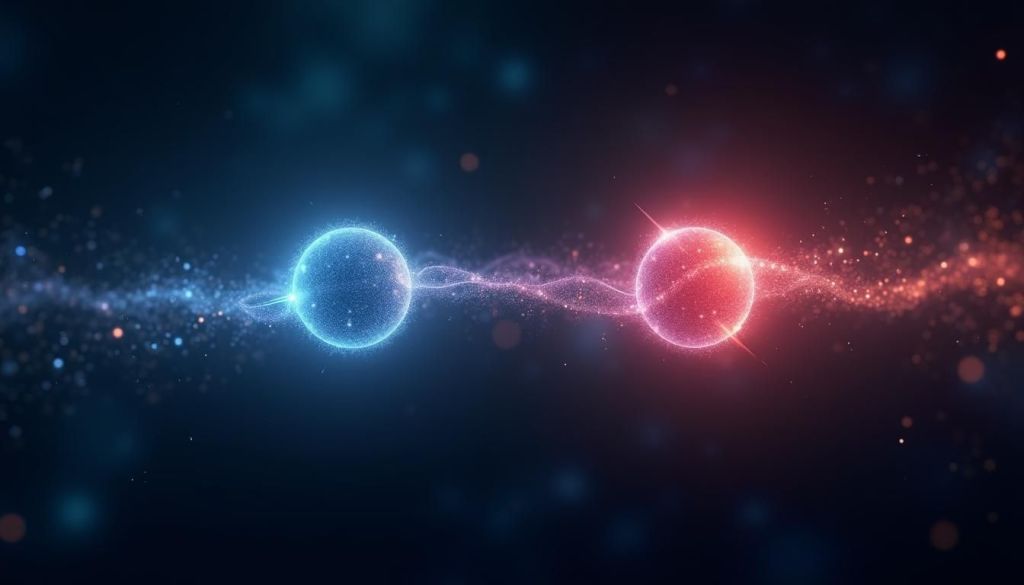
Quantum entanglement describes particles linked instantaneously across any distance, a concept initially dubbed “spooky action” by Einstein. Schrödinger formally termed it “entanglement”. Bell’s theorem, experimentally verified, confirmed its non-local reality, challenging classical physics. It underpins emerging technologies like quantum computing and cryptography, with ongoing research into its profound implications.
-
Time is a profound mystery, viewed through philosophical lenses like Presentism and Eternalism, and shaped by physics from Newton’s absolutes to Einstein’s relativity and the thermodynamic arrow. Our subjective perception is malleable, while quantum physics even questions time’s fundamental existence, leaving a unified understanding elusive.

-
The cat righting reflex enables felines to land on their feet mid-fall, a feat of physics and biology. Using their flexible spine and limb movements, they manipulate inertia to rotate body halves oppositely, conserving angular momentum. This evolved reflex, studied since 1894, doesn’t guarantee safety but inspires robotics.

-
Quantum Field Theory describes reality not as particles, but fundamental fields whose excitations are particles. Unifying quantum mechanics and relativity, it forms the Standard Model, using concepts like renormalisation and symmetries. Though highly successful, it currently excludes gravity and doesn’t explain dark matter, highlighting ongoing research.

-
Humanity’s fascination with the cosmos evolved from ancient views to the Big Bang and Lambda-CDM model. Supported by observations like the CMB and universal expansion, this model explains structure via dark matter and accelerated expansion via dark energy. Mysteries like their nature and the Hubble tension drive ongoing research.

-
Cryogenics, the science of ultra-low temperatures, from historical gas liquefaction to modern MRI and particle accelerators, is crucial. Distinctly, cryonics is the speculative practice of freezing legally dead humans for future revival. This faces immense scientific hurdles and ethical debates, differing significantly from established cryopreservation of cells.

-
The universe is 95% invisible: 27% dark matter, holding galaxies together via gravity, and 68% dark energy, driving accelerating cosmic expansion. Inferred from galaxy rotation and supernova data, their true nature is unknown. Scientists are actively searching for dark matter particles and studying dark energy’s large-scale effects.

-
The Milky Way is pulled towards the mysterious Great Attractor, a gravitational anomaly hidden by galactic dust. This pulling region is now understood as the gravitational centre of the vast Laniakea Supercluster, our cosmic home, revealing the universe’s clumpy structure and dark matter’s role.

-
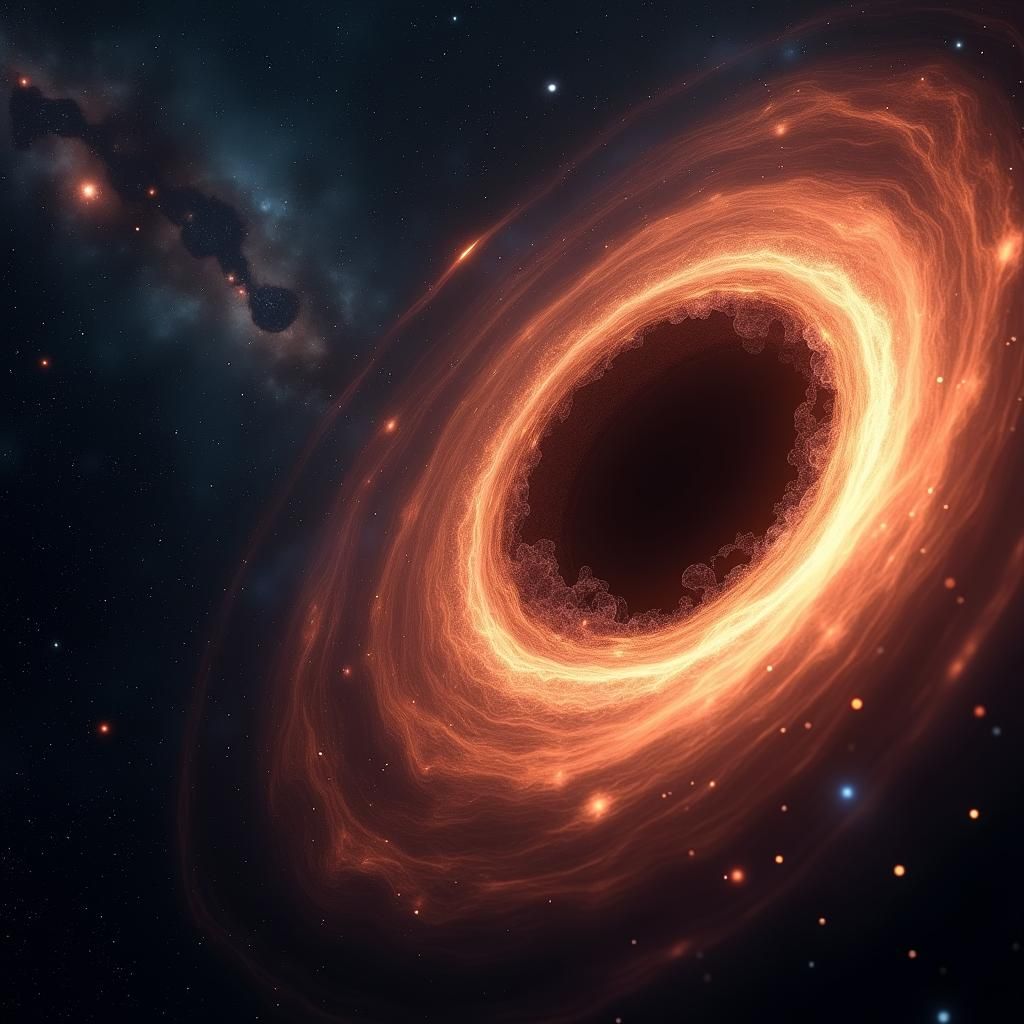
Black holes, classical traps, seemed to destroy entropy, violating thermodynamics. Bekenstein proposed they have entropy proportional to their area. Hawking’s discovery of radiation confirmed this, revealing they have temperature. This led to the information paradox, prompting theories like holography linking entropy to quantum information and spacetime structure.
-
General Relativity beautifully describes gravity at cosmic scales, while Quantum Mechanics governs the subatomic world. These theories clash when applied together, particularly in extreme conditions like black holes and the Big Bang. Quantum Gravity seeks to reconcile them, exploring theories like String Theory and Loop Quantum Gravity, to understand the fundamental nature of space and…


 Conversations with AI