Category: Science and Technology
-
The night sky constantly changes, with predictable future events spanning decades to billions of years. Look forward to spectacular solar eclipses, Halley’s Comet’s 2061 return, planet transits, potential meteor storms, and the distant Milky Way-Andromeda collision, revealing the dynamic, evolving universe.

-
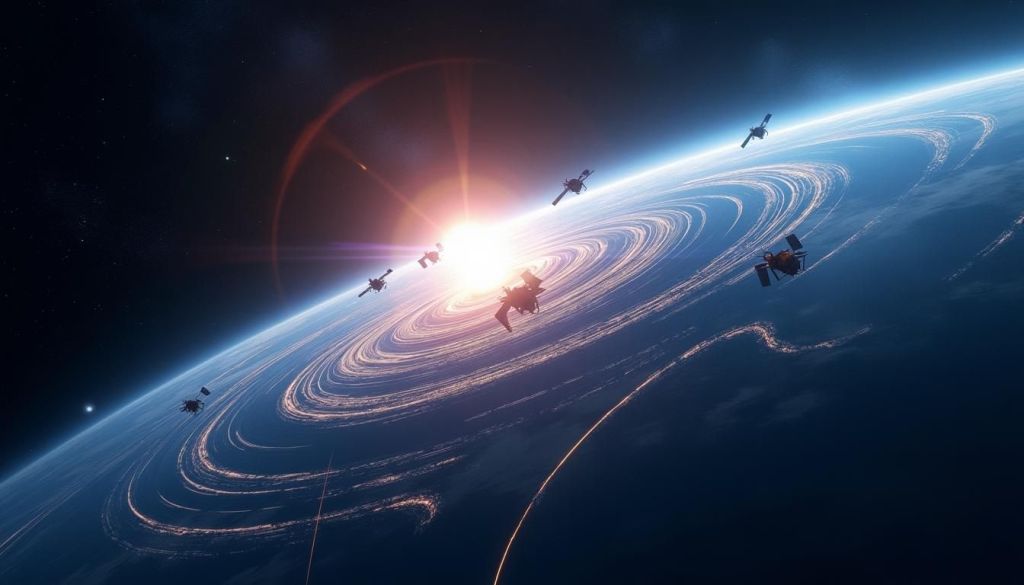
Earth’s magnetic field, generated by the core, naturally flips polarity over thousands of years (geomagnetic reversals). Past reversals didn’t cause extinctions, but a weak phase would impact technology (satellites, power grids) and animal navigation. The field is currently weakening, but a reversal is not expected soon.
-
The universe is 95% invisible: 27% dark matter, holding galaxies together via gravity, and 68% dark energy, driving accelerating cosmic expansion. Inferred from galaxy rotation and supernova data, their true nature is unknown. Scientists are actively searching for dark matter particles and studying dark energy’s large-scale effects.

-
Classical computing reached limits where quantum effects interfere. Quantum computing emerged to harness these effects using qubits (superposition, entanglement) for problems classical computers can’t efficiently solve. Theory and algorithms paved the way, though building quantum machines is challenging, requiring classical control. They offer potential for simulations and cryptography, working alongside classical systems.

-
The Milky Way is pulled towards the mysterious Great Attractor, a gravitational anomaly hidden by galactic dust. This pulling region is now understood as the gravitational centre of the vast Laniakea Supercluster, our cosmic home, revealing the universe’s clumpy structure and dark matter’s role.

-
Ancient China was a major mathematical innovator, developing sophisticated methods often centuries before the West. Driven by practical needs, they used counting rods with a decimal place-value system and negative numbers, understood Pythagoras’ theorem, calculated pi accurately, and created algorithms for solving complex equations and systems.

-
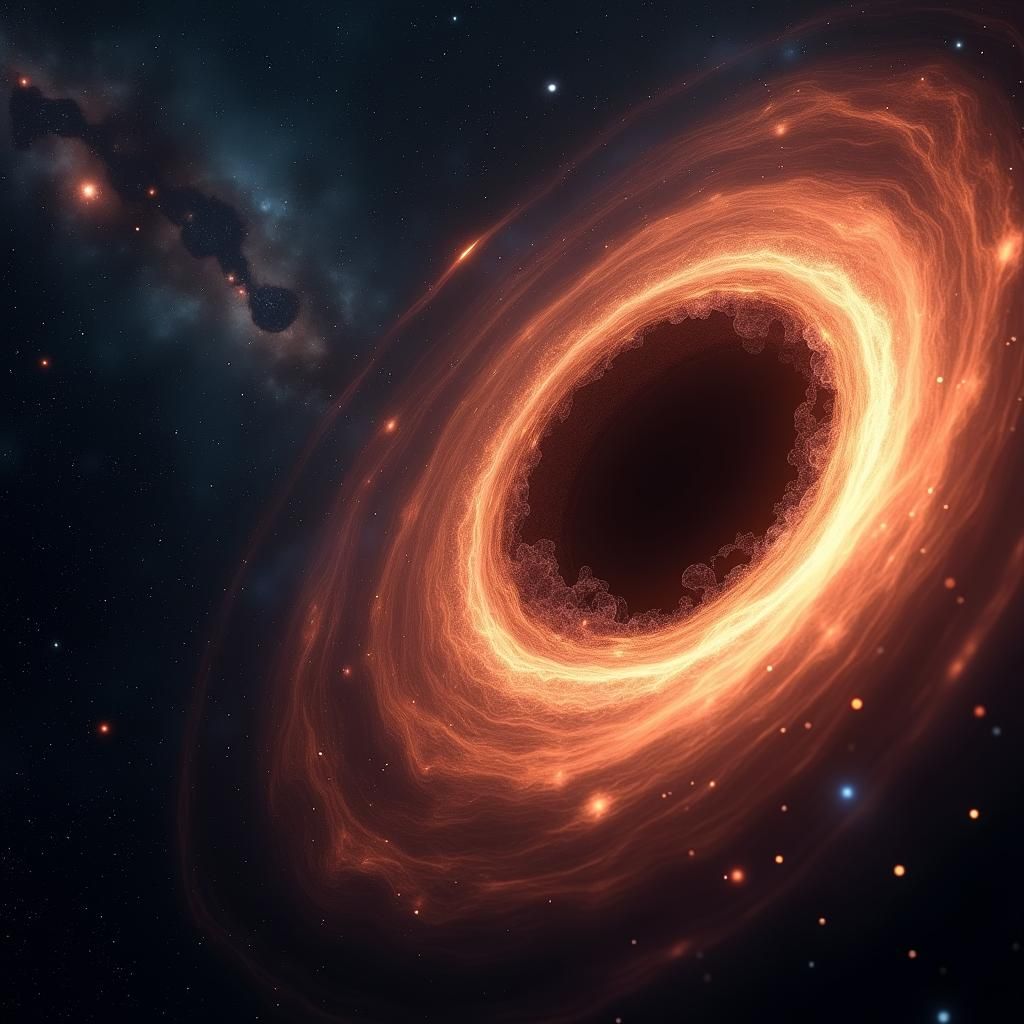
Black holes, classical traps, seemed to destroy entropy, violating thermodynamics. Bekenstein proposed they have entropy proportional to their area. Hawking’s discovery of radiation confirmed this, revealing they have temperature. This led to the information paradox, prompting theories like holography linking entropy to quantum information and spacetime structure.
-
Seismology studies earthquakes, immense forces caused by tectonic plate movement and energy release at faults (elastic rebound). From early attempts to modern global networks, scientists analyse seismic waves to understand hazards and improve monitoring, including early warning systems. Precise prediction remains elusive, making mitigation and preparedness crucial for safety.

-
Technology is deeply embedded in modern life, influencing human evolution. Whilst medicine weakens natural selection, digital demands introduce new pressures. Gene editing and human augmentation present radical possibilities, raising ethical dilemmas about humanity’s future and our wisdom to responsibly direct our biological destiny.

-
Astrophysics explores the universe’s physical nature, evolving from ancient astronomy to modern science using physics, observation, and computation. Key advancements include spectroscopy, relativity, and quantum mechanics. Telescopes across the spectrum, gravitational wave detectors and simulations are vital tools. Astrophysics studies exoplanets, cosmology, and dark matter, yielding technological and societal benefits, and inspiring scientific curiosity.

-
Humanity has long questioned our cosmic solitude, prompting the search for extraterrestrial intelligence (SETI) and life (astrobiology). Using radio telescopes and exoplanet atmosphere analysis, scientists explore for alien signals or biosignatures. The Drake Equation and Fermi Paradox frame this quest, highlighting the implications of both discovery and continued silence for our understanding of life in…

-
Fast Radio Bursts (FRBs) are millisecond-long, powerful radio signals from distant galaxies, first accidentally detected in 2007. Initially enigmatic, the discovery of repeating FRBs aided localisation to dwarf galaxies. Magnetars, neutron stars with strong magnetic fields, are leading source candidates, supported by a galactic magnetar burst. FRBs probe the cosmos and challenge physics, but mysteries…
-
General Relativity beautifully describes gravity at cosmic scales, while Quantum Mechanics governs the subatomic world. These theories clash when applied together, particularly in extreme conditions like black holes and the Big Bang. Quantum Gravity seeks to reconcile them, exploring theories like String Theory and Loop Quantum Gravity, to understand the fundamental nature of space and…
-
Geophysics, applying physics to Earth, studies its structure and processes, evolving from early observations to a sophisticated science. Using methods like seismology and electromagnetics, it explores resources, mitigates hazards, aids engineering and archaeology, and studies planets. Geophysics is vital for understanding our dynamic planet and addressing global challenges sustainably.

-
Machine learning’s evolution from theoretical concepts to everyday applications is intrinsically linked to computing power advancements. Starting with Turing’s ideas and early limitations, Moore’s Law, GPUs, and cloud computing progressively fuelled ML’s growth. Specialised AI hardware now optimises performance. This synergy drives innovation, but also raises questions about accessibility and environmental impact as computing demands…


 Conversations with AI