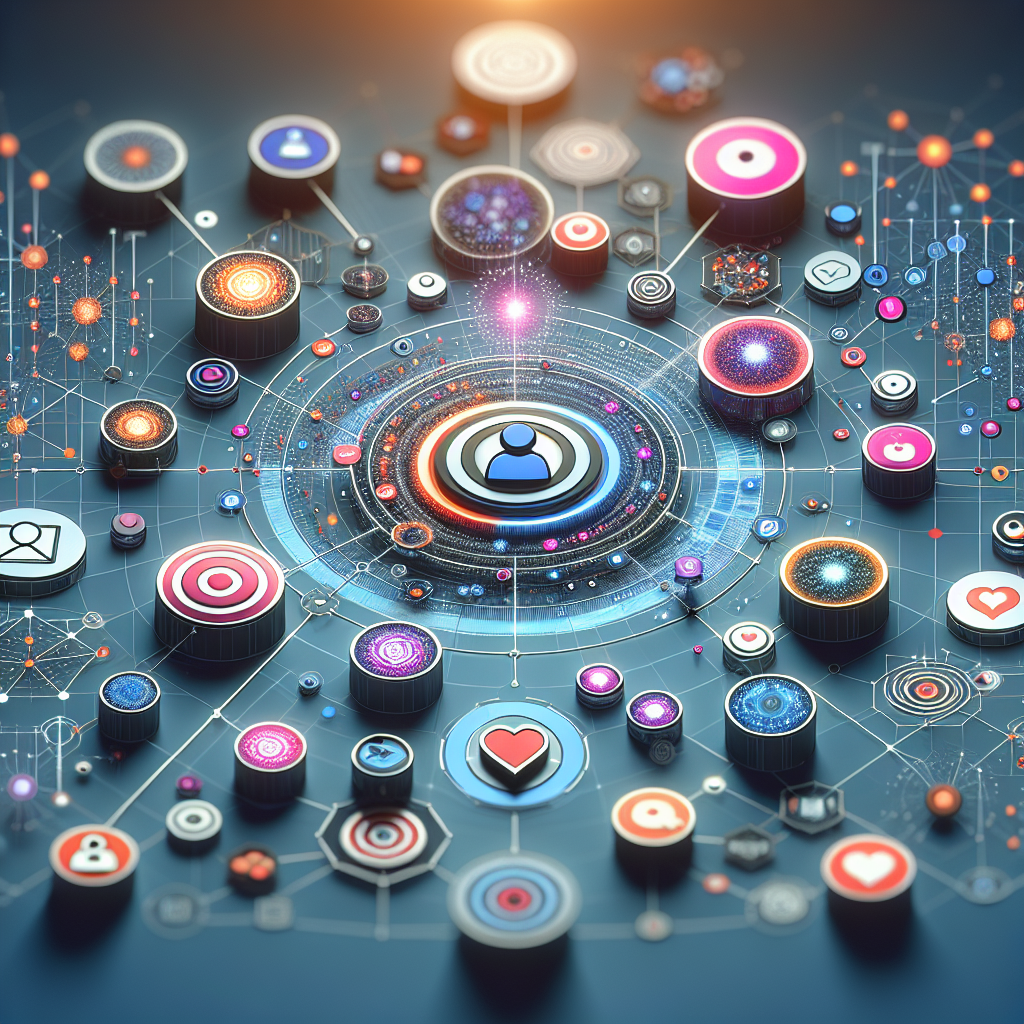
*chatgpt really went to town on the references with this post. I’ve been fascinated with the filter bubble since I first heard about it.
In the digital age we are all immersed in, an unseen power is persistently at work, shaping our online behaviours and interactions in subtle but fundamental ways. This power is derived from the algorithms behind the social media platforms we navigate daily. While these seemingly innocuous mathematical equations may appear benign, their societal impacts are far reaching, warranting exploration and understanding.
Our aim in this article is to delve into the societal impact of social media algorithms. We examine the concept in depth, tracing its inception, evolution, and the profound ways in which it shapes our digital world. This topic holds relevance for anyone with a digital footprint – virtually all of us – and has critical implications for the wider society.
To comprehend the implications of social media algorithms, it’s essential to trace the journey and development of social media itself. The concept of social media crystallised in the late 1990s and rapidly evolved through the turn of the century, reaching a high point with the inception of Facebook in 2004[1]. But it wasn’t until the mid to late 2000s that social media algorithms became more sophisticated, focusing intensely on personalised content delivery[2].
The development and trends of social media algorithms can be broadly segmented into three critical areas: personalisation, amplification of engagement, and data protection and privacy.
Firstly, personalisation of content. Algorithms analyse our likes, dislikes, posts, and an array of online behaviours, to create and deliver content designed specifically for our individual preferences[3]. This personalisation extends to advertisements, news feeds, and even friend suggestions[4]. The crucial question remains: What is the societal impact of such personalised content sharing?
Secondly, algorithms are designed to maximise our engagement. Social media platforms utilise these algorithms to enhance the time users spend on their platforms, thereby generating higher ad revenue and creating a cycle that feeds itself – engaging content leads to longer usage, leading to more data for algorithms to learn from[5].
Lastly, the role of algorithms in data protection and privacy is equally important. There is a continuous evolutionary struggle between algorithms that combat spam, data breaches, and hacker attacks, and those designed for nefarious purposes[6].
Famous author and computer scientist Jaron Lanier has stated, “Algorithms are like invisible puppet masters”[7]. Indeed, social media algorithms curate what information we encounter, subtly influencing our decisions, our perceptions, and ultimately, our worldviews. We are led into ‘filter bubbles’ where the content we see aligns with our interests and ideologies[8].
Critics argue that this has troubling implications, such as the propagation of ‘echo chambers’, where users are exposed solely to information that reinforces their pre-existing beliefs, ultimately leading to societal polarisation[9]. Moreover, these algorithms can be manipulated for targeted misinformation campaigns, as witnessed during various recent political events[10].
In stark contrast, others argue that these algorithms open up vast opportunities for micro-targeted marketing and personalised content, thereby enabling businesses to harness digital strategies with unprecedented precision[11]. They believe that social media algorithms can foster a more connected world, albeit digitally, by enabling shared experiences, opinions and ideas[12].
A damning fact remains: social media algorithms are not transparent, often regarded as ‘black-boxes’ even by experts in the field[13]. Their intricacies are protected fiercely by the corporate giants that utilise them. There is an ongoing debate on whether there must be increased regulatory oversight and measures to ensure these algorithms don’t form an unchecked force[14].
In conclusion, the societal impact of social media algorithms is profound and nuanced. They have and continue to shape our digital society in ways that both liberate and enchain. Exploring this topic unveils a stark reality; we are not just using social media, it is shaping us and our society in ways we are barely beginning to comprehend.
There remain many unanswered questions, and stricter regulatory oversight may be necessary to ensure the ethical application of these powerful algorithms. As these algorithms continue to evolve, their societal impacts warrant further research, scrutiny, and public debate.
References and Further Reading:
- Boyd, d.m., & Ellison, N. B. (2007). Social Network Sites: Definition, History, and Scholarship. Journal of Computer-Mediated Communication.
- Gillespie, T. (2014). The Relevance of Algorithms. In Media Technologies: Essays on Communication, Materiality, and Society.
- Matz, S., Kosinski, M., Nave, G., & Stillwell D. (2016). Psychological targeting as an effective approach to digital mass persuasion. Proceedings of the National Academy of Sciences.
- Marwick, A. (2018). Why Do People Share Fake News? A Sociotechnical Model of Media Effects. Georgetown Law Technology Review.
- Sin, S. J. (2016). The persistent impact of algorithmic bias and user behaviour on personalised news websites. Information, Communication & Society.
- Turow, J., & Couldry, N. (2018). Making sense of “algorithmic” data protection and privacy in Europe. Policy & Internet.
- Lanier, J. (2018). Ten Arguments for Deleting Your Social Media Accounts Right Now.
- Pariser, E. (2011). The Filter Bubble: What The Internet Is Hiding From You.
- Sunstein, C. R. (2017). #Republic: Divided Democracy in the Age of Social Media.
- Tucker, J. A., Guess, A., Barberá, P., Vaccari, C., Siegel, A., Sanovich, S., Stukal, D., & Nyhan, B. (2018). Social Media, Political Polarization, and Political Disinformation: A Review of the Scientific Literature.
- Tiwari, A., Buse, S., & Herstatt, C. (2016). From Electronic to Mobile Commerce: Opportunities Through Technology Convergence for Business Services.
- Ross, C., Terras, M., Warwick, C., & Welsh, A. (2011). Enabled Backchannel: Conference Twitter Use by Digital Humanists. Journal of Documentation.
- Burrell, J. (2016). How the machine ‘thinks’: Understanding opacity in machine learning algorithms. Big Data & Society.
- Pasquale, F. (2015). The Black Box Society: The Secret Algorithms That Control Money and Information.



 Conversations with AI
Leave a comment