Permeating every fibre of our modern society, the invariably complex landscape of technologies forms the quintessential fabric that weaves the fascinating tapestry of the 21st Century. Core to running these technologies lie the veinous networks of cyberspace, pulsating with essential digital life. However, an increasingly sophisticated legion of cyber threats has proven itself a powerful nemesis in the digital age. The purpose of this article centres around dissecting the multifarious range of cybersecurity threats pervading our interconnected world, and incisively discussing requisite countermeasures, thus underlining the paramount importance of cybersecurity in this digital era[1].
The dawn of cybersecurity can be traced back to the early 1970s when the first computer virus, the “Creeper system,” surfaced as an experimental self-replicating program running on the ARPANET, the precursor of modern Internet. Yet, it was only in the 1980s that cybersecurity began its reign, owing to a surge in prominent instances of cyberattacks and subsequent formation of the Computer Fraud and Abuse Act in 1986[2]. A dramatic turn came with the proliferation of the Internet in the 1990s, paving the way for incessant evolution of cyber threats which traversed from simple worms to complex state-sponsored attacks.
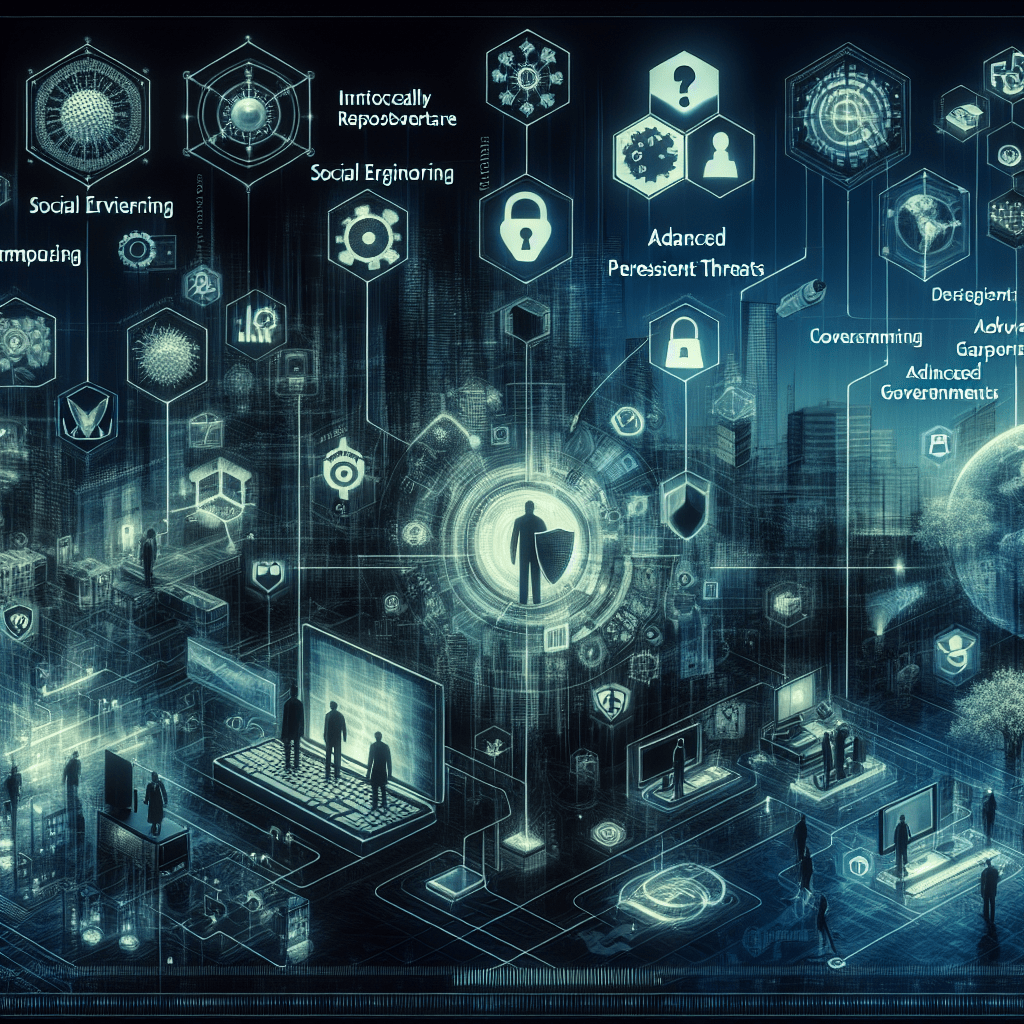
Within this digital labyrinth lies a constellation of cybersecurity threats. de Bruin and Florêncio[3] highlight three distinct areas: Malware, Social Engineering, and Advanced Persistent Threats (APTs) as part of their cyber threat taxonomy. Malware or malicious software, including viruses, worms, trojans, ransomware, and spyware, target disequilibrium in computer systems to execute unsolicited activities, often causing catastrophic system damage. Social Engineering assaults, conversely, manipulate users into divulging sensitive data, exploiting the fact that human factors often represent the weakest link in security chains. Lastly, APTs, typically state-sponsored, are long-term targeted attacks primarily oriented towards extracting sensitive information from organisations.
Margaret Rouse, a renowned cybersecurity expert, regards this intricate cyber ecosystem as a perpetual “cat and mouse game,” where cybercriminals continually evolve their methods to circumnavigate cybersecurity mechanisms[4]. Particularly gumption-filled examples are ransomware attacks, which have seen a 105% increase since 2019, according to Cybersecurity Ventures[5]. Egregious instances include the WannaCry and NotPetya attacks, causing nationwide outages with cost in billions.
Moreover, Vincent Sritapan, a program manager at the Cybersecurity and Infrastructure Security Agency (CISA), underlines the persistent threat of social engineering attacks, emphasising that “Very often, it’s not about the sophistication of the cyberattack, it’s the sophistication of the social engineering”[6]. The infamous Facebook-Cambridge Analytica data scandal of 2018 laid bare the potency of exploiting user data, noticeably sending shockwaves through our digital society.
However, leading academics like Bruce Schneier stress that while individual and corporate vigilance are crucial, it is the responsibility of the government to regulate this digital playground and prioritise cybersecurity[7]. Governments worldwide have already started echoing this sentiment, with the United States enacting the Cybersecurity and Infrastructure Security Agency Act in 2018 and European Union’s General Data Protection Regulation promising hefty penalties for non-compliance of data protection standards.
The controversies regarding cybersecurity often hinge on the balance between maintaining security and respecting privacy rights. The recent debate over government’s use of end-to-end encryption backdoors exemplifies this ethical plight. Furthermore, considering the globalised nature of cyberspace, developing international cybersecurity standards poses significant challenges but are essential in shaping a more secure digital future.
In conclusion, cybersecurity threats pose an unrelenting menace in the digital age, with their modus operandi continually adapting to prevailing cybersecurity strategies. The digital age holds immense promise, but every boon comes with corresponding bane. A concerted effort involving individuals, corporations, and governments is thus needed to navigate the prevalent cybersecurity labyrinth and shield our increasingly interconnected world. Indeed, given the potency of modern cyber threats, isn’t it high time that cybersecurity became a universal right, rather than a privilege exclusive to some?
References and Further Reading:
- Singer P.W., Friedman A. (2014). ‘Cybersecurity: What Everyone Needs to Know.’ Oxford University Press, Oxford.
- Yar M. (2013). ‘Cybercrime and Society.’ 2nd Edition. SAGE Publications. London.
- de Bruin R., Florêncio D. (2017). ‘Robust Features for Detecting Advanced Persistent Threats.’ Workshop on Artificial Intelligence and Security. Springer.
- Rouse M. (2016). ‘Cybersecurity.’ TechTarget.
- Morgan S. (2020). ‘2019 Official Annual Cybercrime Report.’ Cybersecurity Ventures.
- Sritapan V. (2018). ‘The Intersection of Physical and Cybersecurity.’ Government Technology.
- Schneier B. (2018). ‘Click Here to Kill Everybody.’ W.W. Norton & Company. New York.
- Solove D. J., Hartzog W. (2019). ‘The FTC and the New Common Law of Privacy.’ Columbia Law Review.
- Sussman M. D. (2019). ‘Serious Cryptography: A Practical Introduction to Modern Encryption.’ No Starch Press. San Francisco.
- Joyce G.R., Gupta A.K. (2019). ‘Benefits, Risks, and Security Considerations Of Artificial Intelligence.’ International Journal on Cyber Situational Awareness.





 Conversations with AI
Leave a comment