Introduction
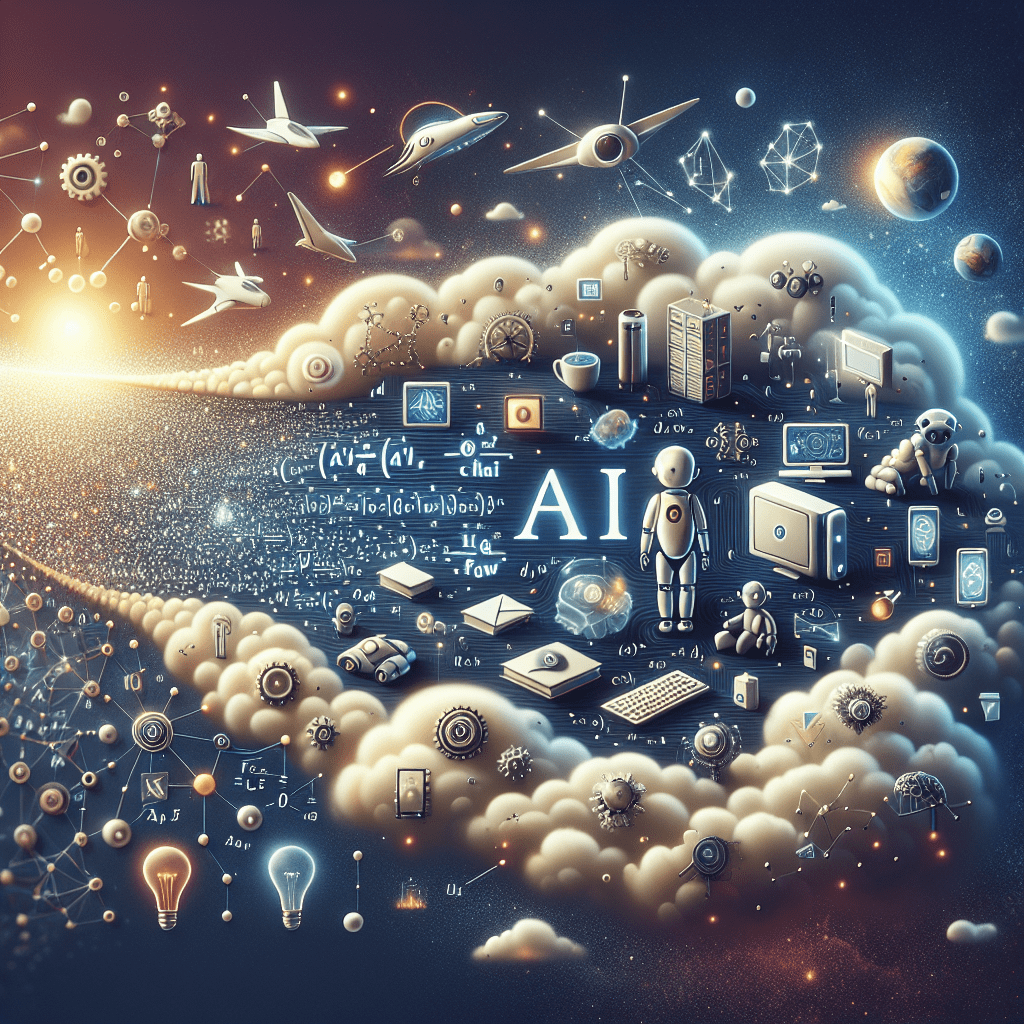
Artificial Intelligence (AI) has transitioned from a mere concept in science fiction to a powerful force driving innovation in our modern world. The journey of AI from dreams to reality has been nothing short of astonishing, transforming the way we live, work, and interact with technology. As Alan Perlis, a computer scientist and the first recipient of the Turing Award, once said, “AI is the science of making machines do things that would require intelligence if done by men.”
The Early Days of AI
The seeds of AI were planted in the 1950s when the pioneering work of researchers like Alan Turing and John McCarthy laid the foundation for artificial intelligence. Initial efforts focused on developing systems that could mimic human intelligence, leading to the creation of symbolic AI and early neural networks. John McCarthy, known as the “father of AI,” famously stated, “As soon as it works, no one calls it AI anymore.”
The AI Winter and Resurgence
The 1970s and 80s saw a period known as the “AI winter,” where interest and funding for AI research waned due to unmet expectations and technological constraints. Nevertheless, breakthroughs in machine learning and cognitive computing reignited interest in AI in the 21st century. Yann LeCun, a computer scientist and deep learning pioneer, remarked, “AI has always been on the brink of scaling up but never quite scaled.”
The Rise of Deep Learning
One of the key drivers behind the recent AI revolution has been deep learning, a subset of machine learning that leverages neural networks to process large amounts of data. Deep learning algorithms have powered advancements in natural language processing, computer vision, and autonomous systems, enabling AI to surpass human performance in various tasks. Fei-Fei Li, a renowned computer scientist in computer vision and AI, highlighted, “The digital world isn’t flat, and our tools for accessing that world shouldn’t be, either.”
AI in Society
The integration of AI in society has been both transformative and controversial. On one hand, AI-powered technologies have enhanced productivity, efficiency, and convenience in areas such as healthcare, transportation, and entertainment. However, as Sundar Pichai, CEO of Google, pointed out, “AI is probably the most important thing humanity has ever worked on. I think of it as something more profound than electricity or fire.”
Challenges and Opportunities
As AI continues to evolve, a host of challenges and opportunities lie ahead. Ensuring the ethical and responsible development of AI systems, addressing algorithmic biases, and safeguarding data privacy are crucial concerns that must be addressed. Timnit Gebru, a prominent AI ethicist, emphasized, “We’re building these systems that have the power to tremendously impact people’s lives and nobody is really thinking about the societal impact.”
The Future of AI
Looking ahead, the future of AI promises even greater advancements and disruptions across industries. Rodney Brooks, a roboticist and co-founder of iRobot, once stated, “I can have incredible freedom with artificial intelligence; it doesn’t need to reflect human types of intelligence, but in the areas that it does, it can amplify what we’re capable of.” As researchers push the boundaries of AI research and development, the dream of creating truly intelligent machines that can reason, learn, and adapt will inch closer to reality.
Conclusion
The journey of artificial intelligence from dreams to reality has been a testament to human ingenuity and perseverance. With each breakthrough and setback, we inch closer to unlocking the full potential of AI to improve lives and solve complex challenges. To echo the words of Andrew Ng, a leading AI researcher and co-founder of Google Brain, “Artificial intelligence is the new electricity; just as electricity transformed almost everything 100 years ago, today I actually have a hard time thinking of an industry that I don’t think AI will transform in the next several years.” As we continue to chart the course of AI’s evolution, the possibilities are limitless, and the journey is far from over.



 Conversations with AI
Leave a comment