Imagine for a moment that the very spark of life on Earth, the intricate dance of molecules that led to bacteria, plants, and eventually us, didn’t actually begin here at all. What if the seeds of life are scattered throughout the cosmos, drifting between stars and planets, just waiting for a suitable home to take root? This is the core idea behind a fascinating and often debated hypothesis known as panspermia. It’s a concept that stretches our understanding of life’s origins beyond our own world and into the vastness of interstellar space. This isn’t just a fanciful notion from science fiction; it’s a topic that has intrigued scientists for centuries and continues to fuel research and debate today. Understanding panspermia is important because it challenges our fundamental assumptions about life’s uniqueness and our place in the universe. If life can travel between worlds, it implies that life might be far more common than we currently imagine.
The idea that life might have cosmic origins isn’t new. The ancient Greek philosopher Anaxagoras, back in the 5th century BCE, mused about “seeds” (or “spermata” in Greek) being part of the cosmos and potentially bringing life to Earth. However, the term “panspermia” itself, meaning “seeds everywhere,” was more formally applied to this theory much later. In the 19th century, several scientific advancements brought the idea into more serious consideration. The understanding that the early Earth was a molten, inhospitable place suggested that life must have appeared after it cooled. Darwin’s theory of evolution implied a single point of origin for all life but didn’t explain that initial spark. Furthermore, Louis Pasteur’s work disproving spontaneous generation — the idea that life could arise from non-living matter on its own — led some to think that if life doesn’t spontaneously generate, it must come from pre-existing life. This made the question of how life *first* arose even more pressing. Scientists like Hermann Richter in 1865, Lord Kelvin (William Thomson) in 1871, and Hermann von Helmholtz in the 1870s began to propose that life might have been delivered to Earth via meteorites. Lord Kelvin famously suggested that “seed-bearing meteoric stones” could have brought vegetation to a lifeless Earth. Later, in 1903, the Swedish chemist Svante Arrhenius proposed the concept of “radiopanspermia,” suggesting that microscopic life forms, like spores, could be propelled through space by the pressure of starlight. He believed life was eternal and constantly being transported across the universe.
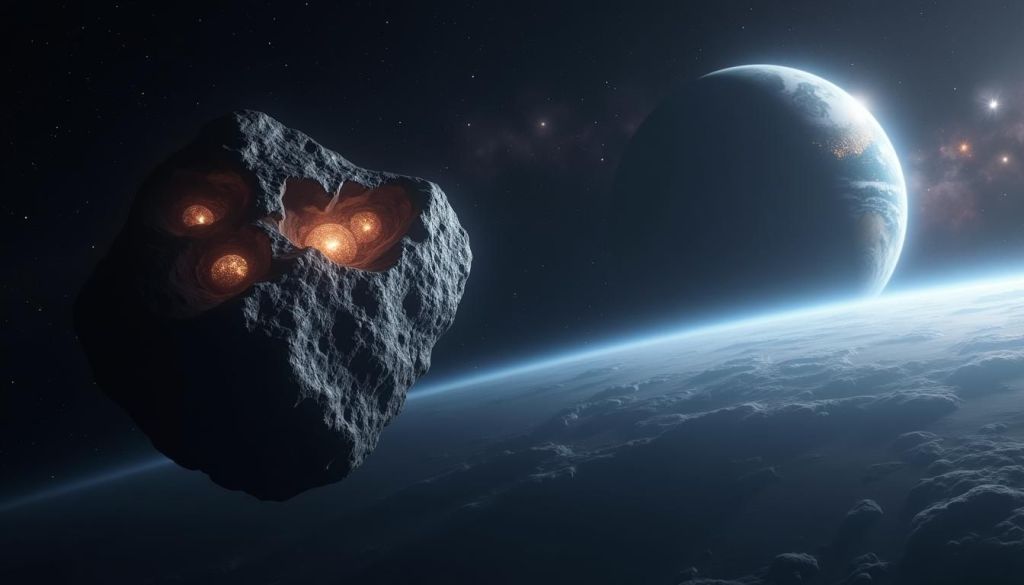
The panspermia hypothesis isn’t a single, monolithic idea but rather branches into several distinct concepts. Lithopanspermia (also sometimes referred to as ballistic panspermia) is the idea that life travels protected within rocks blasted off a planet’s surface by a significant impact, like an asteroid collision. These life-bearing rocks could then journey through space and eventually crash-land on another planet, potentially seeding it with life. There’s evidence that rocks can indeed travel between planets; for example, meteorites from Mars have been found on Earth. Radiopanspermia, as proposed by Arrhenius, suggests that microscopic organisms or spores could be pushed through space by the radiation pressure from stars. However, this idea faces challenges because the harsh radiation of space, particularly ultraviolet (UV) radiation, could be lethal to unprotected microbes over long interstellar journeys. Then there’s directed panspermia, a more speculative and intriguing idea. Proposed by Nobel laureate Francis Crick (co-discoverer of DNA’s structure) and Leslie Orgel in 1973, this theory posits that life was intentionally spread to Earth (and possibly other planets) by an advanced extraterrestrial civilisation. Crick and Orgel even suggested that such a civilisation might have sent out microorganisms in specially designed spacecraft to seed other worlds. They pointed to the unusual importance of the element molybdenum in earthly life, an element rarer on Earth than others like chromium or nickel, as potential, albeit highly speculative, evidence that life might have originated in an environment richer in molybdenum.
For any form of panspermia to be viable, life must be capable of surviving three challenging stages: escape from its home planet, transit through the harsh environment of space, and successful landing and colonisation of a new planet. The escape phase requires life to survive the immense forces of an impact event that could eject it into space. The transit phase is perhaps the most gruelling. Life would need to endure extreme temperature fluctuations, the vacuum of space, and bombardment by cosmic rays and UV radiation. This is where the study of extremophiles becomes crucial. Extremophiles are organisms, often bacteria or archaea, that thrive in conditions considered hostile to most life on Earth — think extreme heat, cold, radiation, pressure, or acidity. Experiments have shown that some microorganisms, like certain bacterial spores (such as *Bacillus subtilis*) or the bacterium *Deinococcus radiodurans* (famous for its extreme radiation resistance), can survive conditions similar to outer space for extended periods, especially if shielded by rock or ice. For instance, research on the International Space Station (ISS) showed that some microbes could survive exposure to space for years if protected within rock. One study estimated that a 1mm diameter colony of *Deinococcus* bacteria could potentially survive up to 8 years in outer space. As Professor Akihiko Yamagishi, principal investigator of the Tanpopo space mission, stated, “The results suggest that deinococcus could survive during the travel from Earth to Mars and vice versa, which is several months or years in the shortest orbit.” Finally, the landing phase involves surviving the fiery descent through a new planet’s atmosphere and finding conditions suitable for life to reawaken and proliferate. While the heat of atmospheric entry is a major hurdle, the interiors of meteorites may not become sterilisingly hot, potentially protecting any hitchhiking microbes.
Several lines of evidence lend some credibility to the panspermia hypothesis, though none are definitive proof. The discovery of organic molecules, which are the building blocks of life, in meteorites is a significant piece of the puzzle. For example, the Murchison meteorite, which fell in Australia in 1969, was found to contain numerous amino acids (the components of proteins), nucleobases (components of DNA and RNA), and other organic compounds like sugars. Analyses of the Murchison meteorite have identified over 90 different amino acids, many of which are not found in terrestrial life, suggesting they formed in space. This indicates that the raw materials for life can be, and are, delivered to Earth from space. This is sometimes referred to as pseudo-panspermia or “soft panspermia” — the idea that the chemical precursors to life, rather than life itself, arrived from space, with life then emerging on Earth through abiogenesis (the process of life arising from non-living matter). The Rosetta mission also detected methyl chloride, a molecule produced on Earth only by living organisms (though it can also form through non-biological processes elsewhere), in the comet 67P.
Perhaps the most sensational, and controversial, piece of evidence came in 1996 with the study of the Martian meteorite ALH84001, discovered in Antarctica in 1984. A team of NASA scientists, including David McKay, announced that they had found what appeared to be microscopic fossils of bacteria-like lifeforms within the meteorite, along with other chemical signatures suggestive of biological activity. This announcement caused a worldwide sensation, with then-US President Bill Clinton even making a speech about the potential discovery. The structures were incredibly small, between 20-100 nanometres in diameter, smaller than any known cellular life at the time, though similar in size to hypothesised “nanobacteria.” However, these claims were met with significant scepticism from the scientific community. Many scientists argued that the observed features could be explained by non-biological processes (abiotic processes) or could be terrestrial contamination that occurred after the meteorite landed on Earth. Subsequent studies largely concluded that the features in ALH84001 were not definitive proof of Martian life, with organic molecules found being potentially formed by geological processes like serpentinisation on early Mars. Despite the controversy, the ALH84001 debate is considered a turning point in the development of astrobiology, significantly boosting interest and research into the possibility of life beyond Earth. As astrobiologist Andrew Steele commented, “I think the approach the group took of combining several lines of evidence was innovative and made the argument more compelling at the time.”
The astronomers Sir Fred Hoyle and Chandra Wickramasinghe were prominent and persistent champions of a form of panspermia often called cometary panspermia. Beginning in the 1970s, they proposed that comets are the primary incubators and transporters of life throughout the universe. They argued that the vast clouds of dust observed in interstellar space contained organic material, a claim later found to be correct. They even controversially suggested that viruses and bacteria are continually arriving on Earth from space via cometary dust, potentially causing disease outbreaks, including the 1918 flu pandemic and even mad cow disease. These claims about disease have been largely rejected by the mainstream scientific community. Wickramasinghe has stated, “On the other hand, the theory of cometary panspermia first discussed by the late Sir. Fred Hoyle and myself in 1980, continues to yield an unbroken astounding record of correspondences of its predictions to new data and new observations. I maintain that wrong theories do not show up in such a way.” Their work, while often on the fringes of mainstream science, has certainly spurred debate and kept the idea of panspermia in scientific discourse.
Panspermia is not without its critics and challenges. One of the main criticisms is that it doesn’t actually solve the fundamental question of how life *originated*; it merely moves the location of that origin to another place in the universe. As one Reddit user put it, “As far as an answer for ‘the origin of life’, it just pushes the question. It might answer ‘how did life begin on Earth’, but that life must have then began somewhere else, so how did that happen?” Another significant hurdle is the sheer vastness of interstellar space and the incredibly long timescales involved for life to travel between star systems. The survival of any microorganism over potentially millions of years in the harsh radiation environment of space remains a major question, despite the resilience of some extremophiles. Furthermore, the theory can be difficult to test experimentally, a key requirement for a scientific hypothesis. Proving that a specific microbe found on Earth definitively originated from beyond our planet is an immense challenge.
The implications of panspermia, if proven true, would be profound. It would suggest that life is not a unique or rare accident confined to Earth but is instead a common phenomenon, distributed throughout the cosmos. If life can hop from planet to planet, then the universe could be teeming with life, or at least the potential for it. This would reshape our understanding of our place in the universe and give enormous impetus to the search for extraterrestrial life. As Dr. Akihiko Yamagishi remarked, “If panspermia is possible, life must exist much more often than we previously thought.” It would mean that all life in a region of space, or perhaps even the galaxy, could share a common origin. Conversely, the dominant alternative theory for the origin of life on Earth is abiogenesis, which proposes that life arose from non-living organic molecules right here on our planet, likely in a “primordial soup” or perhaps in hydrothermal vents. Currently, abiogenesis on Earth is the more widely accepted scientific hypothesis, though the exact mechanisms are still being researched. It’s also possible that both could be true — perhaps life originated on Earth independently, but the planet also received life or its building blocks from space.
Research into panspermia and related fields like astrobiology continues. Scientists are studying meteorites for more complex organic molecules and potential biosignatures. Experiments in space, like those on the ISS, continue to test the survivability of various microorganisms under space conditions. The increasing discovery of exoplanets, including many that may lie within their star’s habitable zone (where conditions might allow for liquid water), also fuels the idea that there are countless potential “landing sites” for life’s seeds. The detection of interstellar objects like ‘Oumuamua and Borisov passing through our solar system further suggests that the transfer of material between star systems is possible, and researchers are exploring the implications of these objects for panspermia. David Cao, who led a study on this, mentioned, “Panspermia is difficult to assess because it requires so many different factors that need to be incorporated, many of which are unconstrained and unknown.” Future missions to Mars, Europa (a moon of Jupiter with a subsurface ocean), and Enceladus (a moon of Saturn also with a subsurface ocean) are actively looking for signs of past or present life, and any discovery would have major implications for our understanding of life’s prevalence.
The concept of panspermia, the journey of life through the cosmos, offers a compelling alternative to a purely Earth-centric origin of life. While definitive proof remains elusive, the mounting evidence of organic molecules in space, the incredible resilience of some microbes, and the theoretical possibility of interplanetary transfer keep this idea alive and well in scientific discussion. It doesn’t answer the ultimate question of life’s very first spark, but it suggests that life, once it arises, might not be confined to its cradle. As we continue to explore our solar system and gaze out into the galaxy, the question lingers: are we the result of a cosmic seeding event, one of many life-bearing oases in an immense, interconnected web of life? Or is the life on this pale blue dot a singular, precious bloom that arose independently against all odds? The search for answers continues, pushing the boundaries of our knowledge and our imagination.
References and Further Reading:
1. Panspermia – Wikipedia.
2. Panspermia | EBSCO Research Starters.
3. Hoyle, F., & Wickramasinghe, N. C. (1980). *Comets and the Origin of Life*. D. Reidel Publishing Company. (Secondary reference, specific content found through general knowledge and supported by)
4. Arrhenius, S. (1908). *Worlds in the Making: The Evolution of the Universe*. Harper & Brothers.
5. Crick, F. H. C., & Orgel, L. E. (1973). Directed Panspermia. *Icarus*, *19*(3), 341-346.
6. McKay, D. S., Gibson Jr., E. K., Thomas-Keprta, K. L., Vali, H., Romanek, C. S., Clemett, S. J., … & Zare, R. N. (1996). Search for Past Life on Mars: Possible Relic Biogenic Activity in Martian Meteorite ALH84001. *Science*, *273*(5277), 924-930. (Referenced in)
7. National Research Council. (2007). *An Astrobiology Strategy for the Exploration of Mars*. National Academies Press. (General support for Mars astrobiology concepts discussed alongside ALH84001)
8. Horneck, G., Klaus, D. M., & Mancinelli, R. L. (2010). Space Microbiology. *Microbiology and Molecular Biology Reviews*, *74*(1), 121-156. (General context for survival in space, supported by)
9. Wickramasinghe, N. C. (2015). *Proofs of Panspermia*. World Scientific Publishing Company. (A book by a key proponent, supports claims by)
10. Davies, P. (2000). *The Fifth Miracle: The Search for the Origin and Meaning of Life*. Simon & Schuster. (General reading on origin of life, aligns with broad discussion)
11. Darling, D. (2001). *Life Everywhere: The Maverick Science of Astrobiology*. Basic Books. (General reading, context for)
12. Loeb, A. (2021). *Extraterrestrial: The First Sign of Intelligent Life Beyond Earth*. John Murray Press. (While focused on ‘Oumuamua, touches on interstellar objects relevant to)
13. Rampelotto, P. H. (2010). Panspermia: A Promising Field of Research. *Astrobiology Science Conference*. (This appears to be a conference abstract type of reference, general support)
14. *Cosmos Magazine* articles on panspermia (e.g., “A brief history of panspermia”).
15. Articles from *Space.com* or *Scientific American* discussing panspermia, extremophiles, or meteorite findings. (General periodical sources supporting various points like)



 Conversations with AI
Leave a comment