*Entropy..
**Maybe we are all living in a simulation, or maybe it’s just me? I’m going for a lie down.
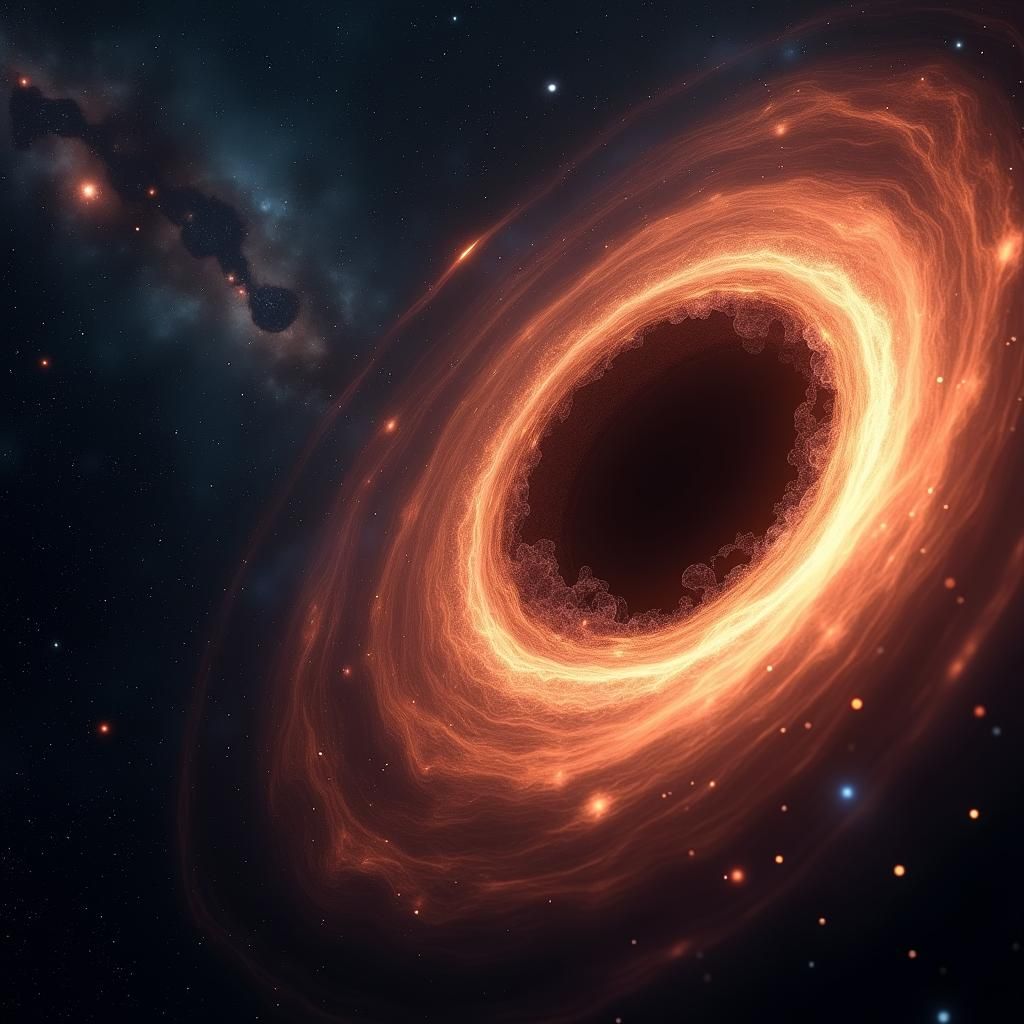
Imagine staring into the abyss, a region of space so dense, so warped, that nothing, not even light itself, can escape its clutches. We call these cosmic monsters black holes, predicted by Einstein’s theory of gravity and now observed throughout the universe. For decades, they were seen as perfect traps, cosmic dustbins swallowing matter and energy, seemingly forever. But then came a question, a paradox sparked by blending the physics of the very large with the rules of the very small: can these ultimate destroyers possess a quality we usually associate with messy bedrooms and shuffling cards – entropy? This exploration delves into the fascinating intersection of theoretical physics, gravity, and information, uncovering how black holes, far from being simple voids, hold profound clues about the fundamental nature of reality itself. Understanding black hole entropy isn’t just about comprehending these exotic objects; it’s about testing the very limits of our physical laws and probing the potential unity between gravity and quantum mechanics, arguably the biggest challenge in modern physics.
Our modern understanding of black holes stems from Albert Einstein’s revolutionary theory of General Relativity, published in 1915 [1]. Unlike Newton’s view of gravity as a simple force pulling objects together, Einstein described gravity as the curvature of spacetime itself, caused by the presence of mass and energy. Massive objects warp the fabric of spacetime around them, and other objects follow these curves, creating the effect we perceive as gravity. Just a year later, in 1916, Karl Schwarzschild found the first exact solution to Einstein’s complex equations, describing the spacetime geometry around a perfectly spherical, non-rotating mass [2]. His solution contained a startling prediction: if enough mass is concentrated within a sufficiently small volume (now called the Schwarzschild radius), the curvature of spacetime becomes so extreme that it forms an ‘event horizon’ – a point of no return. Anything crossing this boundary, including light, is trapped forever, spiralling towards an infinitely dense point at the centre called a singularity. For many years, these solutions were considered mathematical curiosities rather than physical possibilities. However, work by physicists like Subrahmanyan Chandrasekhar, J. Robert Oppenheimer, and Roger Penrose in the mid-20th century showed how massive stars could indeed collapse under their own gravity at the end of their lives to form such objects [3]. The evocative name “black hole” was popularised by physicist John Archibald Wheeler in 1967, capturing the essence of these inescapable gravitational pits. Classical black holes, as described by General Relativity alone, seemed remarkably simple entities, characterised only by their mass, electric charge, and angular momentum (spin) – a concept summarised by Wheeler’s phrase, “black holes have no hair” [4]. They appeared to be perfect absorbers, swallowing everything that fell in without leaving any trace.
This simplicity, however, created a profound conflict with another cornerstone of physics: thermodynamics, particularly the Second Law. The Second Law of Thermodynamics states that the total entropy of an isolated system can only increase over time, or remain constant in ideal cases; it never decreases. Entropy can be thought of, loosely, as a measure of disorder, randomness, or the number of possible microscopic arrangements (microstates) that correspond to the same macroscopic state (macrostate). Think of a tidy room (low entropy) versus a messy room (high entropy) – there are many more ways for a room to be messy than tidy. Alternatively, entropy is related to information; a system with high entropy requires more information to describe its exact state. The problem was this: if you throw something with entropy – say, a cup of hot, disordered gas – into a black hole, it disappears behind the event horizon. From the outside, the object and its associated entropy seem to vanish completely. The black hole itself, according to the classical “no-hair” theorem, only remembers the added mass, charge, and spin, not the complex arrangement or temperature of what fell in. This apparent destruction of entropy represented a blatant violation of the cherished Second Law. Does gravity get a free pass to destroy disorder and information?
The first breakthrough came in the early 1970s from a PhD student at Princeton University, Jacob Bekenstein. Inspired by his supervisor John Wheeler’s musings, including the provocative idea that physics might ultimately be about information (“it from bit”), Bekenstein pondered the connection between black holes and thermodynamics [5]. He considered a thought experiment: what if you slowly lower a box full of hot gas (possessing entropy) towards a black hole’s event horizon and then let the gas fall in, pulling the box back just before it crosses the horizon? It seemed you could make the entropy disappear without significantly changing the black hole (since the box returns). This troubled Bekenstein deeply. He recalled earlier work by Stephen Hawking and James Bardeen showing that in any classical process, the surface area of a black hole’s event horizon never decreases [6], mirroring the behaviour of entropy. Could it be, Bekenstein speculated in 1972, that a black hole does have entropy, and that this entropy is proportional to the area of its event horizon? [7] He proposed that when matter falls into a black hole, the increase in the black hole’s area compensates for (or exceeds) the entropy lost to the outside world, thus saving the Second Law. He even suggested a specific formula relating entropy (S) to area (A), though he couldn’t fix the exact constant of proportionality. As Bekenstein later reflected, “The black hole area theorem… looked tantalizingly like the second law of thermodynamics… Could it be that entropy, a measure of hidden information, resides in the geometry of the black hole?” [8]. His idea was radical – attributing a thermodynamic property like entropy, related to microscopic constituents, to a purely geometric feature of spacetime described by General Relativity.
Many physicists, including Stephen Hawking, were initially sceptical. How could an object that, classically, has zero temperature (it absorbs everything and emits nothing) possess entropy? Thermodynamics dictates that objects with entropy must also have a temperature, and objects with a temperature must radiate energy. But black holes were supposed to be perfectly black. This scepticism spurred Hawking to try and disprove Bekenstein’s idea using the powerful tools of quantum field theory in curved spacetime – combining quantum mechanics with General Relativity, albeit in an approximate way. To his own immense surprise, Hawking discovered in 1974 that black holes are not entirely black after all! [9] He showed that quantum effects near the event horizon cause black holes to emit particles, now known as Hawking radiation. The process can be visualised (though this is a simplification) by considering ‘virtual particles’ – pairs of particles and antiparticles that constantly pop into and out of existence in the quantum vacuum. Near an event horizon, one particle from a pair might fall into the black hole, while the other escapes to infinity. To an outside observer, it looks as if the black hole is radiating. Crucially, the energy carried away by the escaping particle must come from the black hole itself, meaning the black hole slowly loses mass and shrinks over incredibly long timescales. Furthermore, Hawking calculated that this radiation has a perfect thermal spectrum, meaning it corresponds to a specific temperature (the Hawking temperature), which is inversely proportional to the black hole’s mass – larger black holes are colder, smaller ones are hotter. And if something has a temperature and radiates thermally, it must have entropy. Hawking’s calculation confirmed Bekenstein’s intuition and even fixed the constant of proportionality. The result is the celebrated Bekenstein-Hawking formula: S = (kc³/4ħG) * A [10]. Here, S is the entropy, A is the event horizon area, k is Boltzmann’s constant (from thermodynamics), c is the speed of light (from relativity), ħ (h-bar) is the reduced Planck constant (from quantum mechanics), and G is Newton’s gravitational constant (from gravity). This beautiful equation is considered one of the most important results in theoretical physics, linking the three great pillars of modern physics – relativity, quantum mechanics, and thermodynamics – in a single expression describing black holes. Hawking himself noted the profound connection: “This result… suggests that gravity and quantum mechanics must be related in a deep way” (paraphrased sentiment often attributed based on his work’s implications).
While the Bekenstein-Hawking formula provided a stunning resolution to the conflict with the Second Law, it simultaneously birthed a new, perhaps even deeper, puzzle: the black hole information paradox [11]. Quantum mechanics insists that information about a system’s state is never truly lost; it might get scrambled, but it should always be possible, in principle, to reconstruct the past state by tracking all the outgoing particles and their correlations. This principle is known as unitarity. However, Hawking’s original calculation suggested that the outgoing radiation is perfectly thermal, meaning it’s random and carries no information about the specific details of whatever fell into the black hole to form it or increase its mass. Imagine throwing an encyclopaedia into a black hole versus throwing a pile of ashes of the same mass. According to the calculation, the outgoing Hawking radiation would be identical in both cases. As the black hole evaporates completely via Hawking radiation over aeons, where does the information about the encyclopaedia’s contents go? Does it vanish from the universe, violating quantum mechanics? Or does it somehow escape, contradicting the seemingly thermal nature of the radiation and perhaps even the principles of General Relativity near the horizon? This conflict between the predictions of General Relativity (information falls in and cannot escape) and quantum mechanics (information cannot be destroyed) lies at the heart of the information paradox. Hawking initially believed information was truly lost, a stance he famously conceded defeat on years later [12].
Resolving the information paradox and understanding the microscopic origin of black hole entropy – what tiny constituents or degrees of freedom are being counted by the Bekenstein-Hawking formula? – are major driving forces behind the search for a theory of quantum gravity. Several theoretical frameworks offer potential answers. String theory, which posits that fundamental particles are actually tiny vibrating strings and membranes (branes), has had notable success. In 1996, Andrew Strominger and Cumrun Vafa managed to calculate the entropy for certain types of mathematically tractable (“supersymmetric”) black holes by counting the number of ways specific configurations of strings and D-branes could be arranged to produce the black hole’s macroscopic properties (mass, charge, spin) [13]. Remarkably, their result precisely matched the Bekenstein-Hawking formula, providing the first concrete microscopic explanation for black hole entropy within a quantum gravity candidate. Another approach is Loop Quantum Gravity (LQG), which quantises spacetime itself, viewing it as woven from discrete loops or ‘spin networks’. In LQG, the event horizon is also quantised, composed of fundamental geometric units. The entropy of the black hole is proposed to arise from the number of ways these quantum geometric units can configure themselves to create a horizon of a given area [14]. While calculations are complex, LQG also yields results consistent with the Bekenstein-Hawking area law.
Perhaps the most influential idea to emerge from black hole thermodynamics is the holographic principle, proposed independently by Gerard ‘t Hooft and Leonard Susskind in the early 1990s [15, 16]. They were struck by the fact that black hole entropy is proportional to its surface area, not its volume. Usually, the entropy of a system (like a gas in a box) scales with its volume. This suggested something profound: perhaps the maximum amount of information that can be contained within any region of space is actually determined by the area of its boundary, as if the information describing the 3D volume is somehow encoded on a 2D surface, like a hologram. Susskind argued powerfully that if information scaled with volume, one could overload a black hole beyond its Bekenstein-Hawking entropy limit, violating the generalised Second Law. As ‘t Hooft put it, “…the information concerning particles that entered the hole must be stored somehow on the horizon…” [15]. This radical idea gained significant traction with Juan Maldacena’s discovery of the AdS/CFT correspondence in 1997 [17]. This conjecture proposes an exact mathematical equivalence (a duality) between a theory of gravity in a specific type of negatively curved spacetime called Anti-de Sitter space (AdS) and a quantum field theory (similar to those describing particle physics, but with special symmetries – a Conformal Field Theory or CFT) living on the boundary of that spacetime. The gravity theory in the “bulk” AdS space is equivalent to the quantum theory on the lower-dimensional boundary. This provides a concrete realisation of the holographic principle and a powerful tool for studying quantum gravity and black holes. Within AdS/CFT, the information paradox can potentially be resolved because the evolution of the boundary quantum field theory is unitary (information-preserving), implying that the corresponding gravitational process in the bulk, including black hole formation and evaporation, must also preserve information, even if exactly how remains a subject of intense research.
The study of black hole entropy continues to push the frontiers of theoretical physics. It forces us to confront the limitations of our current theories and grapple with fundamental questions about the nature of spacetime, information, and reality. The fact that entropy, a concept born from steam engines, is now intimately linked through the Bekenstein-Hawking formula to the quantum structure of spacetime geometry is nothing short of revolutionary. It suggests that spacetime itself might not be fundamental but rather an emergent property arising from underlying quantum information, echoing Wheeler’s “it from bit”. Controversies still rage regarding the information paradox, with proposed solutions ranging from subtle correlations in Hawking radiation, modifications to spacetime near the horizon (like ‘firewalls’ or ‘fuzzballs’), to connections via wormholes. Each proposal challenges our understanding of gravity and quantum mechanics in different ways. The future likely holds more surprises as we develop more powerful theoretical tools and perhaps, eventually, observational tests capable of probing the quantum realm of black holes.
In summary, the journey to understand black hole entropy has taken us from a classical paradox threatening the laws of thermodynamics to a deep confluence of general relativity, quantum mechanics, and information theory. Bekenstein’s bold conjecture, validated by Hawking’s discovery of black hole radiation, revealed that these enigmatic objects possess an enormous entropy proportional to their surface area. This insight saved the Second Law but spawned the information paradox, questioning the fate of information consumed by black holes and challenging the fundamental tenets of quantum physics. Modern approaches like string theory, loop quantum gravity, and the holographic principle offer promising avenues for resolving these puzzles and unveiling the microscopic degrees of freedom responsible for black hole entropy. Far from being mere cosmic vacuum cleaners, black holes have become theoretical laboratories, crucibles where our most fundamental physical theories are tested and refined. They hint at a reality where geometry, information, and quantum entanglement are inextricably linked. As we continue to unravel their secrets, we are forced to ask ever deeper questions. If the information falling into a black hole is truly encoded on its surface, does this principle apply more broadly? Could it be that the entire three-dimensional universe we experience is merely a holographic projection of information stored on some distant two-dimensional boundary?
References and Further Reading:
- Einstein, A. (1915). Die Feldgleichungen der Gravitation (The Field Equations of Gravitation). Sitzungsberichte der Preussischen Akademie der Wissenschaften zu Berlin, pp. 844–847.
- Schwarzschild, K. (1916). Über das Gravitationsfeld eines Massenpunktes nach der Einsteinschen Theorie (On the Gravitational Field of a Point Mass According to Einstein’s Theory). Sitzungsberichte der Königlich Preussischen Akademie der Wissenschaften, pp. 189–196.
- Penrose, R. (1965). Gravitational Collapse and Space-Time Singularities. Physical Review Letters, 14(3), pp. 57–59.
- Misner, C. W., Thorne, K. S., & Wheeler, J. A. (1973). Gravitation. W. H. Freeman. (This textbook discusses the ‘no-hair’ theorem extensively).
- Wheeler, J. A. (1990). Information, physics, quantum: The search for links. In Zurek, W. H. (Ed.), Complexity, Entropy, and the Physics of Information. Addison-Wesley.
- Bardeen, J. M., Carter, B., & Hawking, S. W. (1973). The four laws of black hole mechanics. Communications in Mathematical Physics, 31(2), pp. 161–170.
- Bekenstein, J. D. (1972). Black holes and the second law. Lettere al Nuovo Cimento, 4(15), pp. 737–740.
- Bekenstein, J. D. (2003). Information in the holographic universe. Scientific American, 289(2), pp. 58–65.
- Hawking, S. W. (1974). Black hole explosions? Nature, 248(5443), pp. 30–31.
- Hawking, S. W. (1975). Particle creation by black holes. Communications in Mathematical Physics, 43(3), pp. 199–220.
- Hawking, S. W. (1976). Breakdown of predictability in gravitational collapse. Physical Review D, 14(10), pp. 2460–2473.
- Hawking, S. W. (2005). Information loss in black holes. Physical Review D, 72(8), 084013. (Paper presented at GR17 conference in Dublin, 2004, conceding the bet).
- Strominger, A., & Vafa, C. (1996). Microscopic origin of the Bekenstein-Hawking entropy. Physics Letters B, 379(1–4), pp. 99–104.
- Rovelli, C. (1996). Black Hole Entropy from Loop Quantum Gravity. Physical Review Letters, 77(16), pp. 3288–3291.
- ‘t Hooft, G. (1993). Dimensional Reduction in Quantum Gravity. arXiv preprint gr-qc/9310026. (Published in Salamfestschrift: A Collection of Talks, World Scientific, pp. 284-296).
- Susskind, L. (1995). The World as a Hologram. Journal of Mathematical Physics, 36(11), pp. 6377–6396.
- Maldacena, J. M. (1998). The Large N limit of superconformal field theories and supergravity. Advances in Theoretical and Mathematical Physics, 2, pp. 231–252. (Also International Journal of Theoretical Physics, 38, pp. 1113-1133 (1999)).
- Susskind, L. (2005). The Cosmic Landscape: String Theory and the Illusion of Intelligent Design. Little, Brown and Company. (Provides accessible explanations of the holographic principle and information paradox).
- Rovelli, C. (2014). Seven Brief Lessons on Physics. Allen Lane. (Offers concise insights into modern physics concepts, including black holes and quantum gravity).
- Institute of Physics website (iop.org) and PhysicsWorld magazine often have accessible articles on recent developments.





 Conversations with AI
Leave a comment