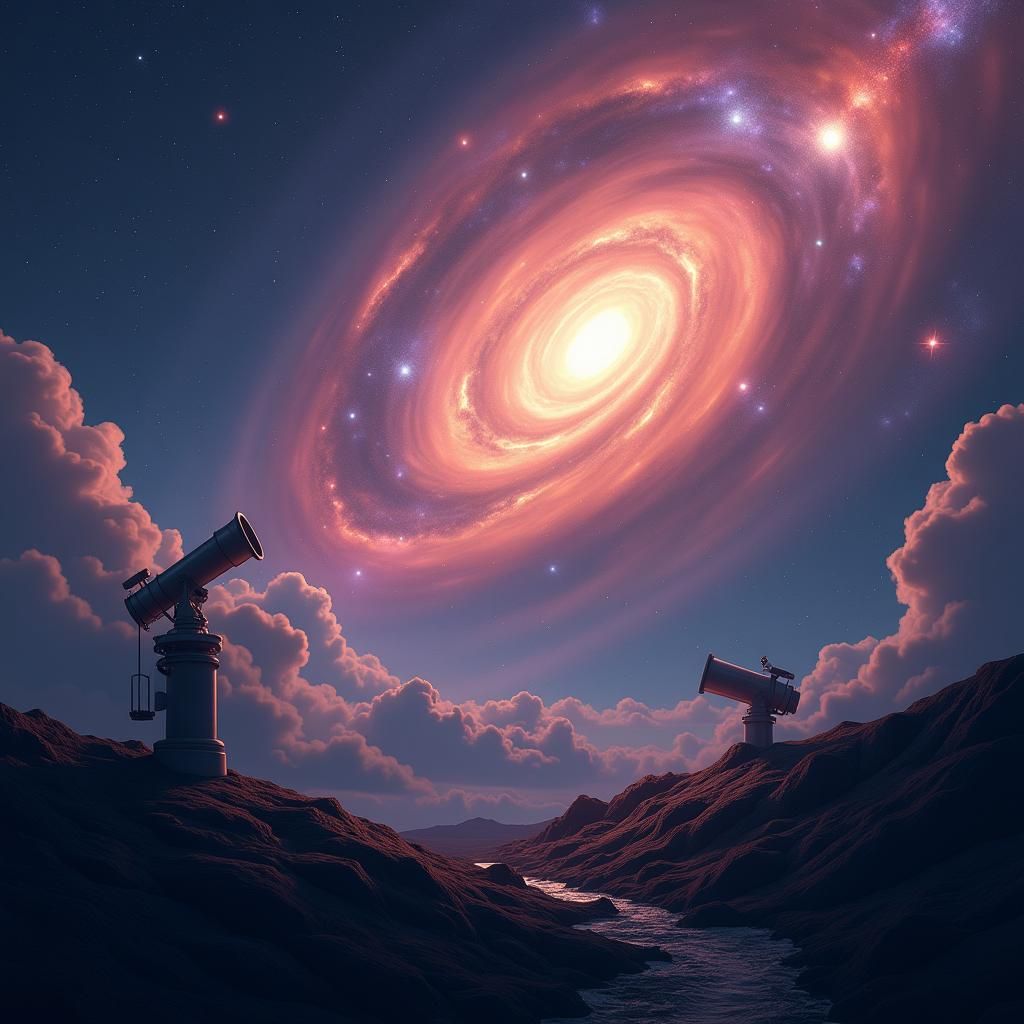
Have you ever looked up at the night sky, truly looked, and felt a sense of overwhelming wonder? Gazing at those distant points of light, perhaps you’ve pondered what they are, how far away they sit, or even if there might be other worlds like ours orbiting them. These are the kinds of questions that drive astrophysics, a fascinating branch of science that seeks to understand the physical nature of the universe and everything within it – from the smallest subatomic particles interacting in the heart of a star to the largest cosmic structures spanning billions of light-years. This isn’t just about satisfying our curiosity, though that’s a powerful motivator; the journey into the cosmos has surprisingly practical implications right here on Earth. Join us as we delve into the science of astrophysics, exploring its fundamental concepts, the incredible tools it employs, and how its discoveries ripple outwards, influencing technology and our very understanding of our place in the vast cosmic ocean.
The roots of astrophysics stretch back centuries, evolving from the ancient practice of astronomy, which primarily focused on mapping the positions and movements of celestial objects. Early civilisations meticulously tracked the stars and planets for navigation, timekeeping, and religious purposes. Think of the careful observations that led to the construction of Stonehenge or the detailed star catalogues compiled by Babylonian and Greek astronomers. A pivotal shift occurred during the Renaissance with figures like Nicolaus Copernicus, who dared to suggest the Earth wasn’t the centre of the universe, followed by Johannes Kepler, who mathematically described planetary orbits, and Galileo Galilei, who turned one of the first telescopes towards the heavens, revealing mountains on the Moon and moons orbiting Jupiter [1]. Isaac Newton then provided the theoretical framework with his law of universal gravitation, explaining why planets moved as they did. However, it was arguably the 19th century that saw the true birth of astro-physics. The development of spectroscopy, pioneered by Joseph von Fraunhofer who discovered mysterious dark lines in the Sun’s spectrum, and later explained by Gustav Kirchhoff and Robert Bunsen, allowed scientists to analyse the light from distant stars and determine their chemical composition and physical conditions [2]. Suddenly, the stars weren’t just points of light; they were physical objects, laboratories of extreme conditions that could be studied from afar. The advent of photography further revolutionised the field, enabling long exposures that captured faint objects invisible to the naked eye and provided permanent records for detailed analysis.
At the heart of modern astrophysics lie the fundamental laws of physics, applied on a cosmic scale. Newton’s gravity remains incredibly useful for describing the motions of planets, stars within galaxies, and even galaxies within clusters. However, for the truly massive objects or phenomena involving extreme gravity and speeds approaching that of light – like black holes, neutron stars, or the expansion of the universe itself – we need Albert Einstein’s theory of General Relativity, published in 1915 [3]. Einstein reimagined gravity not as a force pulling objects together, but as a curvature of spacetime caused by mass and energy. Imagine placing a heavy ball onto a stretched rubber sheet; it creates a dip, and smaller balls rolling nearby will curve towards it. This is analogous to how planets orbit stars – they are following the curves in spacetime created by the star’s mass. General Relativity predicted phenomena like the bending of starlight by gravity (confirmed during a solar eclipse in 1919) and the existence of gravitational waves – ripples in spacetime itself, finally detected directly a century later in 2015 by the LIGO and Virgo collaborations [4]. As astrophysicist Kip Thorne, a Nobel laureate for his work on gravitational waves, noted, these detections opened a completely new window onto the universe, allowing us to “hear” cosmic collisions previously invisible to us.
But gravity isn’t the only fundamental force at play. Understanding what happens inside stars, how elements are forged, or the conditions in the very early universe requires quantum mechanics – the physics of the very small. Quantum mechanics governs the behaviour of atoms and subatomic particles, explaining how nuclear fusion powers stars, converting hydrogen into helium and releasing tremendous amounts of energy, as described by Arthur Eddington in the 1920s [5]. It also explains the discrete spectral lines observed by Fraunhofer, Kirchhoff, and Bunsen – specific colours of light absorbed or emitted by atoms, acting like unique fingerprints that reveal a star’s or nebula’s composition, temperature, and even its motion towards or away from us (through the Doppler effect, causing redshift or blueshift). The interplay between general relativity (governing the large-scale structure and gravity) and quantum mechanics (governing the small-scale interactions and energy generation) is one of the central themes – and challenges – in modern astrophysics, particularly when trying to understand singularities within black holes or the very first moments after the Big Bang.
To probe the universe, astrophysicists rely on an incredible arsenal of observational tools, primarily telescopes designed to capture electromagnetic radiation across its entire spectrum. While our eyes see only a narrow band of visible light, the cosmos radiates in radio waves, microwaves, infrared, ultraviolet, X-rays, and gamma rays. Each part of the spectrum reveals different processes and objects. Radio telescopes, often vast arrays of dishes like the Very Large Array (VLA) in New Mexico or the future Square Kilometre Array (SKA), can pierce through interstellar dust to observe cold gas clouds where stars are born, map the structure of our galaxy, and detect energetic jets blasting from supermassive black holes [6]. Infrared telescopes, like the Spitzer Space Telescope and now the James Webb Space Telescope (JWST), are crucial for seeing cooler objects like forming stars, planet-forming discs, and distant galaxies whose light has been stretched (redshifted) into the infrared by the expansion of the universe [7]. Visible light astronomy, carried out by ground-based giants like the Very Large Telescope (VLT) in Chile and the venerable Hubble Space Telescope, provides sharp images and detailed spectra of stars, nebulae, and galaxies. Ultraviolet, X-ray (like the Chandra X-ray Observatory), and gamma-ray telescopes (like the Fermi Gamma-ray Space Telescope) must be placed in space because Earth’s atmosphere blocks most of this high-energy radiation. They unveil the hottest and most violent phenomena: exploding stars (supernovae), matter swirling into black holes, and collisions between neutron stars [8]. Complementing electromagnetic observations are detectors for cosmic rays (high-energy particles), neutrinos (elusive subatomic particles that travel almost unimpeded through matter), and the aforementioned gravitational waves. This “multi-messenger astronomy,” combining data from different kinds of signals, provides a much richer and more complete picture of cosmic events.
These sophisticated instruments generate vast amounts of data that require powerful computational techniques for analysis and interpretation. Furthermore, many astrophysical processes, like the formation of galaxies over billions of years or the complex hydrodynamics inside an exploding star, are impossible to replicate in a laboratory. Here, computer simulations become indispensable tools. Astrophysicists develop complex numerical models based on the laws of physics, input initial conditions, and let supercomputers simulate the evolution of these systems over cosmic time. Comparing the results of these simulations with actual observations helps refine our understanding of the underlying physics and test cosmological models. For instance, large-scale simulations like the Millennium Simulation or IllustrisTNG have been crucial in understanding how the web-like structure of dark matter shapes the distribution of galaxies we see today [9].
Recent decades have seen breathtaking advances. One of the most exciting areas is the study of exoplanets – planets orbiting stars other than our Sun. Since the first confirmed discovery in 1995, thousands of exoplanets have been found using techniques like the transit method (detecting the slight dimming of a star as a planet passes in front of it) employed by the Kepler Space Telescope and its successor TESS, and the radial velocity method (detecting the wobble of a star caused by an orbiting planet’s gravity) [10]. The focus is now shifting towards characterising these worlds, using telescopes like JWST to analyse the composition of their atmospheres, searching for potential biosignatures – signs of life. Another major breakthrough is the aforementioned detection of gravitational waves, confirming a key prediction of Einstein’s theory and opening a new way to study extreme events like the mergers of black holes and neutron stars. These mergers are also thought to be the primary cosmic factories for heavy elements like gold and platinum [11]. Cosmology, the study of the universe’s origin and evolution, has also entered an era of “precision cosmology.” Detailed measurements of the cosmic microwave background radiation (the faint afterglow of the Big Bang) by missions like WMAP and Planck, combined with observations of distant supernovae and galaxy clustering, have led to the Standard Model of Cosmology, known as Lambda-CDM [12]. This model suggests the universe is composed of only about 5% ordinary matter (the stuff we, stars, and planets are made of), about 27% mysterious dark matter (an invisible substance whose gravity holds galaxies together), and about 68% even more enigmatic dark energy (a force driving the accelerating expansion of the universe). Identifying the nature of dark matter and dark energy remains one of the biggest challenges in physics today.
While astrophysics often deals with phenomena light-years away, its impact is felt much closer to home. The relentless push for better detectors, more precise instruments, and sophisticated data analysis techniques often leads to technological spin-offs. The charge-coupled devices (CCDs) developed for astronomical imaging, particularly for the Hubble Space Telescope, revolutionised digital photography and are now found in countless smartphones and cameras [13]. Techniques developed for processing faint X-ray signals from space have been adapted for medical imaging, leading to improved scanners for detecting diseases like cancer. The need to correct for tiny time distortions predicted by Einstein’s General Relativity is essential for the accurate functioning of the Global Positioning System (GPS) network that many of us rely on daily; without these relativistic corrections, GPS navigation errors would accumulate rapidly, rendering the system useless within minutes [14]. Furthermore, studying the atmospheres of other planets, like Venus with its runaway greenhouse effect or Mars with its thin, cold atmosphere, provides valuable insights into planetary climate dynamics, helping us better understand and model climate change here on Earth. As the late Carl Sagan eloquently put it, “The exploration of the cosmos is a voyage of self-discovery” [15]. Studying the universe helps us understand our own planet’s context and fragility.
Beyond tangible technologies, astrophysics plays a profound role in education and inspiration. Images from Hubble and now JWST capture the public imagination, fostering interest in science, technology, engineering, and mathematics (STEM). The sheer scale and beauty of the universe, the mind-bending concepts like black holes and the Big Bang, and the ongoing quest for knowledge inspire young people to pursue scientific careers and encourage critical thinking. Understanding that the iron in our blood and the calcium in our bones were forged in the hearts of long-dead stars connects us intimately to the cosmos. This realisation, popularised by Sagan’s famous phrase “We are made of star-stuff,” provides a powerful perspective on our place in the universe [15].
Looking ahead, the future of astrophysics promises even more discoveries. The James Webb Space Telescope is peering deeper into cosmic history than ever before, studying the first stars and galaxies. Enormous ground-based telescopes like the Extremely Large Telescope (ELT) and the Thirty Meter Telescope (TMT) will provide unprecedented views of exoplanet atmospheres and distant cosmic objects [16]. Gravitational wave astronomy is still in its infancy, with new detectors planned that will increase sensitivity and allow us to probe even earlier moments in the universe’s history. The ongoing search for the nature of dark matter and dark energy will likely involve novel experiments and perhaps even lead to revisions of our fundamental understanding of gravity or particle physics. There are still fundamental questions to answer: Are we alone in the universe? What happened before the Big Bang? What is the ultimate fate of the cosmos?
Astrophysics, then, is more than just star-gazing. It is a rigorous scientific discipline that combines observation, theory, and computation to unravel the mysteries of the universe. It pushes the boundaries of technology, yields practical applications that benefit society, and provides profound insights into our cosmic origins and destiny. From understanding the fundamental laws that govern reality to searching for life beyond Earth, it tackles some of the biggest questions humanity can ask. While we have learned an immense amount, the universe still holds vast secrets. As we continue to develop new tools and refine our theories, what currently unimaginable wonders await discovery beyond our current horizon?
References and Further Reading:
- Hoskin, M. (Ed.). (1999). The Cambridge Concise History of Astronomy. Cambridge University Press. (Provides a good overview of astronomical history).
- Hearnshaw, J. B. (2014). The Analysis of Starlight: Two Centuries of Astronomical Spectroscopy. Cambridge University Press. (Details the development and impact of spectroscopy).
- Einstein, A. (1916). Die Grundlage der allgemeinen Relativitätstheorie. Annalen der Physik, 354(7), 769–822. (The original paper on General Relativity – for historical context, though technical). A more accessible explanation can be found on websites like NASA’s SpacePlace or university physics department outreach pages.
- Abbott, B. P., et al. (LIGO Scientific Collaboration and Virgo Collaboration). (2016). Observation of Gravitational Waves from a Binary Black Hole Merger. Physical Review Letters, 116(6), 061102. (The landmark detection paper).
- Eddington, A. S. (1926). The Internal Constitution of the Stars. Cambridge University Press. (A foundational text discussing stellar energy generation).
- National Radio Astronomy Observatory (NRAO). (n.d.). Very Large Array. Retrieved from https://public.nrao.edu/telescopes/vla/ (Information on a key radio telescope).
- NASA. (n.d.). James Webb Space Telescope. Retrieved from https://www.jwst.nasa.gov/ (Official site for JWST).
- NASA. (n.d.). NASA’s High Energy Astrophysics Science Archive Research Center (HEASARC). Retrieved from https://heasarc.gsfc.nasa.gov/ (Resource for X-ray and gamma-ray astronomy).
- Vogelsberger, M., et al. (2020). Cosmological Simulations of Galaxy Formation. Nature Reviews Physics, 2(1), 42-66. (Review article on cosmological simulations like IllustrisTNG).
- NASA Exoplanet Exploration. (n.d.). 5 Ways to Find an Exoplanet. Retrieved from https://exoplanets.nasa.gov/discovery/detection-methods/ (Explains key exoplanet detection techniques).
- Abbott, B. P., et al. (LIGO Scientific Collaboration and Virgo Collaboration). (2017). GW170817: Observation of Gravitational Waves from a Binary Neutron Star Inspiral. Physical Review Letters, 119(16), 161101. (Detection of neutron star merger and its electromagnetic counterpart).
- Planck Collaboration. (2020). Planck 2018 results. VI. Cosmological parameters. Astronomy & Astrophysics, 641, A6. (Definitive results from the Planck satellite on cosmological parameters).
- NASA Spinoff. (n.d.). Digital Image Sensors. Retrieved from https://spinoff.nasa.gov/Spinoff2017/cg_1.html (Details the transfer of CCD technology).
- Ashby, N. (2003). Relativity in the Global Positioning System. Living Reviews in Relativity, 6(1), 1. (Detailed explanation of relativistic effects on GPS).
- Sagan, C. (1980). Cosmos. Random House. (A classic book and TV series popularising astronomy and the “star-stuff” concept).
- European Southern Observatory (ESO). (n.d.). The Extremely Large Telescope. Retrieved from https://elt.eso.org/ (Information on the future ELT).







 Conversations with AI
Leave a reply to mideprominentvb75 Cancel reply