*I often wonder if I was about in the past if I’d have MS, if I did how I’d cope, how long I’d be able to last.
Imagine a civilisation where medicine was a blend of science, spirituality, and practicality—where a broken bone could be set with precision, yet a fever might be treated with incantations to the gods. This was ancient Egypt, a culture whose medical innovations laid the groundwork for practices still recognisable today. From surgical techniques documented on papyrus scrolls to herbal remedies that predate modern pharmacology, the Egyptians’ contributions to medicine were both pioneering and deeply influential. Their legacy, preserved in tombs and texts, offers a fascinating glimpse into how they perceived the human body, disease, and healing—a legacy that continues to shape our understanding of medical history.
The relevance of ancient Egyptian medicine lies not just in its historical curiosity but in its enduring impact. Many of their practices, such as wound care and diagnostic methods, reveal a surprisingly empirical approach for their time. By studying their achievements, we gain insight into how early societies navigated the complexities of health and illness, blending observation with tradition. For a modern audience, especially young learners, this topic bridges the gap between ancient history and contemporary science, showing how foundational knowledge is built over millennia.
To appreciate Egypt’s medical advancements, one must first understand its cultural and environmental context. Flourishing along the Nile from around 3100 BCE until the conquest by Alexander the Great in 332 BCE, ancient Egypt developed a sophisticated society with a strong emphasis on religion, agriculture, and bureaucracy. The Nile’s predictable floods supported stable settlements, enabling specialisation in trades, including medicine. Medical practice was closely tied to religion; priests often served as physicians, and temples doubled as healing centres. The earliest known physician, Imhotep (c. 2650–2600 BCE), was also a chancellor and high priest, illustrating the intertwined roles of science and spirituality.
Key to Egypt’s medical knowledge was their experience with mummification. Over centuries, embalmers gained intimate knowledge of human anatomy, identifying organs and understanding their basic functions. While their primary goal was preservation for the afterlife, this process inadvertently advanced anatomical knowledge. The Edwin Smith Papyrus (c. 1600 BCE), a surgical treatise, reflects this understanding, detailing treatments for wounds, fractures, and dislocations with a clarity that suggests systematic observation.
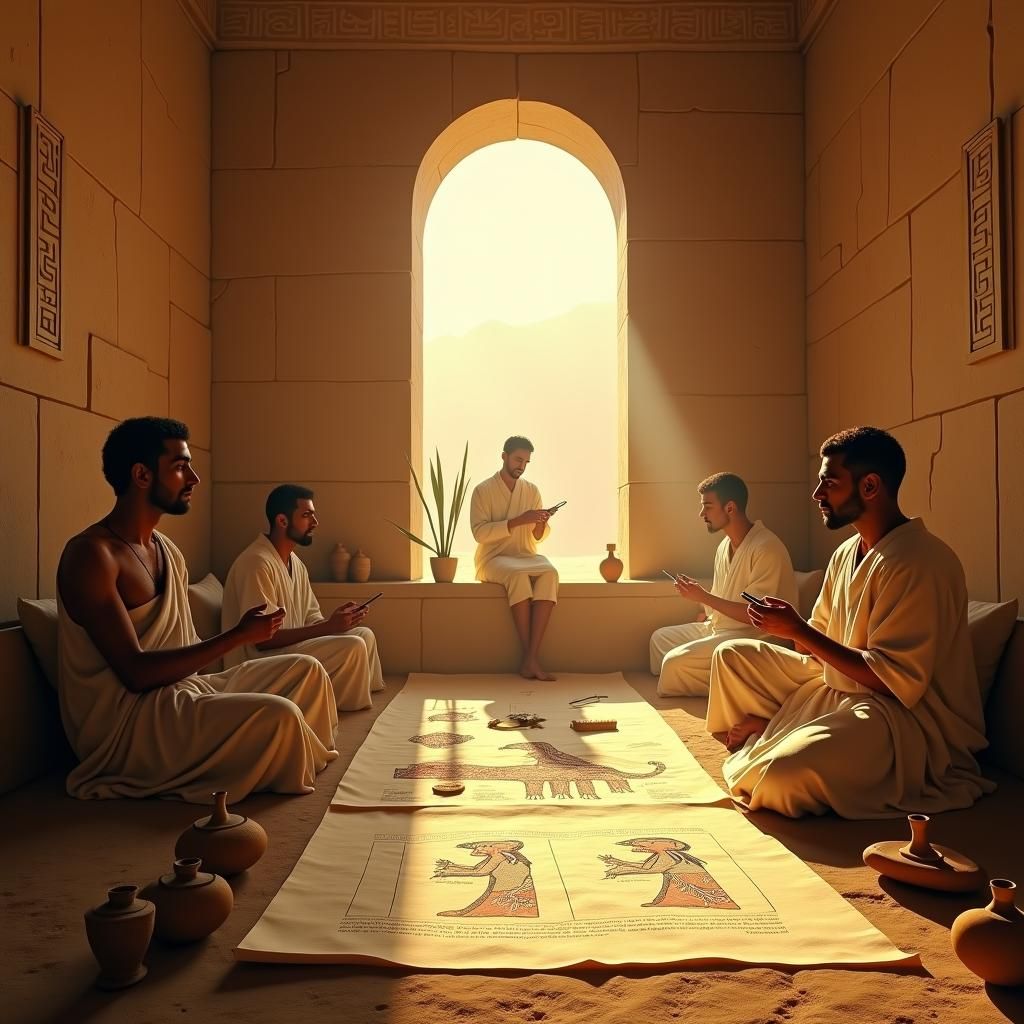
Egyptian medicine was documented in several papyri, the most famous being the Ebers Papyrus (c. 1550 BCE), which lists over 700 remedies for conditions ranging from asthma to crocodile bites. These texts reveal a taxonomy of diseases and treatments, many of which relied on natural ingredients like honey, garlic, and willow leaves—substances now known to have antibacterial or anti-inflammatory properties. The emphasis on cleanliness, evident in recommendations for wound washing with alcohol or vinegar, hints at an early grasp of infection prevention.
Surgical practices in ancient Egypt were remarkably advanced. The Edwin Smith Papyrus describes 48 trauma cases, each with a diagnosis, treatment, and prognosis. For example, it advises immobilising a broken jaw with linen bandages—a technique not dissimilar to modern methods. Surgical tools, such as scalpels and forceps found in tombs, further attest to their skill. However, their understanding of internal medicine was limited by religious taboos; dissecting living bodies was forbidden, so knowledge of organs like the heart and liver came largely from animal sacrifices and mummification.
Pharmacology was another area of expertise. The Ebers Papyrus prescribes compounds made from minerals, plants, and animal products. Honey, widely used for its antimicrobial properties, featured in ointments for burns and wounds. Willow bark, a source of salicylic acid (the precursor to aspirin), was used to alleviate pain. Even seemingly bizarre remedies, such as applying mashed mouse to toothaches, may have had psychological or placebo benefits. These treatments were often accompanied by spells, reflecting the belief that healing required both physical and spiritual intervention.
The role of magic and religion cannot be overstated. Egyptians attributed many illnesses to supernatural causes—the wrath of a god, a curse, or an evil spirit. Thus, treatments frequently combined practical measures with rituals. A physician might prescribe a poultice for a wound while reciting an incantation to Sekhmet, the lion-headed goddess of healing. This dual approach highlights their holistic view of health, where body and soul were inseparable. Yet, it also limited progress; for instance, mental illnesses were often ascribed to demonic possession rather than physiological causes.
Egyptian medicine’s influence extended beyond its borders. Greek historians like Herodotus praised Egyptian physicians, and many Greek medical practices, including those of Hippocrates, show clear Egyptian influences. The Alexandria Library, founded in the 3rd century BCE, became a hub where Egyptian, Greek, and later Roman medical knowledge merged. Galen, the renowned Roman physician, studied Egyptian texts, perpetuating their legacy into the medieval period.
Analysing these contributions raises intriguing questions. How much of Egyptian medicine was truly scientific, and how much was rooted in superstition? Scholars like John F. Nunn argue that their empirical observations—documenting symptoms, testing treatments—laid the groundwork for the scientific method, even if their explanations were framed in religious terms. Conversely, Heinrich von Staden notes that the lack of dissection hindered their understanding of internal physiology, leading to errors that persisted for centuries.
The implications of Egypt’s medical legacy are profound. Their emphasis on documentation—recording case studies and remedies—set a precedent for medical literature. The Ebers and Edwin Smith Papyri are among the earliest examples of systematic medical writing, predating Hippocratic texts by centuries. Moreover, their integrative approach, combining physical and spiritual care, resonates with modern holistic medicine, which acknowledges the mind-body connection.
Yet, controversies remain. Some historians debate the efficacy of Egyptian remedies, arguing that without clinical trials, their success is anecdotal. Others point to evidence of long-term patient care, such as healed fractures in mummies, as proof of their practical skills. The tension between tradition and innovation in Egyptian medicine mirrors contemporary debates about alternative therapies versus evidence-based practice.
In conclusion, ancient Egypt’s contributions to medicine were a tapestry of innovation, tradition, and cross-cultural exchange. Their advancements in surgery, pharmacology, and medical documentation reveal a society deeply engaged with the challenges of health and healing. While their reliance on magic may seem primitive, it underscores a universal human quest to understand and control the forces of life and death. As we continue to unravel the secrets of their medical papyri and mummies, we are reminded that the roots of modern medicine stretch far into the past, nourished by the ingenuity of those who came before us.
What might our own medical practices look like to future civilisations? Will they marvel at our breakthroughs or puzzle over our blind spots, much as we do with the ancient Egyptians? The story of Egyptian medicine invites us to reflect on the evolution of knowledge—and the enduring human desire to heal.
References and Further Reading
- Nunn, J. F. Ancient Egyptian Medicine. University of Oklahoma Press, 1996.
- Sigerist, H. E. A History of Medicine: Early Greek, Hindu, and Persian Medicine. Oxford University Press, 1961.
- Bryan, C. P. The Papyrus Ebers: Translated from the German Version. Bles, 1930.
- von Staden, H. Herophilus: The Art of Medicine in Early Alexandria. Cambridge University Press, 1989.
- Ritner, R. K. The Mechanics of Ancient Egyptian Magical Practice. Oriental Institute of the University of Chicago, 1993.
- Sullivan, R. “A Brief Journey into Medical Care and Disease in Ancient Egypt.” Journal of the Royal Society of Medicine, vol. 89, 1996, pp. 141–145.
- Breasted, J. H. The Edwin Smith Surgical Papyrus: Published in Facsimile and Hieroglyphic Transliteration. University of Chicago Press, 1930.





 Conversations with AI
Leave a comment