*Here in the UK I loved the BBC Micro, didn’t like it at school though, the teachers rarely knew much more than us kids!
** I loved programming, loved playing computer games, loved computers. I was well aware of the geek label back then, but didn’t really care, in the late 80’s to the 90’s through secondary school, college, and university, I was the techno-geek-goth.
*** I’m surprised that even now, with kids on phones/tablets/laptops that there is still a geek stigma associated with computing, why?
The world of education has undergone a significant transformation in recent years, and at the heart of this change is the impact of technology. From the early days of computers in the classroom to the current era of online learning and digital resources, technology has revolutionised the way we learn and teach. As we navigate this new landscape, it’s essential to consider the effects of technology on education, both positive and negative, and explore the ways in which it is shaping the future of learning. The purpose of this post is to delve into the world of technology and education, examining the historical context, current trends, and potential implications for students, teachers, and the education system as a whole.
To understand the impact of technology on education, it’s necessary to look back at the historical context. The first computers were introduced in schools in the 1960s, but it wasn’t until the 1980s that they became a standard feature of the classroom [1]. The early days of educational technology were marked by the use of basic computer programs and educational software, which were often limited in their scope and effectiveness. However, as technology advanced, so too did its potential for education. The widespread adoption of the internet in the 1990s and 2000s opened up new possibilities for online learning, and the development of digital resources such as educational websites, podcasts, and videos has continued to expand the range of learning opportunities available to students.
One of the main areas where technology has had a significant impact on education is in the provision of online learning resources. Websites such as Khan Academy, Coursera, and edX offer a vast array of courses and educational materials, which can be accessed by students from all over the world [2]. These resources have made it possible for students to learn at their own pace, anytime and anywhere, and have opened up new opportunities for students who may not have had access to certain courses or educational institutions in the past. As Sal Khan, founder of Khan Academy, notes, “The idea is to use technology to humanise the learning process, to make it more personal, more interactive, and more effective” [3].
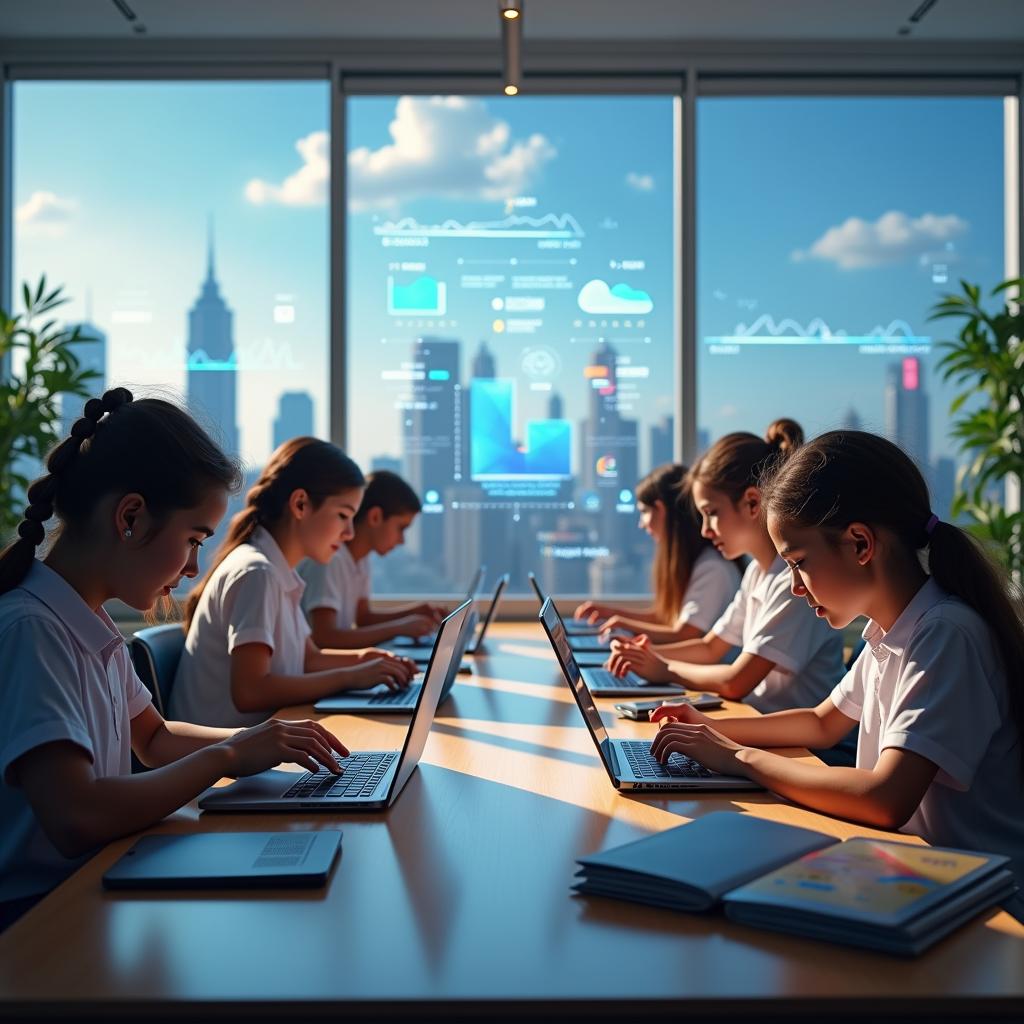
Another area where technology has had a significant impact is in the classroom itself. The use of digital whiteboards, tablets, and laptops has transformed the way teachers teach and students learn. These tools enable teachers to create interactive and engaging lessons, which can be tailored to the individual needs of their students. They also provide students with the opportunity to work collaboratively, share resources, and access a wide range of educational materials [4]. According to a report by the National Center for Education Statistics, the use of technology in the classroom has been shown to improve student engagement, motivation, and academic achievement [5].
However, despite the many benefits of technology in education, there are also some potential drawbacks to consider. One of the main concerns is the issue of equity and access. Not all students have equal access to technology, and this can create a digital divide between those who have the resources and those who do not [6]. As Professor Sugata Mitra, a leading expert in educational technology, notes, “The biggest challenge is not the technology itself, but the social and economic context in which it is used” [7]. Additionally, there are concerns about the potential for technology to distract students, rather than engage them, and the need for teachers to develop the skills and knowledge necessary to effectively integrate technology into their teaching practices [8].
In recent years, there have been significant advancements in educational technology, including the development of artificial intelligence, virtual reality, and gamification. These technologies have the potential to revolutionise the way we learn, making it more interactive, immersive, and effective [9]. For example, AI-powered adaptive learning systems can provide personalised learning experiences for students, while virtual reality can enable students to explore complex concepts and environments in a highly interactive and engaging way [10]. As Neil Selwyn, a professor of education, notes, “The key is to use technology in a way that enhances the learning experience, rather than simply replacing traditional teaching methods” [11].
As we look to the future, it’s clear that technology will continue to play a major role in shaping the education system. The rise of online and blended learning, the development of new technologies such as blockchain and the Internet of Things, and the increasing focus on lifelong learning and professional development will all have a significant impact on the way we learn and teach [12]. According to a report by the OECD, the use of technology in education has the potential to improve student outcomes, increase efficiency, and reduce costs [13]. However, as we move forward, it’s essential to consider the potential implications of these changes, including the need for teachers to develop new skills, the potential for job displacement, and the importance of ensuring that technology is used in a way that is equitable, accessible, and effective for all students.
In conclusion, the impact of technology on education has been significant, and it will continue to shape the future of learning in the years to come. As we navigate this new landscape, it’s essential to consider the potential benefits and drawbacks of technology, and to work towards creating an education system that is equitable, accessible, and effective for all students. As Professor Stephen Heppell, a leading expert in educational technology, notes, “The future of education is not about the technology itself, but about the kind of world we want to create” [14]. As we look to the future, we must ask ourselves, what kind of world do we want to create, and how can technology help us get there?
References and Further Reading:
- Cuban, L. (2001). Oversold and Underused: Computers in the Classroom. Harvard University Press.
- Khan, S. (2012). The One World Schoolhouse: Education Reimagined. Twelve.
- Khan, S. (2011). Let’s use video to reinvent education. TED Talks.
- National Center for Education Statistics. (2019). Student Access to Digital Tools and the Internet.
- National Center for Education Statistics. (2019). Technology in the Classroom.
- Mitra, S. (2013). Build a School in the Cloud. TED Talks.
- Mitra, S. (2014). The Future of Learning.
- Selwyn, N. (2014). Digital Technology and the Contemporary University.
- Luckin, R. (2018). Enhancing Learning and Teaching with Technology.
- Dede, C. (2010). Comparing Frameworks for 21st Century Skills.
- Selwyn, N. (2016). Is Technology Good for Education?
- OECD. (2019). Trends Shaping Education 2019.
- OECD. (2018). Education 2030.
- Heppell, S. (2017). Learning to Love the Future.





 Conversations with AI
Leave a comment