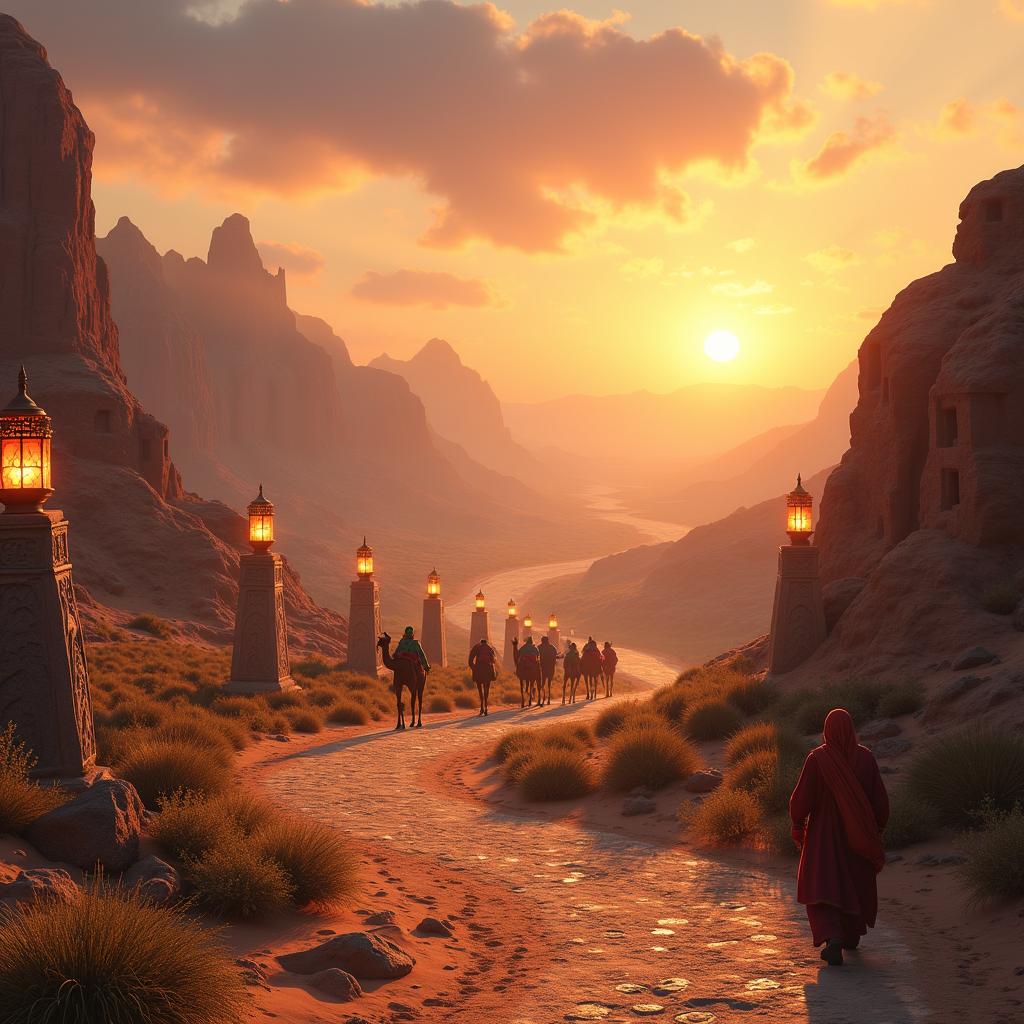
The Silk Road, a network of ancient trade routes that connected the East and West, has long been a subject of fascination for historians, archaeologists, and enthusiasts alike. The mere mention of the Silk Road conjures up images of exotic spices, precious stones, and luxurious fabrics being transported across vast distances, shaping the course of human history. As we delve into the archaeological findings on the Silk Road, we will uncover the secrets of this ancient trade network, exploring its historical significance, cultural impacts, and the latest discoveries that continue to shed new light on this fascinating topic. The purpose of this article is to provide an in-depth analysis of the archaeological findings on the Silk Road, highlighting its importance and relevance to our understanding of the past.
To understand the significance of the Silk Road, it is essential to provide some historical context. The Silk Road was established during the Han Dynasty (206 BCE – 220 CE), when Chinese emperors sought to expand their trade and cultural exchange with Central Asia and the Mediterranean region. The route spanned over 4,000 miles, stretching from China to the Mediterranean, passing through present-day India, Pakistan, Afghanistan, Iran, Turkey, and Greece. Over the centuries, the Silk Road played a vital role in the exchange of goods, ideas, and cultures between the East and West, with merchants, traders, and travelers contributing to the spread of Buddhism, Christianity, and Islam. As noted by historian Peter Frankopan, “the Silk Road was a network of routes that connected the East and West, facilitating the exchange of goods, ideas, and cultures” [1]. This exchange had a profound impact on the development of civilisations, with the Silk Road serving as a conduit for the transmission of knowledge, technologies, and artistic styles.
One of the most significant archaeological findings on the Silk Road is the discovery of the Tarim Basin mummies in western China. These mummies, dated to around 1000 BCE, provide evidence of the early presence of Caucasian peoples in the region, highlighting the complex cultural exchange and migration patterns that occurred along the Silk Road. The mummies were found to be wearing clothing made from wool and felt, which were likely imported from the Mediterranean region, demonstrating the extensive trade networks that existed at the time. As archaeologist Elizabeth Barber notes, “the Tarim Basin mummies are a fascinating example of the cultural exchange that occurred along the Silk Road, with the mummies wearing clothing made from materials imported from the Mediterranean region” [2]. The discovery of these mummies has significant implications for our understanding of the Silk Road, highlighting the complex cultural dynamics that existed along this ancient trade network.
Another significant archaeological finding on the Silk Road is the excavation of the ancient city of Samarkand in modern-day Uzbekistan. Samarkand was a major stopover on the Silk Road, with merchants and traders coming from all over the world to exchange goods and ideas. The excavation of the city has uncovered a wealth of artifacts, including ceramics, textiles, and coins, which provide valuable insights into the daily lives of the people who lived and traded along the Silk Road. As historian Morris Rossabi notes, “Samarkand was a cosmopolitan city, with people from all over the world coming to trade and exchange ideas” [3]. The discovery of these artifacts has significant implications for our understanding of the Silk Road, highlighting the cultural and economic significance of this ancient trade network.
The Silk Road also played a significant role in the spread of Buddhism from India to China and other parts of Asia. Archaeological findings at the Mogao Caves in Dunhuang, China, have uncovered a vast collection of Buddhist scriptures, paintings, and sculptures, which demonstrate the importance of Buddhism along the Silk Road. The caves, which date back to the 4th century CE, provide a unique glimpse into the lives of Buddhist monks and traders who traveled along the Silk Road, spreading their teachings and practices to new regions. As Buddhist scholar Donald Lopez notes, “the Mogao Caves are a testament to the significance of Buddhism along the Silk Road, with the caves containing a vast collection of Buddhist scriptures and artworks” [4]. The discovery of these artifacts has significant implications for our understanding of the spread of Buddhism, highlighting the importance of the Silk Road in the transmission of this major world religion.
In recent years, archaeological discoveries have continued to shed new light on the Silk Road. The use of advanced technologies, such as satellite imaging and ground-penetrating radar, has allowed researchers to locate and excavate new sites, providing fresh insights into the history and culture of the Silk Road. For example, the discovery of the ancient city of Merv in modern-day Turkmenistan has uncovered a wealth of artifacts, including ceramics, glassware, and metalwork, which demonstrate the city’s importance as a major center of trade and culture along the Silk Road. As archaeologist Georgina Herrmann notes, “the discovery of Merv has provided significant new insights into the history and culture of the Silk Road, with the city’s artifacts demonstrating its importance as a major center of trade and culture” [5]. The discovery of these artifacts has significant implications for our understanding of the Silk Road, highlighting the cultural and economic significance of this ancient trade network.
As we analyse the archaeological findings on the Silk Road, it becomes clear that this ancient trade network had a profound impact on the development of human civilisation. The exchange of goods, ideas, and cultures along the Silk Road facilitated the spread of technologies, artistic styles, and religious practices, shaping the course of history in profound ways. However, the Silk Road was not without its challenges and controversies, with the transmission of diseases, such as the Black Death, and the exploitation of local populations by foreign traders and conquerors. As historian Janet Abu-Lughod notes, “the Silk Road was a complex and multifaceted phenomenon, with both positive and negative consequences for the people and cultures involved” [6]. The Silk Road also had significant implications for the environment, with the increased trade and cultural exchange leading to the degradation of natural resources and the loss of biodiversity.
In conclusion, the archaeological findings on the Silk Road provide a fascinating glimpse into the history and culture of this ancient trade network. From the Tarim Basin mummies to the excavation of Samarkand and the Mogao Caves, these discoveries have significant implications for our understanding of the Silk Road and its impact on human civilisation. As we continue to explore and learn more about the Silk Road, we are reminded of the importance of cultural exchange and the need to preserve our cultural heritage for future generations. As archaeologist Colin Renfrew notes, “the Silk Road is a testament to the power of cultural exchange and the importance of preserving our cultural heritage” [7]. The Silk Road remains an enigmatic and captivating topic, inviting us to reflect on the complexities of human history and the interconnectedness of our global community. As we look to the future, we are left with a provocative question: what secrets still lie hidden along the Silk Road, waiting to be uncovered by intrepid archaeologists and historians?
References and Further Reading:
- Frankopan, P. (2015). The Silk Roads: A New History of the World. Bloomsbury Publishing.
- Barber, E. (1999). The Mummies of Ürümchi. W.W. Norton & Company.
- Rossabi, M. (2010). The Turks of Central Asia. Routledge.
- Lopez, D. (2013). The Princeton Dictionary of Buddhism. Princeton University Press.
- Herrmann, G. (2013). The Archaeology of Merv. Oxbow Books.
- Abu-Lughod, J. (1989). Before European Hegemony: The World System A.D. 1250-1350. Oxford University Press.
- Renfrew, C. (2009). Prehistory: The Making of the Human Mind. Weidenfeld & Nicolson.
- Foltz, R. (2010). Religions of the Silk Road: Overland Trade and Cultural Exchange from Antiquity to the Fifteenth Century. Palgrave Macmillan.
- Liu, X. (2010). The Silk Road in World History. Oxford University Press.
- Christian, D. (2000). A History of Russia, Central Asia and Mongolia. Blackwell Publishers.




 Conversations with AI
Leave a comment