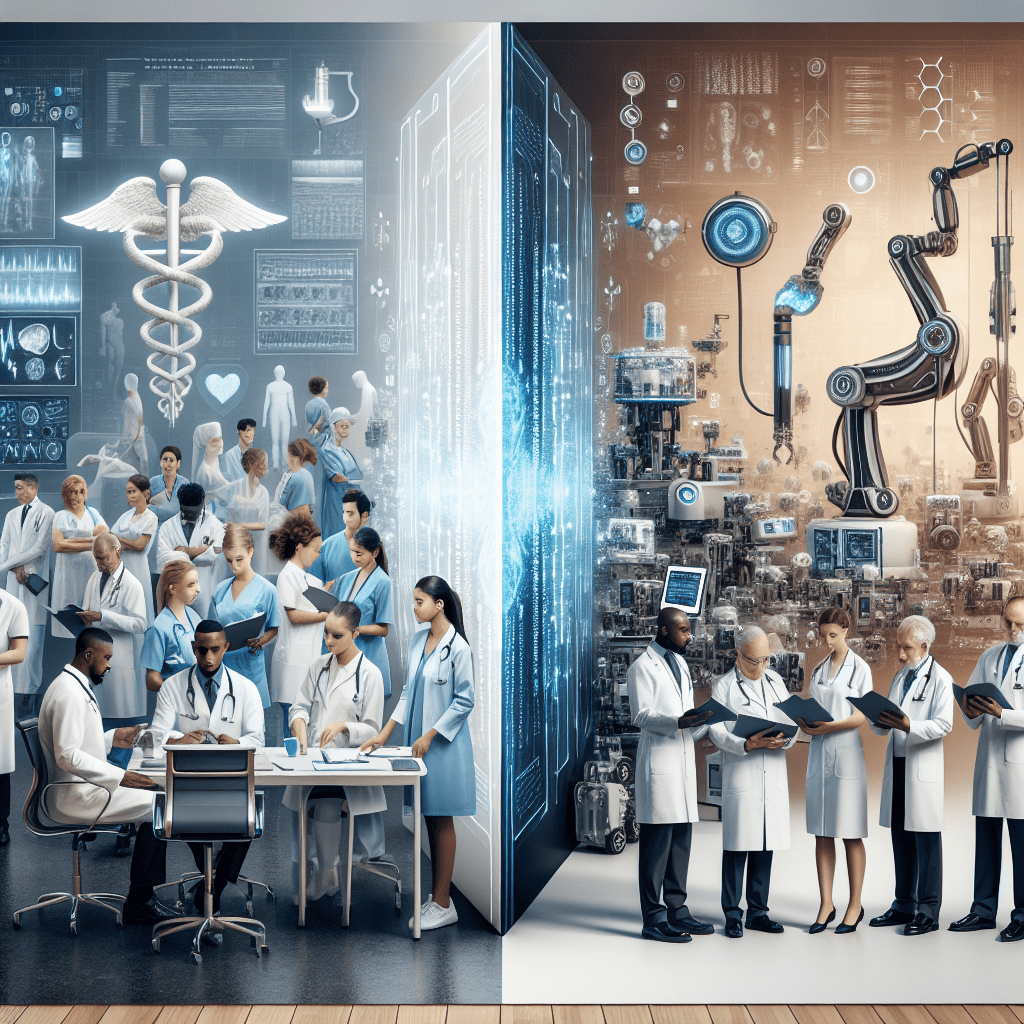
Artificial Intelligence (AI) has emerged as a transformative force in healthcare, driving innovation and reshaping how medical services are delivered and managed. Its impact spans various aspects of healthcare, including diagnosis, treatment, patient management, and operational efficiency. As AI continues to evolve, it promises to address some of the most significant challenges in healthcare, such as improving patient outcomes, reducing costs, and enhancing access to medical services.
Advancements in Diagnostic Accuracy:
One of the most profound impacts of AI in healthcare is its ability to improve diagnostic accuracy. Machine learning algorithms can analyze vast amounts of data from medical imaging, lab results, and patient records to detect patterns that may be invisible to the human eye. For instance, AI systems have shown high proficiency in identifying abnormalities in radiology images, such as X-rays and MRI scans, which assists doctors in making more precise diagnoses. Dr. Eric Topol, a notable cardiologist and digital medicine researcher, stated, "AI in medicine will ultimately lead to smarter diagnosis and decision-making" (from his work in digital health). This enhanced accuracy not only assists healthcare professionals but also saves patients from the adverse effects of misdiagnosis.
Personalized Treatment Plans:
AI is also pivotal in personalizing treatment plans for patients, tailoring interventions based on individual patient data. By analyzing genetic information, lifestyle factors, and patient history, AI can recommend specific treatment regimens that are more effective for the individual. This approach is shifting the paradigm from a one-size-fits-all method to one that considers the unique biological makeup and circumstances of each patient. Dr. Fei-Fei Li, a renowned AI scientist and professor at Stanford University, emphasizes, "The future of medicine lies in personalized healthcare, made feasible by the power of AI" (from her keynote on AI in healthcare). This personalized care leads to improved efficacy of treatments and enhances patient satisfaction.
Streamlining Administrative Processes:
AI is not only transforming clinical operations but also administrative processes. Automation of routine tasks such as scheduling, billing, and patient documentation can significantly reduce the workload of healthcare providers, allowing them to focus more on patient care. AI-powered assistants can manage appointments and coordinate patient follow-ups, ensuring efficient use of resources. Paul Roemer, a healthcare IT consultant, noted, "The biggest benefit of AI might just be in the back office, improving efficiency and freeing up healthcare professionals" (from a healthcare technology conference). This efficiency contributes to healthier work environments and more time for direct patient interaction.
Enhancing Access to Healthcare:
AI-powered telemedicine platforms are removing barriers to healthcare access, especially for rural or underserved populations. These platforms use AI to triage and manage patient inquiries, provide virtual consultations, and deliver remote monitoring services. Dr. John Halamka, President of the Mayo Clinic Platform, highlighted this impact by saying, "AI-driven telemedicine can democratize healthcare, making it accessible to those who wouldn’t otherwise have it" (from his public address on digital healthcare). Through these technologies, geographical and physical barriers are minimized, allowing more patients to receive the care they need efficiently and promptly.
Challenges and Ethical Considerations:
While AI offers numerous benefits, it also presents challenges, notably in ethics and privacy. Concerns about data security, informed consent, and algorithmic bias need to be addressed to fully harness AI’s potential in healthcare. The late Dr. Stephen Hawking, a famed theoretical physicist, once warned, "The rise of powerful AI will be either the best, or the worst thing, ever to happen to humanity" (from his discussion on the future of AI). Ensuring that AI applications in healthcare are developed and implemented ethically is crucial to securing trust and maximizing benefits for society.
In conclusion, AI is playing a pivotal role in revolutionizing healthcare through diagnostic enhancements, personalized medicine, streamlined processes, expanded access, and ongoing ethical discourse. As we continue to explore its capabilities, the potential for AI to further innovate and improve the healthcare landscape remains immense.





 Conversations with AI
Leave a comment