*Inspired by an A-level assignment
The idea of “rights” is typically tied to beings with the capacity for sentience—that is, the ability to experience sensations like pain, pleasure, and emotions. Animals, especially those with well-developed nervous systems, can suffer, feel pain, and have interests in avoiding harm. These capacities are the basis for arguing that animals deserve certain rights, such as the right to avoid unnecessary suffering.
Vegetables, on the other hand, lack nervous systems and consciousness. They don’t have the capacity to experience pain, emotions, or suffering. Therefore, the concept of rights, which is based on the ability to have subjective experiences, doesn’t apply to them in the same way it does to animals.
The idea isn’t about the intrinsic value of life but rather the capacity for experiencing life in a way that involves sentience. Some philosophical arguments, like those from deep ecology or certain forms of environmental ethics, might push for respecting all forms of life, including plants, but this respect is usually framed differently than the rights-based discussions centered on animals.
What is deep ecology?
Deep ecology is an environmental philosophy and social movement that promotes the inherent worth of all living beings, regardless of their utility to human needs. It advocates for a radical shift in the way humans perceive and interact with the natural world, emphasizing that humans are just one part of a larger, interconnected ecosystem rather than the center of it.
Here are some key principles of deep ecology:
- Intrinsic Value of Nature: Deep ecology asserts that nature has intrinsic value, independent of any human use or benefit. This means that all forms of life, including animals, plants, and even ecosystems, have their own value and right to exist, irrespective of their utility to humans.
- Interconnectedness: The philosophy emphasizes the interconnectedness of all life forms. It recognizes that human actions have far-reaching effects on the environment and other species, and therefore, humans have a responsibility to act in ways that respect and preserve this interconnected web of life.
- Critique of Anthropocentrism: Deep ecology criticizes anthropocentrism, the belief that humans are the most important entities in the universe and that nature exists primarily to serve human needs. Instead, it calls for an “ecocentric” or “biocentric” perspective, where humans are seen as one species among many, with no greater right to exploit resources than any other species.
- Simplicity and Sustainability: Advocates of deep ecology often promote living in harmony with nature, which includes adopting lifestyles that are simple, sustainable, and have minimal impact on the environment. This might involve reducing consumption, conserving resources, and supporting local and sustainable practices.
- Social and Political Change: Deep ecology also calls for profound social and political changes to address environmental degradation. This might involve questioning and transforming economic systems, political structures, and cultural values that prioritize growth, consumption, and exploitation over environmental health and sustainability.
The term “deep ecology” was coined by the Norwegian philosopher Arne Næss in the early 1970s. Næss distinguished between “shallow” environmentalism, which focuses on addressing environmental problems for human benefit, and “deep” ecology, which calls for a fundamental shift in how humans perceive and relate to the natural world.
How to practice deep ecology?
Practicing deep ecology involves adopting a mindset and lifestyle that reflects the philosophy’s core principles. Here are some practical steps you can take to align your life with deep ecology:
1. Cultivate Ecological Awareness
- Learn and Reflect: Educate yourself about the interconnectedness of all life forms, ecosystems, and the impacts of human activities on the planet. Reflect on how your actions influence the environment.
- Mindfulness in Nature: Spend time in nature, observe the relationships between different organisms, and develop a deep appreciation for the natural world. This can help foster a sense of connection and responsibility.
2. Adopt a Sustainable Lifestyle
- Reduce Consumption: Limit your use of natural resources by consuming less, reusing and recycling materials, and avoiding single-use items. Choose quality over quantity and prioritize products with minimal environmental impact.
- Support Local and Sustainable: Buy locally produced goods and food that are sustainably sourced. This reduces your carbon footprint and supports practices that are in harmony with nature.
- Minimize Waste: Reduce waste by composting organic materials, recycling, and choosing products with minimal packaging. Aim for a zero-waste lifestyle where possible.
3. Simplify Your Life
- Voluntary Simplicity: Embrace a simpler lifestyle that prioritizes meaningful experiences and relationships over material possessions. This can reduce your ecological footprint and increase your well-being.
- Energy and Resource Conservation: Use energy and resources wisely. This includes using energy-efficient appliances, reducing water usage, and being mindful of your consumption patterns.
4. Advocate for Systemic Change
- Political and Social Engagement: Get involved in environmental activism and support policies that protect the environment and promote sustainability. This might involve voting, campaigning, or participating in community-based conservation projects.
- Challenge Anthropocentrism: Advocate for a shift in societal values away from human-centered thinking and toward an ecocentric or biocentric perspective that recognizes the intrinsic value of all life forms.
5. Promote Biodiversity and Conservation
- Support Wildlife Protection: Engage in or support efforts to protect endangered species and preserve natural habitats. This could include participating in reforestation projects or supporting organizations that work to conserve biodiversity.
- Create Natural Spaces: If you have access to land, create natural habitats like native plant gardens, pollinator-friendly spaces, or wildlife corridors. These contribute to the local ecosystem and promote biodiversity.
6. Deepen Your Spiritual Connection to Nature
- Ecocentric Spirituality: Explore spiritual practices that emphasize the sacredness of nature and the interconnectedness of all life. This might include rituals, meditations, or other practices that honor the earth and its ecosystems.
- Ecological Identity: Cultivate an ecological identity where you see yourself as part of the natural world rather than separate from it. This can shift your perspective and influence your actions.
7. Education and Outreach
- Teach Others: Share your knowledge and passion for deep ecology with others. Educate your community, friends, and family about the importance of ecological awareness and sustainable living.
- Support Ecological Education: Advocate for and support educational programs that teach ecological principles and the importance of environmental stewardship.
8. Foster Community Resilience
- Community Building: Work with others in your community to create resilient, sustainable systems. This might involve starting a community garden, organizing a local clean-up, or participating in cooperative projects.
- Ecological Economics: Support or engage in economic systems that prioritize sustainability, such as cooperatives, local economies, and fair trade practices.
9. Reflect and Reevaluate
- Ongoing Reflection: Regularly assess your actions and lifestyle choices to ensure they align with deep ecology principles. Be open to making changes as you learn and grow in your ecological awareness.
By integrating these practices into your life, you can embody the principles of deep ecology and contribute to a more sustainable, equitable, and ecologically balanced world.
Examples of deep ecology?
Deep ecology can manifest in various ways, from individual actions to broader social movements and projects. Here are some examples of deep ecology in practice:
1. The Green Belt Movement (Kenya)
- Founded by Wangari Maathai in 1977, the Green Belt Movement is a grassroots environmental organization in Kenya that focuses on tree planting, environmental conservation, and women’s rights. The movement has planted over 50 million trees across Kenya, helping to restore degraded environments, promote biodiversity, and empower local communities, particularly women.
2. Bioregionalism
- Bioregionalism is a deep ecology-inspired approach that encourages people to live within the natural boundaries of their local ecosystems (bioregions) rather than artificial political borders. It promotes sustainable living practices that are in harmony with the local environment, such as using local resources, preserving indigenous plant species, and supporting local food systems.
3. Rewilding Projects
- Rewilding is an ecological restoration approach that seeks to return landscapes to their natural state by reintroducing native species and allowing ecosystems to function with minimal human interference. Examples include the reintroduction of wolves to Yellowstone National Park in the U.S., which has had significant positive effects on the ecosystem, and large-scale rewilding efforts in Europe, like the reintroduction of European bison and other species.
4. Permaculture
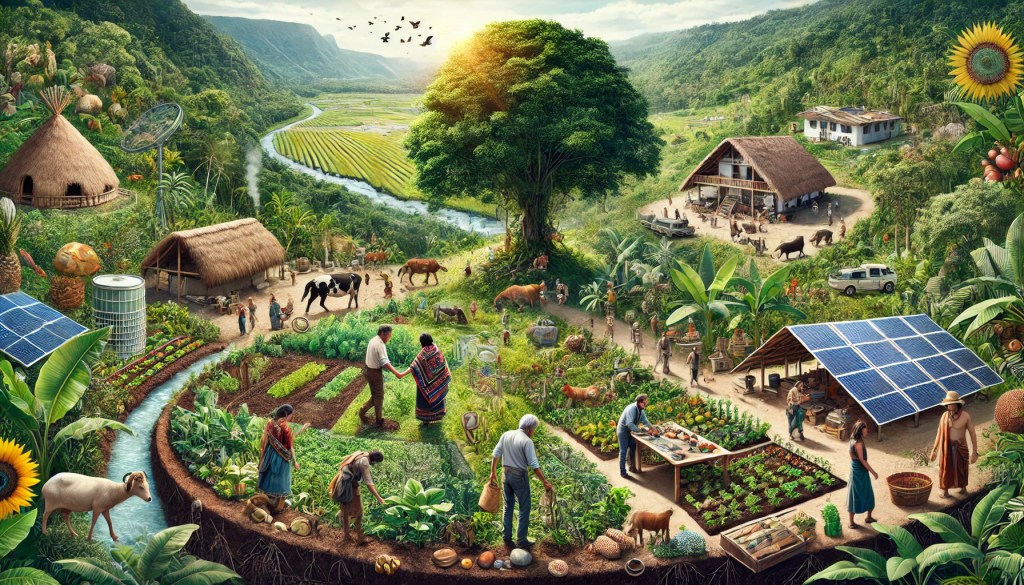
- Permaculture is a sustainable agricultural and social design system that mimics the patterns and relationships found in natural ecosystems. It promotes practices like organic farming, agroforestry, and sustainable land use, focusing on creating self-sufficient, resilient, and ecologically balanced human settlements. Permaculture gardens and farms are practical examples of deep ecology in action.
5. Earth First! Movement
- Earth First! is a radical environmental movement that emerged in the 1980s and is rooted in deep ecology principles. It advocates for direct action to protect wilderness areas and endangered species, often challenging logging, mining, and other industrial activities that harm the environment. Their slogan, “No compromise in defense of Mother Earth,” reflects the movement’s commitment to putting ecological concerns above human economic interests.
6. Indigenous Land Stewardship
- Many Indigenous communities around the world practice forms of deep ecology through their traditional land stewardship. These practices include sustainable hunting, fishing, gathering, and farming methods that have been used for generations, maintaining the health of ecosystems. The Kichwa people of the Ecuadorian Amazon, for instance, engage in sustainable agroforestry and protect large areas of rainforest from deforestation.
7. The Transition Town Movement
- The Transition Town Movement is a global grassroots initiative that began in the UK in 2006. It focuses on creating resilient communities that can thrive in the face of environmental challenges like climate change and resource depletion. Transition towns work to reduce dependence on fossil fuels, support local food production, and build strong, self-sufficient local economies.
8. Sacred Groves and Forest Preservation
- In many cultures, certain forests, groves, or natural sites are considered sacred and are protected from exploitation. These sacred groves often function as biodiversity hotspots and are managed according to traditional ecological knowledge that aligns with deep ecology principles. For example, the Kavus of Western Ghats in India are sacred forests that have been preserved for centuries by local communities.
9. Ecovillages
- Ecovillages are intentional communities designed to be socially, economically, and ecologically sustainable. These communities often implement deep ecology principles by creating closed-loop systems that minimize waste, generate their own energy, grow their own food, and live in harmony with the surrounding environment. Examples include Findhorn in Scotland and Auroville in India.
10. Restoration of Traditional Agriculture
- In places like Peru’s Sacred Valley, efforts have been made to restore traditional Andean agricultural practices that are closely aligned with the principles of deep ecology. These practices involve terracing, crop rotation, and the cultivation of diverse, native crops that are well-suited to the local environment, promoting biodiversity and sustainable land use.
These examples illustrate how deep ecology can be applied across different contexts, from local communities to global movements, to foster a more harmonious relationship between humans and the natural world.





 Conversations with AI
Leave a comment