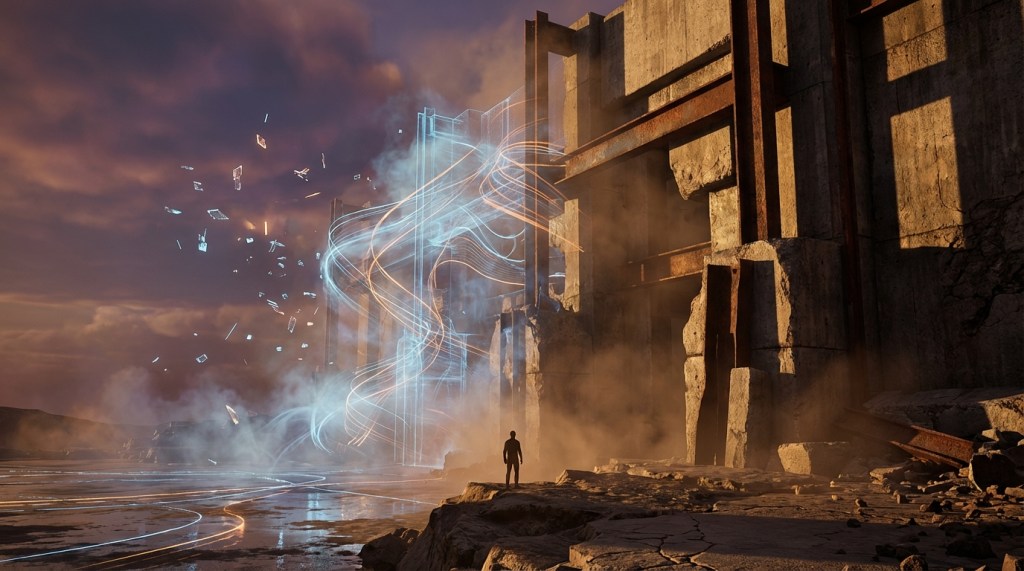
An archaeologist stands on a windswept hill, five hundred years from now, looking out over a landscape that is both familiar and utterly alien. They are here to find us. Below them, strange, skeletal structures of steel and concrete jut out from the earth, choked by ivy and worn smooth by the centuries. They are exploring the ruins of a city.
This is the start of a story about what we will leave behind. It’s a thought experiment, a way of looking at the world we live in right now through the speculative eyes of the future. What would they find? And what might they get completely wrong about who we were?
Visit 1: 500 Years From Now
In these first few centuries, our footprint is still clumsy and obvious. The archaeologists would map the foundations of our homes and marvel at the sheer scale of our ruined office blocks. In the ground, they would find a distinct, unnatural layer – a compressed seam of our plastic waste, a stubborn refusal to decay that might become our most defining legacy. They would unearth strange, durable ceramic thrones and wonder about their purpose.
But it’s what they wouldn’t find that would puzzle them the most. They would see the evidence of immense construction, of buildings raised with precision, but find no tools left behind. No ladders, no trowels, no saws. They might write in their notes that the tools were perhaps sacred, ceremonially removed after each build. They wouldn’t guess the simple truth: we just tidied up when we were finished.
Visit 2: 10,000 Years From Now
Now leap forward in time. An ice age has come and gone, grinding our cities to dust. The archaeologist of this era isn’t digging through ruins; they are a geologist searching for anomalies in the rock. The skyscrapers are gone. The houses have vanished.
What they find are the deeper scars. They find strange, man-made hills, perfectly flat on top, which are the compacted remains of our landfills. Drilling core samples, they discover a thin, dark line in the strata – our plastic seam, now fossilised into a new kind of rock, a ‘technofossil.’ This layer, globally distributed and chemically uniform, leads them to a new wrong conclusion. They see no regional variation in our mass-produced waste and assume we were a single, planet-wide monoculture, building and consuming in perfect, monotonous unison. They would miss the vibrant, chaotic tapestry of our different cultures entirely.
Visit 3: 100,000+ Years From Now
Now we jump to the deep future. So much time has passed that our own species is a ghost. The archaeologist here is more like a palaeontologist, hunting for the fossil record of a strange species that flared brightly and then disappeared. And here, they find two things that create a profound and unsolvable puzzle.
First, under the most extraordinary, one-in-a-billion circumstances, they find the last, most intimate trace of us: a single, fossilised human skeleton. They also find the thin, planetary layer of technofossils – a signature of a species that lived fast and left a toxic, ephemeral trace.
Second, they find the pyramids. Eroded but still colossal. Silent. The link between the two discoveries is entirely lost to time. Were the pyramids built by the same civilisation that left the plastic dust, perhaps at a different stage of their development? Were they the work of a completely different group altogether? Without any reliable data, the archaeologists can only guess.
The final, and perhaps greatest, wrong conclusion they could draw is to assume the builders of the pyramids were primitive. For all they know, these silent, enduring stone mountains are the true mark of a genuinely advanced civilisation, one that understood permanence, while our own fleeting, noisy existence is just a strange, toxic anomaly in the planet’s history.
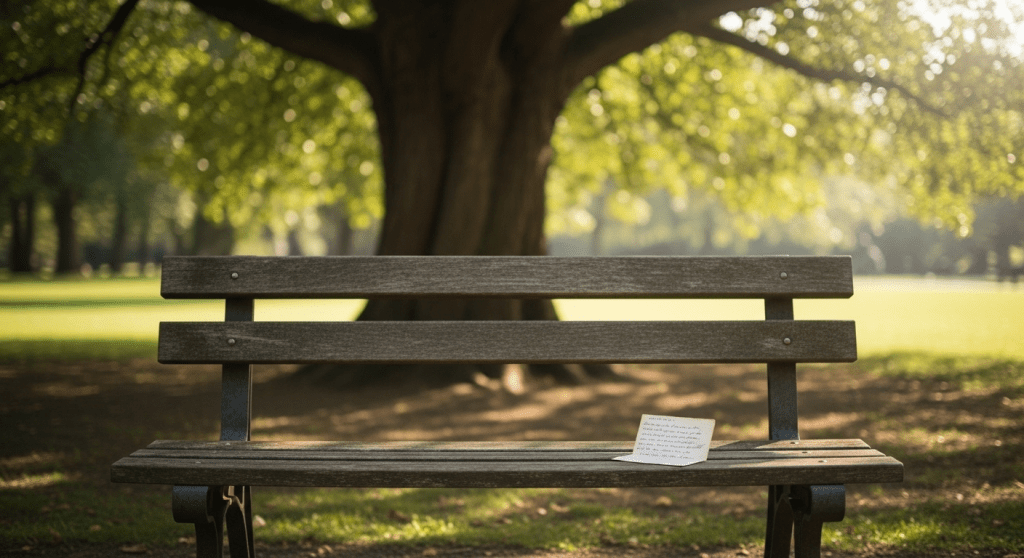
So, after all that, what’s really left? A chemical seam in the rock, a few giant stone structures from an unknown time, and a pile of wrong conclusions. Our future archaeologist might find a fossil, but they’ll never hold that letter from a loved one. They might map the ghost of a park, but they’ll never have sat on your favourite bench.
It seems all the things that really, truly matter – the things that actually make up a life – aren’t the things that last. Maybe they’re not supposed to. They just exist for this moment in history, and they matter now. And perhaps the most important thing is simply to realise that, before they, too, are gone.


 Conversations with AI
Leave a comment