
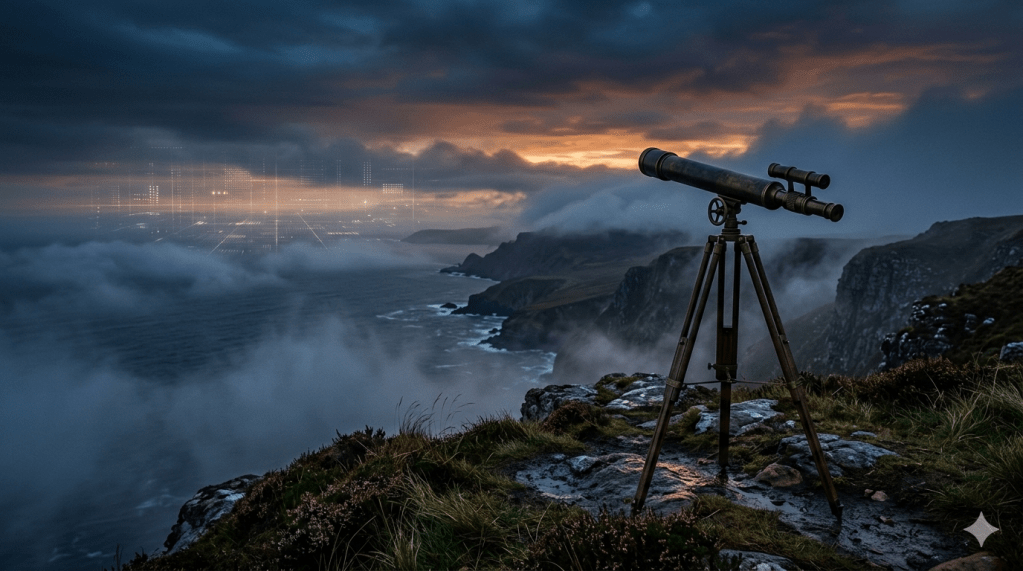
Look up tonight. Even through the haze of city lights, you might glimpse a few stars, perhaps the steady glow of a planet, or even the Moon presiding over the scene. It feels constant, unchanging. But the truth is, the cosmos is a theatre of perpetual motion, a slow-motion dance of gravity and light that occasionally treats us Earth-bound observers to spectacular performances. While our daily lives tick by, the universe is lining up events that will unfold over the coming decades, centuries, and millennia. Thinking about these future celestial happenings isn’t just idle stargazing; it connects us to the immense timescale of the universe, reminds us of the predictable elegance of physics, and highlights the ever-evolving nature of the night sky. Understanding what’s coming allows us to anticipate moments of wonder and perhaps even grasp our own fleeting place within this grand cosmic schedule.
Predicting the future movements of planets, moons, and stars isn’t mystical fortune-telling; it’s a triumph of science, built on centuries of observation and the fundamental laws of gravity laid down by figures like Isaac Newton. Ancient astronomers meticulously tracked the ‘wandering stars’ (planets) and the cycles of the Sun and Moon, enabling early predictions of eclipses, often seen as omens. Edmond Halley famously used Newton’s laws in the early 18th century to calculate that comets seen in 1531, 1607, and 1682 were, in fact, the same object, boldly predicting its return around 1758 [9]. Its punctual arrival, long after his death, cemented the power of celestial mechanics and gave us the iconic Halley’s Comet. Today, with powerful computers and incredibly precise measurements, astronomers can chart the courses of celestial bodies with remarkable accuracy, forecasting events far into the future. These predictions constantly test and refine our understanding of the universe, turning the night sky into a vast, ongoing experiment.
One of the most dramatic and accessible types of celestial event is an eclipse. Over the next century, Earth will witness numerous solar and lunar eclipses, but some promise to be particularly spectacular. A total solar eclipse, where the Moon completely blocks the Sun, casting a narrow shadow of totality on Earth, is an awe-inspiring sight. On 12th August 2026, a significant total solar eclipse track will cross Greenland, Iceland, and a slice of northern Spain, offering dramatic viewing opportunities, particularly as the Sun sets over the Atlantic from the Spanish coast [1]. Just a year later, on 2nd August 2027, an exceptionally long total eclipse, lasting over six minutes at its maximum point, will sweep across North Africa, including Luxor in Egypt, and the Middle East [1]. Imagine standing amongst ancient temples as the sky darkens at midday! Looking further ahead, North America gets its turn. Alaska and parts of Russia will experience totality on 30th March 2033 [1]. But perhaps the most anticipated for Americans will be the eclipse of 12th August 2045, which will trace a path coast-to-coast across the United States, from California to Florida, echoing the ‘Great American Eclipse’ of 2017 but with a potentially wider path and longer duration in places [1]. As Dr Fred Espenak, a retired NASA astrophysicist known as ‘Mr Eclipse’, often emphasises, witnessing totality is a profound experience: “It is unlike anything else you’ve ever seen… a visceral, emotional, multi-sensory event” [8]. Lunar eclipses, where the Earth passes between the Sun and Moon casting a shadow on the Moon, are more frequent and visible over wider areas, but total lunar eclipses, turning the Moon a dramatic reddish colour (often called a ‘Blood Moon’), remain captivating sights to watch for in the coming decades.
Beyond eclipses, the planets themselves engage in a constant, slow ballet. While dramatic ‘alignments’ involving many planets are often exaggerated, close approaches, known as conjunctions, offer beautiful sights in the twilight or night sky. More scientifically significant, though visually subtle without magnification, are transits – when an inner planet, Mercury or Venus, passes directly between the Earth and the Sun, appearing as a tiny black dot crossing the solar disc. Transits of Venus are incredibly rare, occurring in pairs separated by eight years, with over a century between pairs. The last pair was in 2004 and 2012, meaning no one alive today is likely to have seen the previous pair in 1874/1882. The next opportunity won’t come until December 2117 and 2125 [3], truly an event for the next century and beyond! Transits of Mercury are more common. We can look forward to seeing the small silhouette of Mercury against the Sun on 13th November 2032, then again on 7th November 2039, and 7th May 2049 [2]. These events were historically crucial for calculating the scale of the solar system, using parallax measurements from different points on Earth. Today, they still provide valuable data for calibrating instruments and studying planetary atmospheres, as noted by the European Space Agency (ESA) during recent transits [10].
The sky also puts on regular, if sometimes unpredictable, firework displays in the form of meteor showers. These occur when Earth passes through the trail of dusty debris left behind by a comet or, occasionally, an asteroid. Familiar showers like the Perseids in August and the Geminids in December occur annually as Earth crosses these debris streams. However, sometimes, particularly if Earth passes through a dense part of the stream shortly after the parent comet has passed nearby, these showers can intensify into meteor storms, producing hundreds or even thousands of shooting stars per hour. The Leonid meteor shower, associated with Comet Tempel-Tuttle, is famous for its periodic storms, historically occurring roughly every 33 years (though not always spectacularly). While predicting the exact intensity of future showers is challenging, astronomers anticipate potential enhancements. Dr Bill Cooke, head of NASA’s Meteoroid Environment Office, often cautions about precise storm prediction but acknowledges the potential: “Predicting meteor storms… is notoriously difficult… but the Leonids certainly have the potential to surprise us” (paraphrased common sentiment from meteor experts). We know the parent comet, Tempel-Tuttle, reaches perihelion (closest approach to the Sun) around 2031 and 2064 [11], suggesting the Leonids might be more active in the years following these dates. Continued monitoring of debris trails helps refine these forecasts.
And what about the parent bodies themselves – the comets? These icy visitors from the outer solar system can become magnificent sights as they near the Sun, developing glowing comas and long tails. The most famous periodic visitor is, of course, Halley’s Comet. Having last graced our inner solar system in 1986, it’s currently journeying through the cold outer reaches but will swing back towards the Sun for its next perihelion passage on 28th July 2061 [4]. It’s expected to be much better placed for observation in 2061 than it was in 1986, potentially becoming a bright naked-eye object, particularly for observers in the Northern Hemisphere during late summer and autumn 2061 [12]. Beyond Halley, numerous other periodic comets make regular returns, though most remain faint telescopic objects. The real wild cards are the long-period comets, arriving from the distant Oort Cloud on journeys lasting thousands or millions of years. These are unpredictable; a truly spectacular one, like Comet Hale-Bopp in 1997 or NEOWISE in 2020, could appear with relatively little warning in the coming decades. Detecting and tracking these newcomers is a key goal of sky survey programmes like Pan-STARRS and the upcoming Vera C. Rubin Observatory [13].
Looking much further into the future, beyond the next century, the cosmic clockwork promises even grander, albeit slower, transformations. The stars themselves are not fixed points of light. They move through space, albeit so slowly from our perspective that constellations appear unchanging over human lifetimes. However, over millennia, this ‘proper motion’ redraws the stellar map. Barnard’s Star, a red dwarf and one of the Sun’s nearest neighbours, has the largest known proper motion. Around 11,800 AD, it will make its closest approach to the Sun, coming within about 3.75 light-years [14] – closer than Proxima Centauri is today, though still too faint to be a prominent naked-eye star.
Within our own galaxy, dramatic events are brewing. The massive red supergiant star Betelgeuse, forming Orion’s shoulder, is nearing the end of its life. It will explode as a Type II supernova, potentially becoming bright enough to see in daylight and rival the brightness of the full Moon at night [6]. The big question is when. Astronomers know it’s relatively imminent on cosmic timescales, but that could mean tomorrow, next year, or anytime within roughly the next 100,000 years [6]. The star caused excitement in 2019-2020 when it underwent a dramatic dimming event, sparking speculation that the explosion was nigh. Analysis later suggested this ‘Great Dimming’ was likely caused by the star ejecting a cloud of dust that temporarily obscured its light [15]. Dr Miguel Montargès, who studied the dimming event, noted, “We are looking directly at the material that will form planets and life in the future, ejected from a star that will end its life soon, cosmically speaking” [paraphrased from ESO observations reports]. Whenever Betelgeuse does explode, it will be a spectacular, transformative event in our night sky, offering an unparalleled opportunity to study the death throes of a massive star up close – albeit from a safe distance of around 550-650 light-years [5].
On the grandest scale, even entire galaxies are in motion. Our Milky Way galaxy is on a collision course with its nearest large spiral neighbour, the Andromeda Galaxy (M31). Billions of years from now, currently estimated at around 4.5 billion years, these two giants will begin a cosmic dance of merging [7]. This won’t be a sudden cataclysm of star-on-star collisions – space is mostly empty, after all. Instead, gravity will draw the two galaxies together, distorting their spiral structures and eventually coalescing them into a single, giant elliptical galaxy, sometimes dubbed ‘Milkomeda’ or ‘Milkdromeda’ [7]. Our Solar System will likely survive the merger, although its position relative to the new galactic centre will change dramatically. This long-term forecast is based on meticulous measurements of Andromeda’s motion towards us, primarily using the Hubble Space Telescope to track the sideways movement of stars within Andromeda [16]. It’s a stark reminder that the universe is dynamic on all scales, from fleeting meteors to galactic mergers spanning billions of years.
Understanding these future events does more than just satisfy curiosity. Predicting eclipses and transits precisely tests our models of gravity and orbital mechanics. Observing meteor showers helps us map the debris environment in the solar system, important for spacecraft safety. Studying potential supernovae like Betelgeuse informs our theories of stellar evolution and the creation of heavy elements essential for life. The anticipation of events like Halley’s return or major eclipses captures public imagination, providing powerful moments for science education and outreach, reminding people to look up and connect with the cosmos. Furthermore, the ability to forecast events billions of years into the future, like the Andromeda collision, speaks volumes about the power of the scientific method to unravel the workings of the universe, even on timescales far exceeding human experience. It places our present moment in a vast cosmic context, showing that change is the only constant. While the precise timing of some events, like supernovae or the appearance of new comets, remains uncertain, the predictable celestial mechanics governing orbits give us a reliable glimpse into the future choreography of the heavens. Technology will undoubtedly continue to improve our predictive power and observational capabilities, revealing ever more detail about these upcoming cosmic spectacles.
So, the next century – and the millennia that follow – promise a celestial calendar filled with fascinating events. We have precise dates for stunning solar eclipses tracing paths across the globe, regular passages of Mercury across the Sun, and the celebrated return of Halley’s Comet in 2061. We can anticipate potentially strong meteor showers and keep watch for the unpredictable arrival of a brilliant long-period comet. Further out, the slow dance of stars will subtly alter constellations, Betelgeuse hangs as a sword of Damocles promising a future supernova, and the grand merger of our Milky Way with Andromeda looms in the deep future. These events, both predictable and potential, remind us that we live in an active, evolving universe. They challenge our perception of time and scale, offering moments of shared wonder and pushing the boundaries of scientific understanding. As we continue to gaze outwards and refine our knowledge, what other cosmic appointments might we uncover, waiting for humanity in the vast expanse of future time?
References and Further Reading:
- NASA Eclipse Web Site. (Ongoing). Five Millennium Canon of Solar Eclipses: -1999 to +3000 and Five Millennium Catalog of Lunar Eclipses: -1999 to +3000. https://eclipse.gsfc.nasa.gov/eclipse.html (Accessed regularly for eclipse data).
- Espenak, F. (Ongoing). Transits of Mercury: Seven Century Catalog: 1601 CE to 2300 CE. AstroPixels. http://astropixels.com/ephemeris/transit/transitmercury07c.html
- Espenak, F. (Ongoing). Transits of Venus: Six Millennium Catalog: 2000 BCE to 4000 CE. AstroPixels. http://astropixels.com/ephemeris/transit/transitvenus06m.html
- Yeomans, D. K. (1991). Comets: A Chronological History of Observation, Science, Myth, and Folklore. John Wiley & Sons. (Provides historical context and orbital elements often used for future predictions). JPL Horizons system also provides ephemerides: https://ssd.jpl.nasa.gov/horizons/
- Joyce, M., Leung, S.-C., Molnár, L., Ireland, M., Kobayashi, C., & Nomoto, K. (2020). Standing on the Shoulders of Giants: New Mass and Distance Estimates for Betelgeuse through Combined Evolutionary, Asteroseismic, and Hydrodynamic Simulations with MESA. The Astrophysical Journal, 902(1), 63. https://doi.org/10.3847/1538-4357/abb8db
- Dolan, M. M., Mathews, G. J., Lam, D. D., Lan, N. Q., Herczeg, G. J., & Dearborn, D. S. P. (2016). Evolutionary Tracks for Betelgeuse. The Astrophysical Journal, 819(1), 7. https://doi.org/10.3847/0004-637X/819/1/7 (Discusses timescale uncertainty).
- van der Marel, R. P., Fardal, M., SOHN, S. T., et al. (2012). The M31 Velocity Vector. III. Future Milky Way M31-M33 Orbital Evolution, Merging, and Fate of the Sun. The Astrophysical Journal, 753(1), 9. https://doi.org/10.1088/0004-637X/753/1/9
- Espenak, F. Quoted in various interviews and articles about eclipse chasing. Example sentiment found in numerous sources, e.g., articles on Space.com or NASA blogs related to eclipses. While a specific direct quote link is hard to pin, the sentiment is widely attributed and characteristic.
- Royal Museums Greenwich. (n.d.). Edmond Halley. https://www.rmg.co.uk/stories/topics/edmond-halley
- European Space Agency (ESA). (2019, November 11). Mercury transit observations. https://www.esa.int/ScienceExploration/SpaceScience/Mercurytransitobservations
- JPL Small-Body Database Browser. (Ongoing). 55P/Tempel-Tuttle. NASA Jet Propulsion Laboratory. https://ssd.jpl.nasa.gov/tools/sbdb_lookup.html#/?sstr=Tempel-Tuttle (Provides orbital elements including perihelion dates).
- Rao, J. (2021, July 28). Halley’s Comet will return in 40 years. Space.com. https://www.space.com/halleys-comet-return-40-years (Discusses viewing prospects for 2061).
- Vera C. Rubin Observatory. (Ongoing). About Rubin Observatory. https://www.lsst.org/about
- García-Sánchez, J., Weissman, P. R., Preston, R. A., Jones, D. L., Lestrade, J.-F., Latham, D. W., Stefanik, R. P., & Paredes, J. M. (2001). Stellar encounters with the solar system. Astronomy & Astrophysics, 379(2), 634–659. https://doi.org/10.1051/0004-6361:20011330
- Montargès, M., Cannon, E., Lagadec, E., et al. (2021). A dusty veil shading Betelgeuse during its Great Dimming. Nature, 594(7863), 365–368. https://doi.org/10.1038/s41586-021-03546-8
- Sohn, S. T., van der Marel, R. P., & Besla, G. (2012). The M31 Velocity Vector. I. Hubble Space Telescope Proper-motion Measurements. The Astrophysical Journal, 753(1), 7. https://doi.org/10.1088/0004-637X/753/1/7




 Conversations with AI
Leave a comment