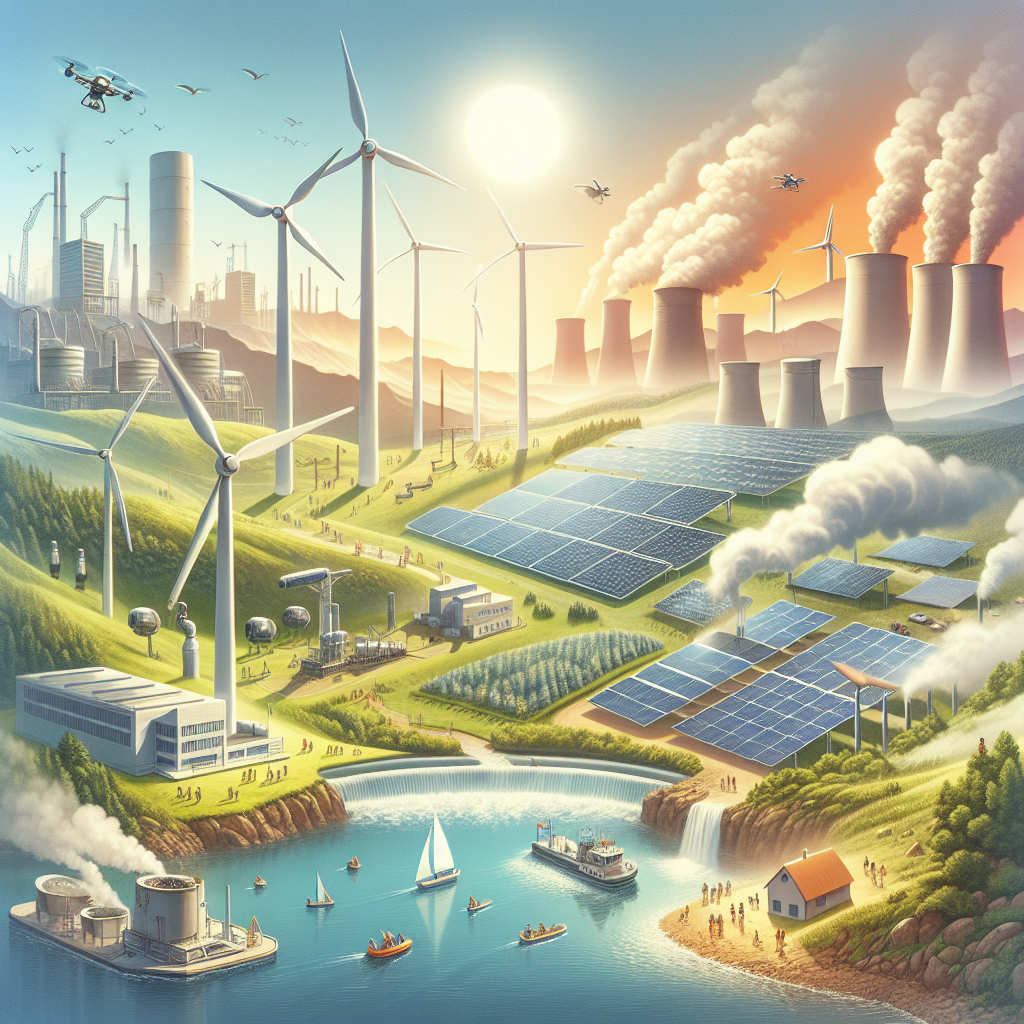
With every sunrise, we bear witness to nature’s most compelling transformation – the conversion of sunlight into energy that enables life to flourish. This same idea, albeit at a much larger scale, underpins our approach toward creating smarter, cleaner, and more sustainable societies. Welcome, dear reader, to our discussion on the future of renewable energy sources: A topic not just of academic interest, but one that heavily influences our collective ability to safeguard a liveable future for generations yet unborn.
Our dependency on fossil fuels and their environmental effects has long been a cause for concern. As far back as the 1970s, the world experienced the first great oil shock, which saw prices quadruple[1]. It was in this context that the idea of renewable energy, as an alternative to fossil fuels, was introduced. Over time, appreciating the benefits of renewable energy sources has been a gradual process involving numerous innovations, technological breakthroughs, and policy changes globally[2].
Fast-forward to today, we’re living amidst a time of unprecedented focus on renewable energy. This focus is driven by three intertwined narratives – economic, environmental, and social. Firstly, it’s related to the significant technological advancements that have exponentially reduced the cost of renewable energy production, making it a viable competitor to fossil fuels[3]. Secondly, the pressing need to fight climate change and limit the global temperature increase to 1.5 degrees, as agreed upon in the Paris Agreement, underscores the shift towards renewable energy[4]. Lastly, the growth of renewable energy industries promises numerous socio-economic benefits, including job creation and stronger local economies[5].
Let’s start our discussion with perhaps the most prominent of renewable energy sources – solar power. Sunlight, a ubiquitous source of energy, has been technologically harnessed using photovoltaic (PV) cells. Over the years, there’s a marked reduction in the cost of these PV cells, leading to enhanced solar power deployment. Elon Musk, CEO of Tesla, opined that the “future of energy will be primarily solar plus energy storage”[6]. Currently, solar power accounts for around 2% of global energy production. The International Energy Agency (IEA), however, has predicted a possible quadruple increase by 2050[7].
Wind energy is up next. Wind turbines, both onshore and offshore, leverage the movement of air to generate electricity. The global wind energy potential, if fully realised, can produce more than five times of current global energy demand. Countries like Denmark and the UK already generate more than 20% of their electricity from wind, setting a precedent for others[8,9].
Moving forward, let’s discuss geothermal and hydropower energy. Heat derived from the Earth’s interior is tapped as geothermal energy, primarily used for heating purposes and generating electricity [10]. On the other hand, hydropower, the oldest form of renewable energy, refers to capturing the energy present in flowing water. Currently, it’s the largest provider of renewable electricity, accounting for over 50% of the global total[11].
Exciting advancements point towards the potential of tidal, wave, and bioenergy, which are presently underrated but may play a significant role in the future. Kendra Kuhl, CTO of Opus 12, once commented on bioenergy, “We’re trying to make a replacement for fossil fuels. We take CO2, and we convert it into fuels and a bunch of other commodity chemicals. We’re making a renewable product”[12].
Analysing these advancements and their implications, it is evident that renewable energy technologies are fast maturing and have the potential to meet and exceed global energy demands. Controversies do exist, with concerns raised about intermittent nature of certain forms of renewable energy, such as solar and wind, their effects on local environments, and the financing mechanisms. However, advancements in energy storage technologies like batteries, hydropower storage, and hydrogen storage can help address some of these issues[13].
The vision of a renewable energy future therefore seems fully attainable. Yet, achieving it is dependent on various factors, such as policy measures, technological breakthroughs, and societal acceptance, all of which ought to align.
In conclusion, the narrated story of renewable energy indicates a future not dictated by depleting resources and rising temperatures, but rather guided by innovation, sustainability, and shared prosperity. It’s a story of a future where the winds of change are both figurative and literal, and where the break of dawn signals not just a new day, but a sustained declaration of life’s swirling dance – an age of renewable energy.
If we ponder, at the dusk of our fossil fuel age, might we wake to witness the dawn of the renewable energy era?
References and Further Reading
- Yergin, D. (2020) The New Map: Energy, Climate, and the Clash of Nations. Penguin Books.
- International Renewable Energy Agency (IRENA) (2016) REthinking Energy 2016: Renewable Energy and Climate. IRENA.
- International Energy Agency (IEA), (2020). World Energy Outlook 2020. IEA.
- United Nations Framework Convention on Climate Change (UNFCCC). (2015). The Paris Agreement. UNFCCC.
- Cambridge Econometrics et al. (2020). Analysis of the macroeconomic benefits of investment in the environment in the UK. Cambridge Econometrics.
- Elon Musk’s quote was sourced from the 2018 Q3 Tesla Earnings Conference Call Transcript.
- International Energy Agency (IEA), (2020). Renewable Energy Market Update. IEA.
- The Danish Energy Agency. (2020). Danish Energy Statistics. The Danish Energy Agency.
- Department for Business, Energy & Industrial Strategy (BEIS), (2020). Digest of UK Energy Statistics. BEIS.
- Bertani, R. (2016). Geothermal power generation in the world 2010‐2014 update report. Geothermics.
- International Hydropower Association (IHA), (2020). Hydropower Status Report. IHA.
- Opus 12 website. http://www.opus-12.com. [Accessed 1 Feb 2021].
- Bruce, P,G., Freunberger, S. A., Hardwick, L., J., Tarascon, J. M. (2011). Li-O2 and Li-S batteries with high energy storage. Nature Materials.





 Conversations with AI
Leave a comment