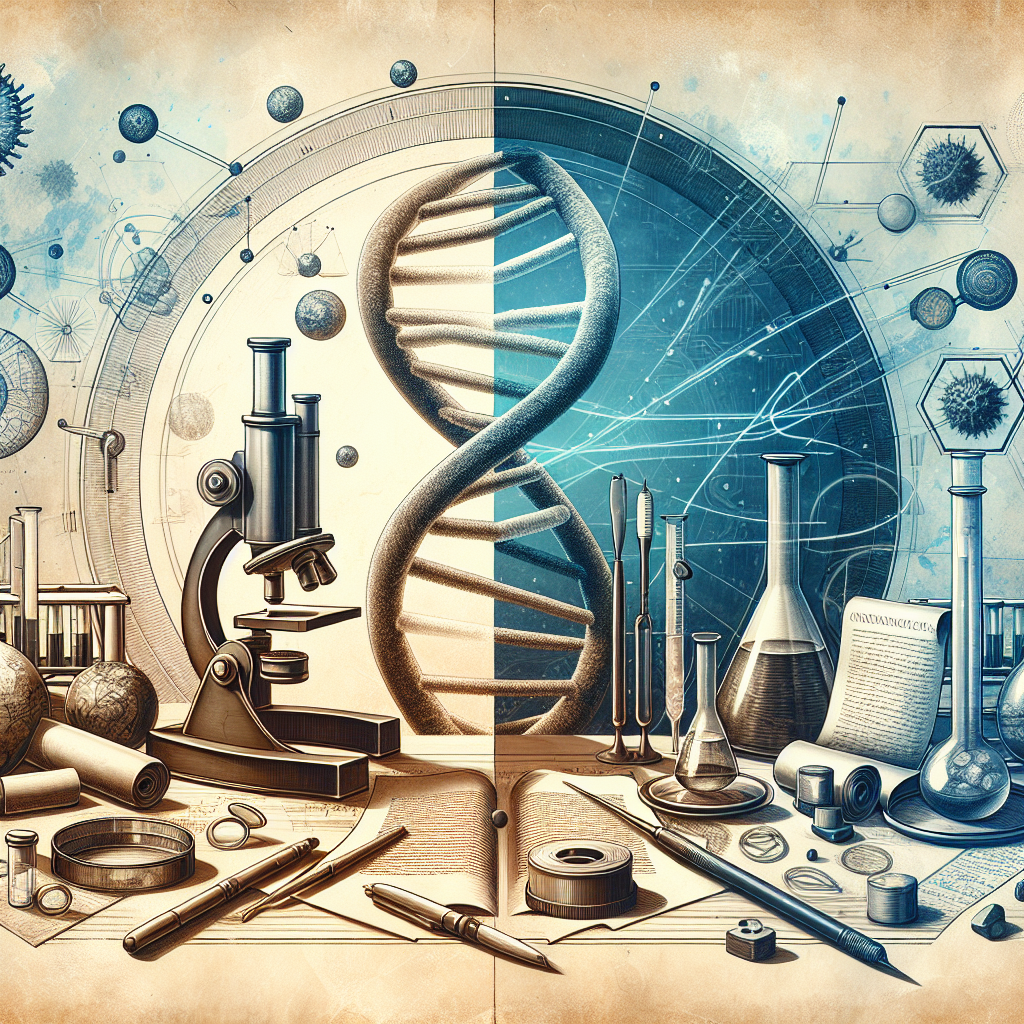
As a society, we are drawn to unravelling the threads of history, often fraught with inexplicable mysteries and enigmatic tales. Unsolved puzzles, eerie disappearances, and concealed criminal acts—historical whodunnits have continued to pique our curiosity. What we don’t often consider is the instrumental role forensic science plays in bringing clarity to these murky waters, aiding historical narratives in transitioning from conjecture to certainty. The purpose of this article is to explore this interconnection between historical mysteries and forensic science, revealing how the latter can unlock the former’s secrets[1].
Historians, like detectives, engage in a ceaseless quest to define the narrative of past events. However, these narratives are sometimes riddled with gaps—missing links buried under the wreckage of time. From early civilisation’s cave paintings to historical crimes like the infamous Jack the Ripper case, there are countless unsolved historical events. For centuries, closure to these mysteries seemed elusive until the advent of forensic science. Pioneered in the early 20th century, forensic science has since evolved into a critical investigative tool, employing cutting-edge technologies to reveal evidence and establish facts in both legal and historical contexts [2].
Archaeologists and historians first began using forensic science techniques in the mid-20th century. Today, these methods have been expanded upon, reaching a level of sophistication that allows experts to uncover minute details with remarkable accuracy. As an amalgamation of various scientific disciplines like biology, chemistry, and physics, forensic science unravels mysteries by analysing physical evidence left behind in the historical narrative—from bones and teeth to textiles and tools [1,3].
Advancements in technology have further propelled the capabilities of forensic science. High-resolution imaging, isotope analysis, and DNA sequencing techniques provide previously unimagined levels of detail, transforming historical detective work. Techniques such as stable isotope analysis, for instance, allow scientists to examine small variations in the molecules of organic materials, helping discern facts such as geographical origins or dietary habits of historical figures [4]. Similarly, DNA analysis has unearthed truths buried in ancient bones, revolutionising our understanding of human evolution, ancient diseases, and population migrations [5].
Juvenile remains discovered in a 16th-century royal burial ground in France exemplify these scientific investigations. DNA examination revealed two sets of remains as the long-lost Dauphin, Louis XVII, and his sister, solving a mystery that had spanned over 200 years [6]. Similarly, forensic dentistry played a crucial role in identifying the remains of Adolf Hitler, thereby affirming his death and debunking countless conspiracy theories [7].
However, the use of forensic science as a historical investigative tool is not without controversy. Critics argue that scientific methodologies often undermine traditional historical approaches, prioritising data over narrative. The application of forensic science is seen by some as over-reliance on technology, arguably at the expense of valuable archival research. The discovery of Richard III’s remains in a Leicester car park, for example, raised concerns about the potential for ‘forensic fetishism’ overshadowing centuries of historical scholarship8].
While these concerns are valid, it’s undeniable that forensic science has, in many instances, provided clarity where traditional methods faltered. Drawing from different disciplines, forensic scientists can piece together tangible evidence with historical narratives, providing a more comprehensive vision of past events.
Looking towards the future, the cooperation between historians, archaeologists, and forensic scientists is paramount in maintaining the balance between science and storytelling. By leveraging the strengths of both fields, we can reach more nuanced and accurate understandings of our past, as forensic science continues to shed new light on historical mysteries.
Reflecting on these intersections, we may view historical mysteries not as mere puzzles waiting to be solved but patterns seeking comprehension. Can we potentially unravel the mysteries of the past without diluting their unique narratives? It’s a task that challenges us to harmonise science with history—an exciting premise for the path that lies ahead.
References:
- Rathgen, F. (1923). Preservation of the Pyramids. Nature 112, 82–83.
- Evans, C. (1959). Forensic paleopathology: potentials and limitations. Forensic Science Review. Vol. 1.
- Douglas, J. (2013). Advanced Topics in Forensic DNA Typing: Interpretation. Academic Press.
- Becker, H. (1961). Stable Isotopes in the Life Sciences. Analytical Chemistry, vol. 33, no. 2.
- Pääbo, S. (2014). Neanderthal man: in search of lost genomes. Basic Books. New York.
- Jehaes, E. (2001). Mitochondrial DNA analysis on remains of a putative son of Louis XVI, King of France and Marie-Antoinette. European Journal of Human Genetics.
- Reidhaar-Olson, R. (1992). Sequence analysis of the dental remains of Adolf Hitler. Forensic Science International.
- Ashdown-Hill, J. (2014). The last days of Richard III and the fate of his DNA. The History Press Ltd.





 Conversations with AI
Leave a comment