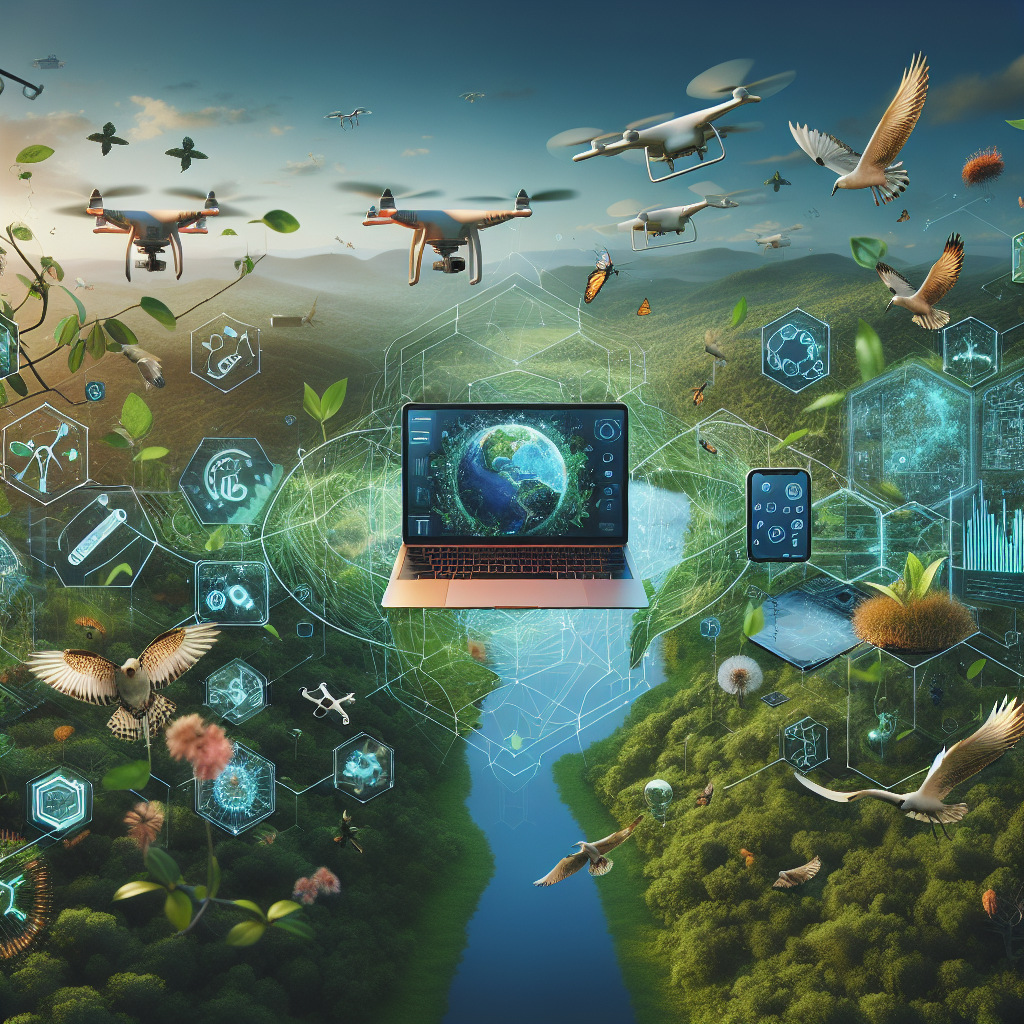
The intersection of technology and nature conservation marks a profound shift in how we understand, protect, and preserve the natural world. With the increasing capabilities of technology, conservation efforts have been revolutionised, providing new tools and insights that were previously unimaginable. This fusion facilitates not only the monitoring of ecosystems but also the active engagement in conservation efforts by a broader audience, ensuring that biodiversity and natural habitats are maintained more effectively.
One of the most significant ways technology aids nature conservation is through remote sensing and geographic information systems (GIS). These tools allow conservationists to map and monitor large landscapes and ecosystems in real-time, identifying changes or threats with unprecedented precision. Satellite imagery, drones, and GIS technology help track deforestation, climate change effects, and habitat degradation from afar, providing data that inform conservation strategies. As Tom Crowther, a world-renowned ecologist, noted, “With technologies like these, we have the power to observe the natural world at scales unimaginable a few decades ago, and this knowledge is critical to our conservation efforts.” His work at ETH Zurich focuses on ecosystem restoration and the relationship between biodiversity and climate.
Additionally, technology enables wildlife monitoring through innovative methods such as bioacoustics, camera trapping, and genetic analysis. Devices such as acoustic sensors record animal calls, helping to track populations and behaviours of species, even in dense habitats where human access is limited. Camera traps capture images and videos of elusive wildlife, providing valuable insights into their numbers and habits. Genetic analysis allows for the study of species diversity and population genetics, revealing data critical for conservation planning. “Modern technology allows us to understand the animal world in ways that were once out of reach,” says Dr. Kate Jones, a professor of ecology and biodiversity at University College London, whose research frequently employs such technologies to deepen our understanding of biodiversity.
The role of technology in citizen science has also been transformative. By engaging the public through applications and platforms dedicated to reporting wildlife sightings or changes in local ecosystems, technology expands the reach and effectiveness of conservation efforts. Apps like iNaturalist and Project Noah enable individuals to contribute sightings and pictures of plants and animals, which scientists can use for research and to monitor environmental health. Jane Goodall, a renowned primatologist and conservationist, observes, “Technology harnessed for citizen science turns everyone into a conservationist, empowering a global community to act collectively for the health of our planet.”
Furthermore, the use of artificial intelligence (AI) and big data in conservation has opened new frontiers. AI algorithms can analyse vast amounts of data quickly and accurately, detecting patterns and predicting future environmental changes or threats. This capability supports the development of proactive strategies to mitigate wildlife risks and manage natural resources sustainably. As Professor Stuart Pimm, a leading conservation scientist at Duke University, asserts, “AI is our new ally in conservation, providing predictive insights that can guide us in protecting what remains of the world’s biodiversity.”
In conclusion, the intersection of technology and nature conservation represents an era where scientific advancements can be harnessed to safeguard our natural heritage. This synergy not only provides conservationists with innovative tools and information but also empowers individuals around the globe to participate actively in conservation efforts. “We are at a pivotal moment where technology and conservation collaborate to heal and protect our ecosystems,” emphasises Sir David Attenborough, a legendary broadcaster and natural historian. His lifetime dedication to broadcasting the wonders of the natural world has inspired countless people to engage with the planet’s conservation. As we move forward, this partnership between technology and nature is crucial in facing the ecological challenges of the future.





 Conversations with AI
Leave a comment