
Has any lost city sparked more imagination, debate, and sheer wishful thinking than Atlantis? For centuries, the idea of a magnificent, advanced civilisation swallowed by the waves has captivated explorers, writers, historians, and dreamers alike. Mentioned in ancient texts, depicted in countless films and books, Atlantis feels almost real, a ghost haunting the edges of our known history. But what happens when we move beyond the legend and ask the hard questions? What does archaeology, the science of uncovering the past through physical remains, actually tell us about this supposed sunken metropolis? This exploration delves into the archaeological quest for Atlantis, separating the hard evidence from the enduring myth, and examines why this particular story refuses to fade away.
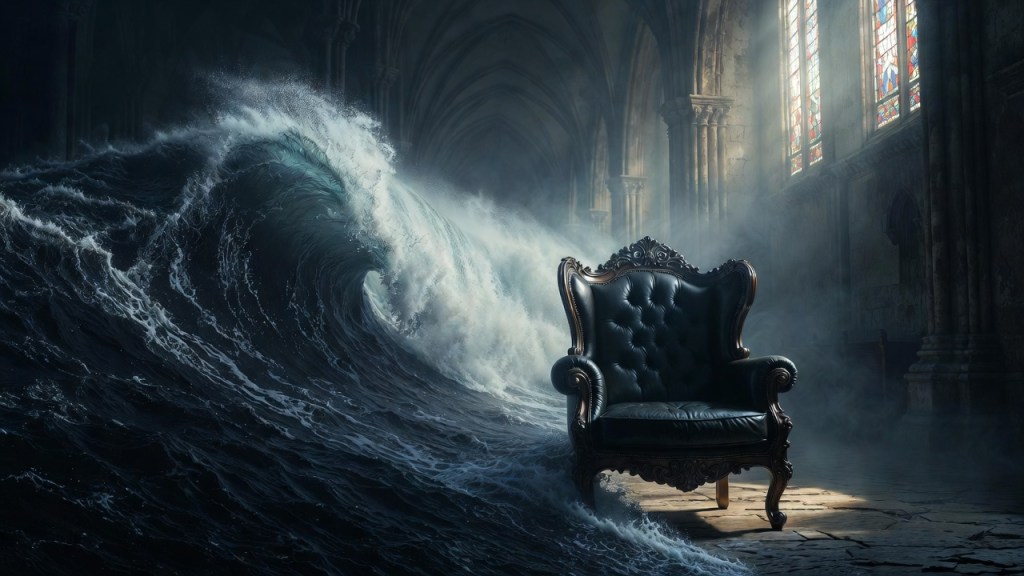
The entire concept of Atlantis originates from just one source: the ancient Greek philosopher Plato, writing around 360 BCE. In two of his dialogues, Timaeus and Critias, Plato introduces Atlantis through a story told by Critias, who claims it was passed down through his family from the Athenian statesman Solon, who supposedly heard it from Egyptian priests. According to Plato’s account [1], Atlantis was a formidable naval power located “beyond the Pillars of Hercules” (usually interpreted as the Strait of Gibraltar, placing Atlantis in the Atlantic Ocean). It was described as an island larger than Libya and Asia Minor combined, technologically advanced, rich in resources, and organised into concentric rings of land and water canals, ruled by descendants of the sea god Poseidon. Plato details its elaborate temples, palaces, and a powerful military that conquered parts of Western Europe and Africa. However, its hubris led it into conflict with ancient Athens. Following a failed invasion of Athens, Atlantis allegedly incurred the wrath of the gods and, in “a single day and night of misfortune,” was destroyed by violent earthquakes and floods, sinking beneath the sea approximately 9,000 years before Solon’s time (making it around 9600 BCE) [1]. It is absolutely crucial to remember that Plato presented this narrative within philosophical dialogues, primarily concerned with ideas about ideal states, justice, and the divine order. Many scholars believe Atlantis was intended as a philosophical allegory or thought experiment, a cautionary tale about the dangers of imperial ambition and societal corruption, rather than a literal historical account [2].
Despite the philosophical context, the allure of a real, lost super-civilisation proved irresistible. The search for archaeological evidence began in earnest much later, particularly gaining momentum in the 19th and 20th centuries. The core challenge, however, remains stark: despite extensive exploration of the Atlantic seabed and numerous proposed locations, archaeologists have found precisely zero definitive, unambiguous evidence of a submerged city matching Plato’s description in the location he specified [3]. There are no vast ruins of concentric canals, no inscriptions naming Atlantean kings, no artefacts confirming a Bronze Age or Neolithic superpower in the middle of the Atlantic that vanished around 9600 BCE. As archaeologist Ken Feder notes, “The archaeological evidence for the existence of Plato’s Atlantis is precisely the amount you would predict for a mythical place: none” [4].
This lack of direct evidence hasn’t stopped speculation, however. Instead, the search has often shifted towards finding real historical events or locations that might have inspired Plato’s story. The most widely discussed and scientifically plausible candidate in this regard is the Minoan civilisation on the island of Crete and, more specifically, the volcanic eruption on the nearby island of Thera (modern Santorini) around 1600 BCE [5]. The Minoans were a sophisticated Bronze Age culture with impressive palaces (like Knossos), advanced art, a writing system (Linear A, still undeciphered), and extensive maritime trade networks across the Mediterranean. Around 1600 BCE, the volcano on Thera erupted catastrophically – one of the largest volcanic events in recorded human history [6]. This eruption buried the Minoan settlement of Akrotiri on Thera under metres of ash, preserving it remarkably like Pompeii. The eruption also likely triggered massive tsunamis that would have devastated coastal areas of nearby Crete, potentially crippling the Minoan civilisation, which experienced a significant decline shortly thereafter.
There are compelling parallels between the Minoan catastrophe and elements of the Atlantis story: a sophisticated island civilisation, advanced for its time, which suffered a sudden, devastating natural disaster involving the sea. Archaeologists excavating Akrotiri have uncovered stunning frescoes, multi-storey buildings with plumbing, and evidence of a thriving society abruptly ended [7]. Some researchers suggest Plato might have heard distorted accounts of this Bronze Age collapse, passed down through Egyptian sources as Solon allegedly claimed, and adapted them for his philosophical narrative [5]. However, significant discrepancies exist. Thera/Crete is in the Mediterranean, not beyond the Pillars of Hercules in the Atlantic. The Minoan civilisation flourished around 1600 BCE, not 9600 BCE. The scale described by Plato – an island larger than Libya and Asia Minor – far exceeds that of Crete or Thera. Furthermore, while the eruption was devastating, the Minoan culture didn’t vanish overnight; it continued on Crete, albeit in a weakened state, eventually being overtaken by the Mycenaeans from mainland Greece [8]. Thus, while the Thera eruption provides a fascinating possible inspiration, it cannot be equated directly with Plato’s Atlantis.
Over the years, numerous other locations have been proposed, often based on flimsy evidence or misinterpretations. The “Bimini Road” in the Bahamas, an underwater formation of limestone blocks, was once touted as Atlantean ruins, but geological analysis has confirmed it to be a natural beachrock formation dating back only a few thousand years [4, 9]. Expeditions have searched near the Azores islands, in the North Sea (Doggerland, a submerged Mesolithic landscape), off the coast of Spain, and even bizarrely suggested locations like Antarctica or South America. One area that has received recent attention is the Doñana National Park region in southern Spain, near Cádiz (ancient Gades), just beyond the Strait of Gibraltar. Researchers using satellite imagery, ground-penetrating radar, and underwater technology have identified anomalies suggesting possible ancient structures buried beneath the marshlands, potentially related to the semi-mythical ancient city of Tartessos, a rich civilisation known to the Greeks that disappeared from historical records around the 6th century BCE [10]. Some researchers, like the late Professor Richard Freund, controversially linked these potential findings to the Atlantis legend, suggesting memorial cities built by fleeing Atlanteans or that Tartessos itself was the inspiration [11]. However, mainstream archaeological consensus remains highly sceptical. The evidence is preliminary, interpretations are debated, and crucially, no definitive proof linking these findings to Plato’s specific description of Atlantis has emerged. Much more rigorous excavation and analysis are needed before any firm conclusions can be drawn [12].
So, what would actual archaeological proof of Atlantis look like? Archaeologists would need to find submerged ruins dating to roughly 9600 BCE, located in the Atlantic beyond Gibraltar, matching Plato’s description of concentric rings, advanced metallurgy (he mentions ‘orichalcum’), and evidence of a large, organised society far beyond anything else known from that period (the Neolithic era, when hunter-gatherer societies and early farming communities were the norm) [3]. Finding such evidence would revolutionise our understanding of prehistory. Its continued absence, despite advances in underwater survey technology, strongly supports the view that Atlantis, as Plato described it, did not exist as a physical place.
Why, then, does the Atlantis myth persist with such tenacity? Part of the appeal lies in the very nature of the story – a utopian paradise lost, a warning against arrogance, the romantic notion of uncovering a forgotten golden age. It taps into a deep human desire for mystery and the possibility that our ancient past holds secrets grander than we imagine. Furthermore, the story has been continually revitalised in popular culture, from Jules Verne’s Twenty Thousand Leagues Under the Seas to Disney films and video games, keeping it firmly in the public consciousness. It also feeds into the realm of pseudoarchaeology, where fringe theories often ignore scientific methodology and evidence in favour of sensational claims [4]. Distinguishing between legitimate archaeological inquiry into potential inspirations (like Thera) and the unsubstantiated search for a literal Atlantis is crucial. Professor Christos Doumas, director of the Akrotiri excavations, has cautioned against conflating the Minoan site with the myth: “Atlantis is a romantic idea… Akrotiri is real. It’s a fantastic discovery which tells us about the eastern Mediterranean in the second millennium BC” [13].
In conclusion, the archaeological quest for Plato’s Atlantis has yielded fascinating discoveries about real ancient civilisations and catastrophic events, most notably the Bronze Age Minoans and the eruption of Thera. These findings offer tantalising hints of events that might have echoed down the centuries to inspire parts of Plato’s philosophical tale. However, based on current archaeological evidence – or rather, the complete lack thereof in the specified time and place – the Lost City of Atlantis as described in the Timaeus and Critias remains firmly in the realm of myth. There are no submerged ruins in the Atlantic dating to 9600 BCE matching Plato’s description. While archaeology continues to uncover wonders of the ancient world, revealing sophisticated societies and dramatic histories, the physical reality of Atlantis isn’t one of them. The story endures not because of tangible proof, but because of its power as a narrative – a mirror reflecting our own hopes, fears, and fascination with the unknown depths of the past. Perhaps the most enduring question isn’t “Where is Atlantis?”, but “Why do we still feel the need to find it?”
References and Further Reading:
- Plato. Timaeus and Critias. (Various translations available. Benjamin Jowett’s translation is a classic, widely accessible source).
- Vidal-Naquet, P. (2007). The Atlantis Story: A Short History of Plato’s Myth. University of Exeter Press. (Provides a scholarly analysis of Plato’s intent).
- Feder, K. L. (2010). Encyclopedia of Dubious Archaeology: From Atlantis to the Walam Olum. Greenwood. (Discusses Atlantis within the context of pseudoarchaeology).
- Feder, K. L. (2020). Frauds, Myths, and Mysteries: Science and Pseudoscience in Archaeology (10th ed.). Oxford University Press. (Chapter specifically addresses Atlantis).
- Luce, J. V. (1969). The End of Atlantis: New Light on an Old Legend. Thames & Hudson. (Classic work proposing the Minoan hypothesis).
- Friedrich, W. L. (2009). Santorini – Volcano, Natural History, Mythology. Aarhus University Press. (Detailed scientific account of the Thera eruption).
- Doumas, C. G. (1983). Thera: Pompeii of the Ancient Aegean. Thames & Hudson. (Overview of the Akrotiri excavations by the lead archaeologist).
- Castleden, R. (2002). Minoans: Life in Bronze Age Crete. Routledge. (General history of the Minoan civilisation and its decline).
- Shinn, E. A. (2009). “The Geology of the Bimini Road and Other Submerged Cultural Resources”. In: Perspectives in Carbonate Geology: A Tribute to the Career of Robert Nathan Ginsburg. Special Publication 41, International Association of Sedimentologists. pp. 237-245. (Scientific analysis debunking the Bimini Road claims).
- Kuhrt, A. (1995). The Ancient Near East, c. 3000-330 BC, Volume II. Routledge. (Provides historical context for Tartessos).
- Freund, R. (2012). Digging Through the Bible: Modern Archaeology and the Ancient Bible. Rowman & Littlefield. (Includes discussion of his team’s work in Spain, often linked to Atlantis in media reports, although the primary focus was biblical connections and Tartessos). Note: Media reports often sensationalised Freund’s speculative link to Atlantis beyond his published academic focus. Reputable sources for the Doñana findings often stem from geophysical survey reports or National Geographic features which should be consulted critically.
- Schulten, A. (1922). Tartessos: ein Beitrag zur ältesten Geschichte des Westens. (While dated, Schulten’s early work laid groundwork for Tartessos research near Doñana; modern archaeological reports on surveys in the area are more specific but may be less accessible). Check university repositories or Spanish archaeological journals for recent geophysical survey results in the Doñana area.
- Quote attributed to Christos Doumas in various news articles and interviews regarding the Akrotiri excavations and the Atlantis connection. E.g., As reported by the BBC News, “Greek island might be Atlantis”, 2007, though exact phrasing may vary slightly across sources.



 Conversations with AI
Leave a comment