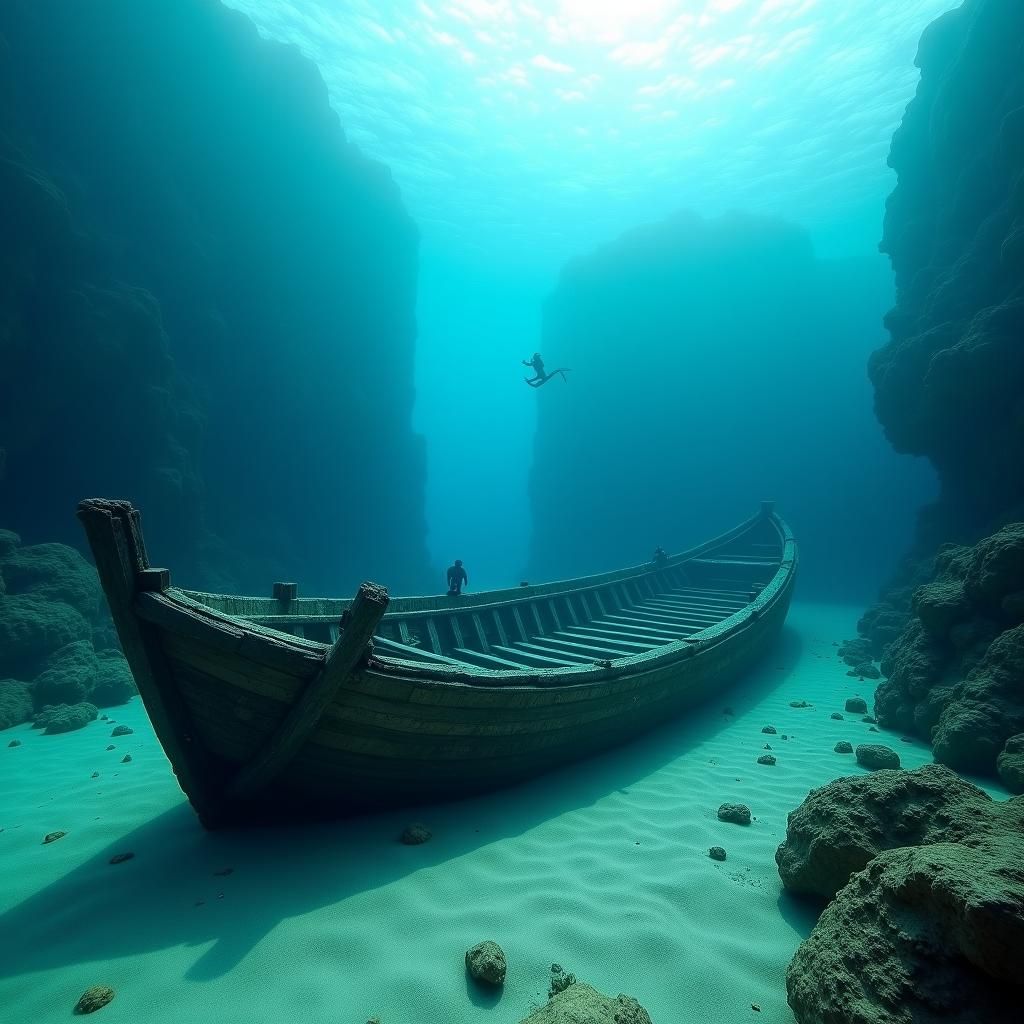
Imagine a world where the stories of the past aren’t just buried beneath our feet, but also submerged beneath the waves. For centuries, the ocean has been a silent guardian of history, concealing countless secrets in its depths. From ancient shipwrecks laden with treasure to entire cities swallowed by the sea, the underwater realm offers a unique and often breathtaking window into human history. This isn’t just about finding pretty artefacts, it’s about piecing together the narratives of our ancestors, understanding their lives, their journeys, and the forces that shaped their world, and ours. This post dives deep (pun intended) into the fascinating world of underwater archaeology, exploring some of the most incredible discoveries made beneath the ocean’s surface and revealing why this field is so vital for understanding our shared past.
To truly appreciate the significance of underwater archaeology, it’s important to understand its place within the broader field of archaeology and the unique challenges it faces. Archaeology itself is the study of human history and prehistory through the excavation of sites and the analysis of physical remains. For most of its history, archaeology has been a land-based pursuit, focusing on terrestrial sites. However, the realisation that a vast amount of human history lies submerged has gradually led to the development of underwater archaeology as a specialised discipline. This field really started gaining momentum in the mid-20th century, coinciding with advancements in diving technology like SCUBA (Self-Contained Underwater Breathing Apparatus), which was refined during and after World War II (1). Before this, exploring the seabed was a far more cumbersome and limited affair, often relying on dredging or early diving bells. The development of sonar and remote-operated vehicles (ROVs) has further revolutionised the field, allowing archaeologists to explore deeper and more remote locations than ever before, without even getting wet themselves.
One of the most compelling areas of underwater archaeology is the study of shipwrecks. These time capsules of maritime history offer an unparalleled glimpse into past trade routes, naval warfare, shipbuilding techniques, and even the daily lives of sailors. Consider the Mary Rose, a warship of the English Tudor navy of King Henry VIII. It sank (not far from where I live) in 1545 during a battle with the French fleet and lay on the seabed of the Solent for over 400 years before being raised in 1982 in a remarkable feat of engineering and archaeological skill. The excavation of the Mary Rose has provided an extraordinary amount of information about 16th-century life. As historian David Starkey notes, “The Mary Rose is not just a ship; it is a time capsule. It gives us a unique insight into the world of Tudor England” (2). The ship and its contents, including weapons, tools, personal belongings, and even the remains of the crew, offer a vivid picture of naval life and technology of that era. The preservation conditions underwater, while challenging in some respects, can also be remarkably good for organic materials in certain environments, leading to the survival of textiles, wood, and even food remains that would rarely survive on land.
Beyond individual shipwrecks, entire fleets lost in battle also provide invaluable historical data. The Battle of Jutland, a major naval engagement of World War I between the British and German fleets in 1916, left numerous warships sunk in the North Sea. These wrecks, though often disturbed by the passage of time and the harsh marine environment, are still considered war graves and sites of significant historical importance. Underwater surveys of the Jutland battlefield have used sonar and ROVs to map the locations of the wrecks and assess their condition. As maritime archaeologist Innes McCartney has stated, “The wrecks of Jutland represent a unique archaeological resource, providing insights into naval technology and the brutal reality of naval warfare in the early 20th century” (3). Studying these wrecks helps us understand the scale and intensity of naval conflict in the past and provides a tangible link to the human cost of war at sea.
Another fascinating area of underwater archaeology is the discovery of submerged settlements and cities. Rising sea levels, earthquakes, and other natural disasters have caused coastal sites to become submerged throughout history. Doggerland, for instance, is a vast area of land that once connected Britain to continental Europe. This landmass was gradually submerged as sea levels rose after the last Ice Age. Archaeological surveys in the North Sea have revealed evidence of prehistoric human occupation in Doggerland, including stone tools, animal bones, and even possible traces of settlements (4). These discoveries are revolutionising our understanding of early human migration and adaptation to changing environments. Professor Vincent Gaffney, who has led extensive research in Doggerland, argues that “Doggerland represents a lost world, a landscape inhabited by early humans that is now beneath the waves. Its study offers profound insights into the impact of climate change on human societies in prehistory” (5). The finds from Doggerland demonstrate that significant chapters of human history are not just hidden on land, but also lost beneath the sea, waiting to be rediscovered.
Moving to more recent history, the Caribbean Sea is rich with submerged colonial-era settlements and ports, often associated with the transatlantic slave trade and European expansion into the Americas. Port Royal, Jamaica, famously known as the “wickedest city in the world” in the 17th century, was largely destroyed and submerged by an earthquake and tsunami in 1692. Underwater archaeological investigations at Port Royal have uncovered remarkably well-preserved buildings, streets, and artefacts, providing a snapshot of life in a bustling colonial port city at the height of its prosperity and infamy (6). The finds from Port Royal, including buildings still standing underwater, everyday objects, and trade goods, offer a vivid picture of colonial society, trade networks, and the impact of natural disasters on human settlements. Donny L. Hamilton, who has directed archaeological excavations at Port Royal for decades, emphasises that “Port Royal is an unparalleled underwater site. Its sudden destruction and submersion preserved an entire 17th-century town in remarkable detail, offering a unique window into the past” (7).
The methods used in underwater archaeology are constantly evolving, driven by technological advancements. Remote sensing technologies like side-scan sonar and magnetometer surveys are crucial for locating potential underwater archaeological sites without physically disturbing them initially. These techniques can detect anomalies on the seabed that might indicate the presence of shipwrecks, submerged structures, or buried artefacts. Once a site is identified, underwater archaeologists use a range of techniques to investigate it, from scuba diving for shallower sites to the use of ROVs and submersibles for deeper and more challenging environments. Photogrammetry and 3D modelling are increasingly used to create detailed virtual reconstructions of underwater sites, allowing researchers to study them in great detail without the need for extensive excavation or removal of artefacts (8). These digital techniques are also invaluable for the preservation and dissemination of underwater cultural heritage, making these submerged sites accessible to a wider audience.
Despite the incredible potential of underwater archaeology, it also faces significant challenges. The marine environment is inherently destructive. Waves, currents, marine organisms, and chemical processes all contribute to the degradation of underwater archaeological sites. Pollution and destructive activities like dredging and trawling also pose serious threats. Furthermore, the legal and ethical frameworks for protecting underwater cultural heritage are complex and often inadequate. Ownership of shipwrecks and artefacts recovered from international waters is often contested, leading to legal battles and ethical dilemmas. UNESCO’s Convention on the Protection of the Underwater Cultural Heritage (2001) aims to establish international standards for the protection of underwater sites, but it has not been universally ratified and enforcement remains a challenge (9). As Sarah Dromgoole, a specialist in maritime law, points out, “The protection of underwater cultural heritage requires international cooperation and effective legal frameworks. However, the current legal landscape is fragmented and often fails to adequately protect these vulnerable sites” (10).
Looking to the future, underwater archaeology is poised to become even more important as climate change and rising sea levels threaten to submerge more coastal sites. Understanding how past societies adapted to sea-level rise and coastal change, as revealed through underwater archaeology, can offer valuable lessons for addressing the challenges we face today. Furthermore, the exploration of deeper ocean environments, facilitated by advanced technologies, promises to reveal even more unknown chapters of human history. The deep sea, once considered beyond the reach of archaeology, is now being recognised as a potential frontier for discovery. As Dr. Robert Ballard, renowned for his discovery of the Titanic and other deep-sea wrecks, argues, “The deep ocean is the largest museum on Earth, holding countless stories of human history waiting to be told. Exploring this frontier is crucial for understanding our past and informing our future” (11).
In conclusion, underwater archaeological discoveries are continually rewriting our understanding of history, revealing lost civilisations, forgotten voyages, and the profound impact of the sea on human societies. From the Mary Rose to Doggerland and Port Royal, these submerged sites offer unique insights that terrestrial archaeology alone cannot provide. As technology advances and our ability to explore the ocean depths increases, we can expect even more astonishing discoveries to emerge from the underwater realm. However, the protection of this fragile underwater cultural heritage requires ongoing efforts in research, conservation, and international cooperation. The ocean holds a vast library of human history, and it is our responsibility to explore, understand, and protect these invaluable stories from the deep. What other secrets lie hidden beneath the waves, waiting to reshape our understanding of the past? The journey of discovery has only just begun.
References and Further Reading:
- Muckelroy, K. (1978). Maritime Archaeology. Cambridge University Press.
- Starkey, D. (2003). Six Wives: The Queens of Henry VIII. Harper Perennial.
- McCartney, I. (2016). Jutland 1916: The Archaeology of a Naval Battlefield. Seaforth Publishing.
- Coles, B. (1998). Doggerland: a speculative survey. Proceedings of the Prehistoric Society, 64, 45-81.
- Gaffney, V. et al. (2009). Europe’s Lost World: The submerged landscapes of the southern North Sea. Council for British Archaeology Research Report, 160.
- Marx, R. F. (1973). Port Royal Rediscovered. Doubleday.
- Hamilton, D. L. (2011). Methods of Conserving Underwater Archaeological Material Culture. Texas A&M University Press.
- Firth, A. (2018). Underwater Photography for Archaeological Documentation. Routledge.
- UNESCO. (2001). Convention on the Protection of the Underwater Cultural Heritage. UNESCO.
- Dromgoole, S. (1999). Underwater Cultural Heritage and International Law. Cambridge University Press.
- Ballard, R. D. (2000). The Eternal Darkness: A Personal History of Deep-Sea Exploration. Princeton University Press.



 Conversations with AI
Leave a comment