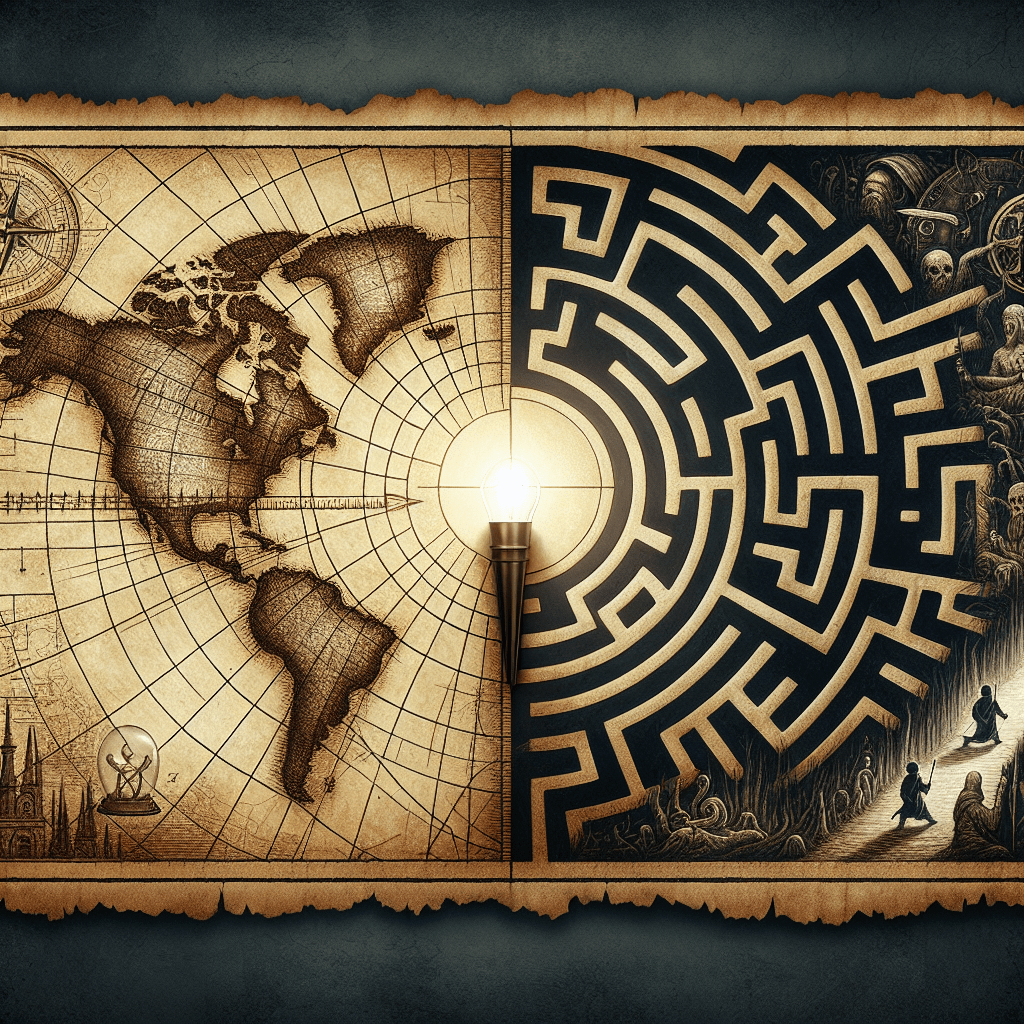
The allure of conspiracy theories is undebatable. They offer simple explanations to complex phenomena or events, often interwoven with a hint of mystery and rebellion. They can be intellectually stimulating, emotionally appealing but equally dangerous in fostering misinformation and mistrust. Therefore, separating reality from fiction in conspiracy theories is not just an intellectual exercise; it’s a societal necessity aimed at cultivating informed citizens. Our quest herein is to traverse this intriguing world of conspiracy theories to delineate fiction from reality.
In order to make sense of conspiracy theories, it is essential to delve into their origins and historical development. Throughout history, humans have sought explanations for events they do not understand. In ancient times, any unexpected event from a solar eclipse to disease outbreaks was often blamed on deities, witches, or other mystical entities. However, as scientific knowledge progressed, the sources of mystery and intrigue also evolved, resulting in modern conspiracy theories that often involve highly sophisticated technologies or global institutions.
A key inflection point for conspiracy theories was the rise of mass communication. With the advent of the printing press in the 15th century, followed by radio, television, and now the internet, dissemination of conspiracy theories became increasingly efficient and far-reaching. The 20th century, especially post World War II, marked significant proliferation of conspiracy theories dealing with topics as diverse as UFO sightings, global warming denial, and claims of a ‘New World Order’.
The world of conspiracy theories has vastly evolved along with societal changes. Today, it enmeshes topics like secret government projects, aliens, cancer ‘cures’, and manipulated or ‘fake’ news. Conspiracy theories have also gravitated around significant historical events. The assassination of American President John F. Kennedy, the Moon landing, and the 9/11 attacks have been fertile breeding grounds for many conspiracy theories.
As Richard J. Hofstadter, famed American historian and public intellectual remarked, “Conspiracy is the instrument of the powerless when they argue against the powerful” [4]. This statement captures the essence of the psychological appeal of conspiracy theories – they offer a narrative where the disempowered can stand up against the ‘establishment’.
The spread and influence of conspiracy theories pose several implications on our society. While they can foster creative thinking, their deceptive simplicity can also mislead the public and nourish destructive ideologies. The anti-vaccination movement is a stark example, driven partly by conspiracy theories about ‘Big Pharma’, potentially endangering public health [5].
However, merely brushing off all conspiracy theories as baseless might also be an oversimplification. For instance, the infamous Watergate scandal that culminated in the resignation of U.S. President Richard Nixon was initially dismissed as a conspiracy theory [6]. So, while most conspiracy theories might indeed be figments of imagination, some might contain grains of truth.
In conclusion, making sense of conspiracy theories demands an intricate balancing act – maintaining healthy scepticism without closing one’s mind to unconventional possibilities. It’s akin to traversing a razor’s edge between fact and fiction, reality and imagination. But as global citizens, arming ourselves with critical thinking skills to make this traverse responsibly remains an imperative. The world of conspiracy theories is likely to continue captivating human imagination – how we navigate it can make all the difference.
References and Further Reading
- Hofstadter, R. (1965). “The Paranoid Style in American Politics”, Vintage Books.
- Smith, N., & Graham, T. (2019) “Mapping the anti-vaccination movement on Facebook”, Information, Communication & Society.
- Perlman, H. (1973). “The Watergate Scandal: A Turning Point in American History”, Historical Association of America.
Explore further:
- Barkun, M. (2006). “A Culture of Conspiracy: Apocalyptic Visions in Contemporary America”, University of California Press.
- Knight, P. (2008). “Conspiracy Theories in American History: An Encyclopedia”, ABC-CLIO.
- Rosenblum, N. L., & Muirhead, R. (2019). “A Lot of People Are Saying: The New Conspiracy Theories”, Princeton University Press.




 Conversations with AI
Leave a comment